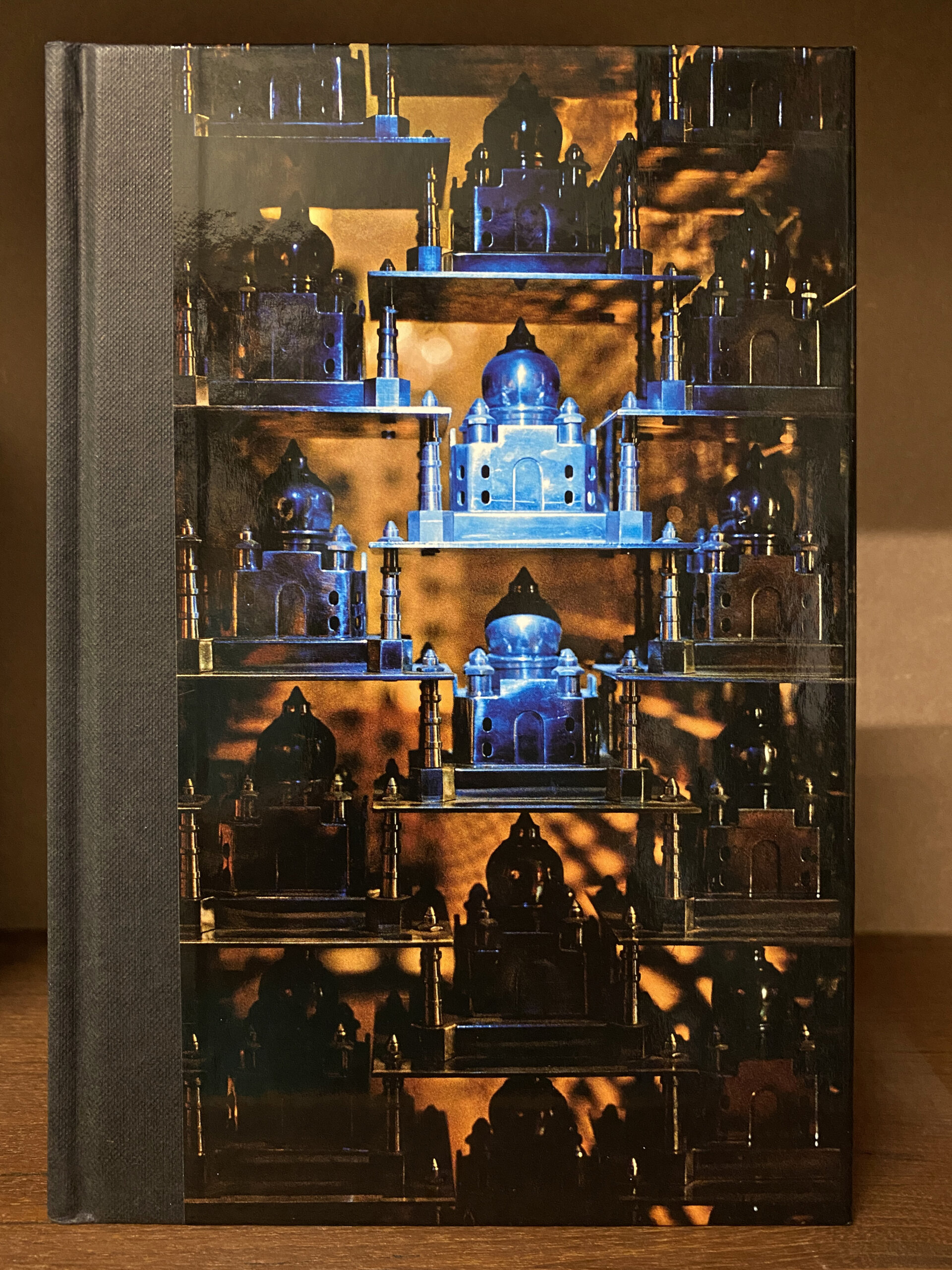
One evening, about a decade ago, I visited a gallery in New Delhi. I entered from a gate at the rear, walking through a garden into a white walled space, with a burgeoning crowd. For someone still unfamiliar with the capital’s art scene and its personalities, the setting was a bit intimidating. As I nursed my drink in a corner, I noticed a woman make her way through the crowd with a cart. It was the launch of House of Love and this mobile cart was stacked with books just off the press. The woman—clearly, the author herself—was approaching guests, requesting them to buy a copy.
It was an irreverent act. At a commercial gallery, where photographic prints are sold for large amounts, and heavy negotiations conducted behind closed doors, the artist marketing her own work at her opening event was rare and unusual. In the midst of an exclusive, and somewhat stiff audience of Delhi’s art circuit, Dayanita had an infectious, childlike enthusiasm for her new book, and an eagerness for the audience to engage with it.
The excitement wasn’t without reason. At the time, Dayanita’s proposition of a book of photographic short stories felt radical, especially because it did so with the documentary image. For someone like me, who was making her first forays into photographic editing, it opened up an entire universe of ideas, one where photographs need not talk to each other in literal or chronological ways, and where a book of photographs need not be bound by a single narrative from beginning to end. It was one of my first encounters with photo fiction, that too in a short story format. A set of images put together could build new stories, carrying with them their original context, but also being able to divorce themselves from it, making new meanings with their precursors and successors. I remember Dayanita voicing her desire for the book to find a corner in the fiction section of a bookshop, and not be forced onto the photography or arts shelf. The irreverence, and the imagination, emanated from here—from the urge to free the form from the rigid categories it is often bound by.
In telling fictional short stories, House of Love introduced me to lightness, to buoyancy, in photography. In the third of a series of ten short stories, Theft in a cake shop—one of my favourites—there is no shortage of drama. A tender image of a young man at the bakery, standing with an offering of cake and knife in one hand, sits beside scenes of machetes for sale and guns pointed at white bureaucrats. The bang of the gunshot is drowned out by the blaring wedding band, which provides a cheeky musical outro to this short piece. The look of disapproval in the eyes of the woman in the opening image reminds me of stories of my nani, my grandmother, fed up of my uncle—her son—stealing sweets from the kitchen shelf. In the fictions of House of Love, with the images as memory triggers, I felt as much an author of this imaginary tale as Dayanita.
Ten years on, I see House of Love as an experiment in intuition, one of the guiding forces in editing photographic narratives. Where the yellow light from a stairway in a building spills out on to a steel sculpture, bouncing from it to illuminate one of many Taj Mahals—the eternal house of love—to bathing an industrial landscape in its incandescence. Connections are forged through hints and suggestions, never fully revealing a distinct, definitive storyline. It is almost an ode to the ambiguity of the photograph, the denial of the absolute truth and, for me, the invigorating possibility of one set of images threading multiple stories.