Museum Bhavan is a home for books, a structure. If you open the cover, it remains hinged to the base of the box like a clamshell. This joint top and bottom remind the user that, once they are done, they must replace the cover. Also like a clam, which is the archival term for this type of receptacle, the box is snug. The nine volumes, plus the pamphlet of conversations, sit tight in the base of the box. You can change the order of the books, but it’s impossible to add another unless it was made in the same format and swapped; if one is taken away, it’s obvious.
If the box protects the books, then the box is also protected. It is bound in a type of fabric called ‘achaara’, which is laid under others being block-printed to soak up the residual inks. The fabric, like the box itself, is secondary. It supports making other products, in a similar way to how the box sustains its contents. Nevertheless, it is unique. No two centimetres of the fabric are alike, since it is made of the ink that has soaked through—randomly—from the patterns repeated on the cloths above.
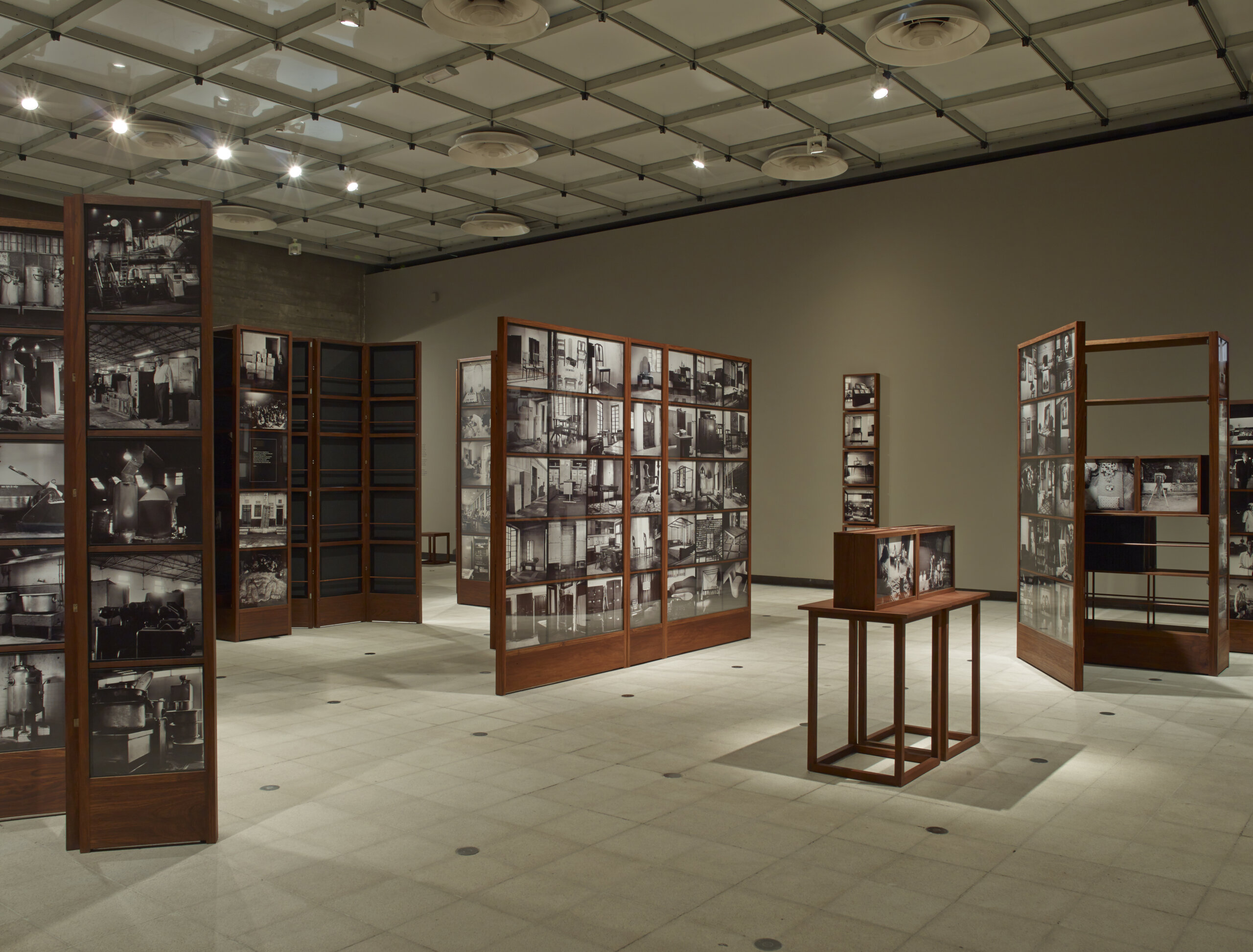
One of the meanings of the word ‘bhavan’ is house. Dayanita grew up in what she calls an organic house. “When a child was born, we added a room, if we needed a larger guest room, a wall was torn down…So a house can grow and collapse. I’ve created a situation where I can still do that. I wanted a veranda, so I made it. Then I wanted a room on top, so I had it made.” A house can accommodate the needs of its inhabitants, which also applies to museums. Dayanita worked with carpenters to build organic museums to display her photographs, inclusive of storage, a desk, and stools, then a bench or a bed. Museum and home in one, Museum Bhavan, till there were nine. These nine wooden structures were portable, but they begat nine even more portable, accessible, and domestic objects: books. The design of the wooden Museum Bhavan builds in the protection of the photographs; the design of the paper Museum Bhavan builds in the protection of the books. They are the homes that support the museums. They are each unique and each set up to change.
In the paper Museum Bhavan, each book can be read intimately, one image by one image, one volume by one volume. They fit perfectly in the hands. Museum of Vitrines. Museum of Furniture. Museum of Photography. Godrej Museum. Museum of Machines. Museum of Little Ladies. Ongoing Museum. Museum of Men. Printing Press Museum. This is the order in my Museum Bhavan, for example, today. But yesterday, it differed. Yesterday, I opened the Godrej Museum first and only the Godrej Museum. Tomorrow is open. Perhaps I will choose to unfold a volume accordion style and display it, only one or multiple. It’s an option, from the first till the ninth volume, to peruse, to have an exhibition, in any order you choose. If you also have Dayanita’s other box of books, Sent a Letter, the opportunities multiply. Designed in the same size and format, Museum Bhavan and Sent a Letter amount to sixteen books for perusal, sixteen possible exhibitions, sixteen objects to be held.
The twinning of museum and home means that you, as the collector and curator, can decide what to view, or not to view, at any given time. My Museum Bhavan sits on my desk like a talisman. I open the box to view the spines of the books, at times I view the books intently—as in the past few days, while writing—sometimes I exhibit them. But mostly they lie in wait, like so many things in a house, in a museum, which enact part of their power simply by being there. Their pull is the knowledge that they are there. They hold possibility, in what they might offer at any given time, and that those offerings will change with the viewer, with moods and conversations, with time.
Museum Bhavan is a series of books with series of photographs in a clamshell box covered with many-coloured fabric. It is a home and a museum, which in turn creates and protects its home, its owner, wherever and whoever that may be.