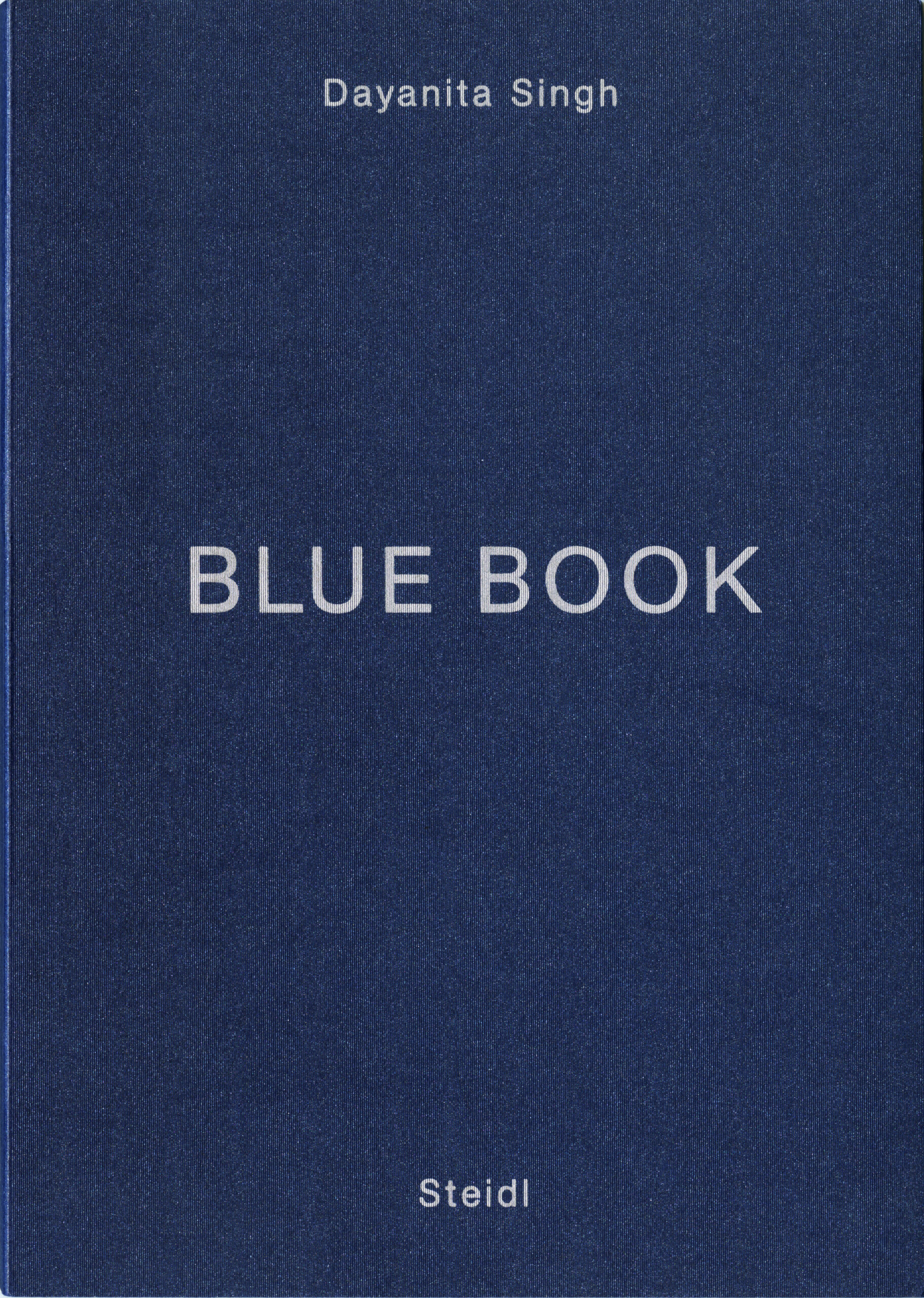
The Blue Book series emerged from happenstance. Singh was photographing factories and industrial landscapes when she was caught without her usual black-and-white film, just after sunset. She reached, instead, for a roll of colour daylight film, even though the light at the time was inappropriate for its use. When the film was processed and the contact sheets came back, she discovered all the images tinged with a melancholic blue. Singh had finally found her own way with colour.
The photographs in Blue Book are not ordinary landscapes. Doused in their unique hue, they hint at complex combinations of palpable longing and silent loss, insidious danger and quiet despair. Simultaneously sensuous and contemplative, they generate a poetic and personal critique of the industrial, raising several questions: what is our relationship to land, to horizon, to industry, to landscape?
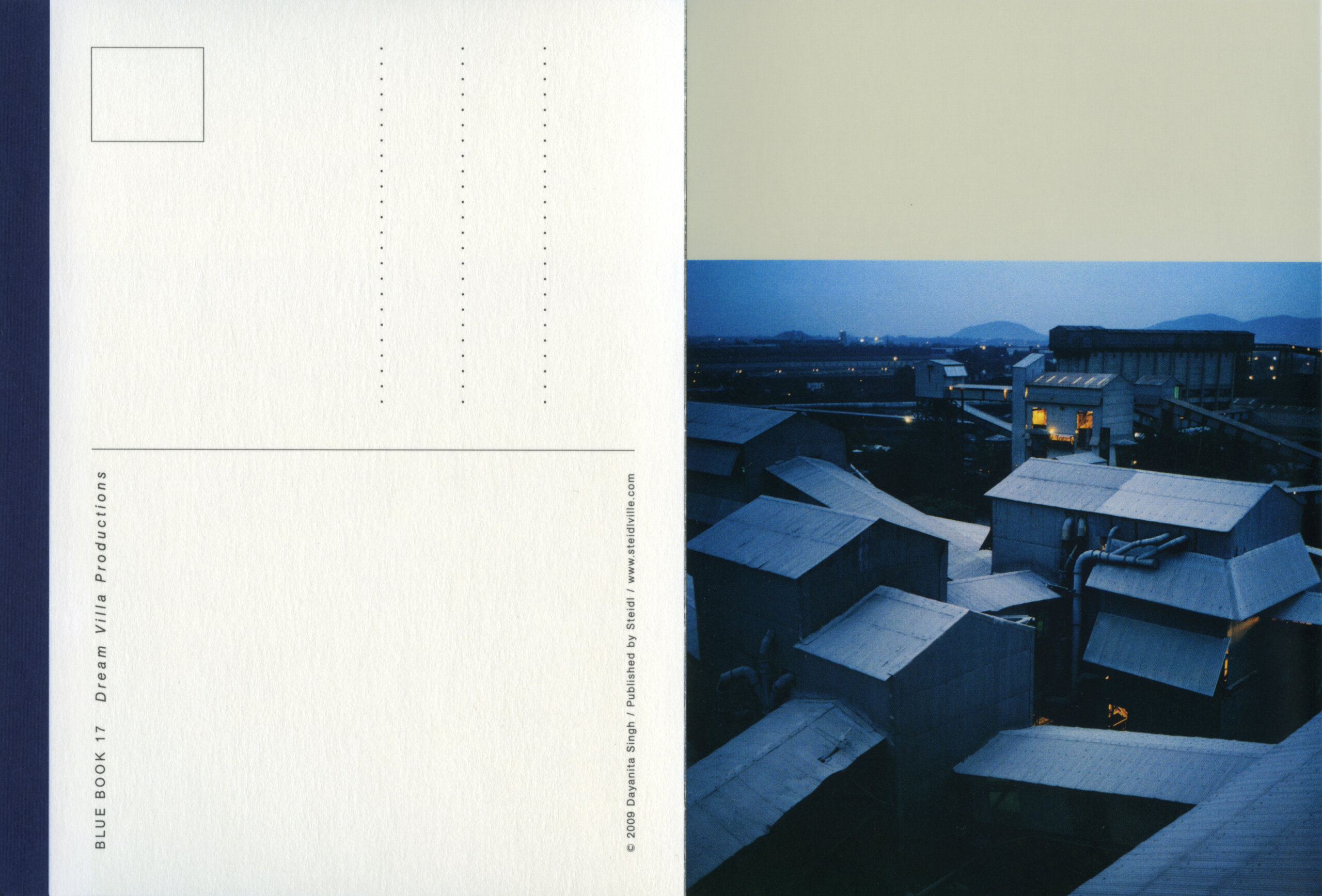
Originally, Singh had wanted to fashion the images into an accordion-fold book—just as she had done with Chairs and Sent a Letter—something small enough to fit into a standard mail packet. Not wanting to repeat the form, Steidl suggested a postcard book instead.
It felt particularly apt to put landscape images on postcards and Singh liked that the book would be built to dismantle and disperse. Forgoing the usual large size of landscape photobooks, they settled on a standard 4×6 inch postcard size and created a slim volume of 23 images bound in a navy-blue cardboard cover.
The size of the book felt particularly apposite, as it reminded Singh of a prayer book that fits comfortably in both hands. But the choice of scale also does something more, skilfully changing the reader’s engagement with terrain. Where ordinarily the landscape dominates the human, here, the human dominates the landscape. Blue Book brings it, quite literally, into the palm of the reader’s hand.
The postcard book form allowed Singh to experiment with new ways to exhibit the book, particularly as it was designed to be disassembled. In one instance, Singh created an accordion-fold version by dismantling a copy and sticking the postcards together. She showed this concertina maquette in the Indian Highway exhibition at the Serpentine Gallery, London in 2008, alongside Dream Villa wallpaper.
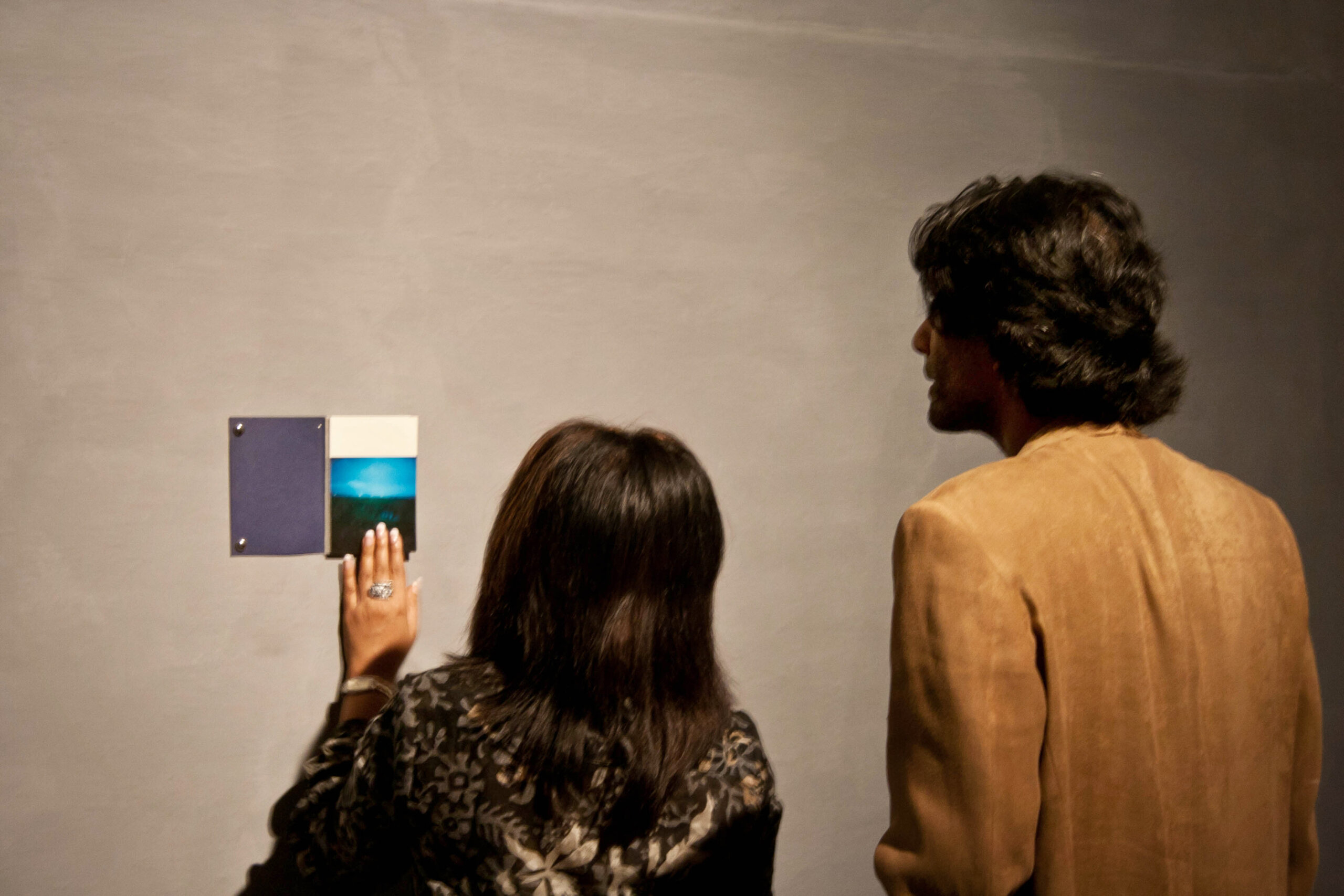
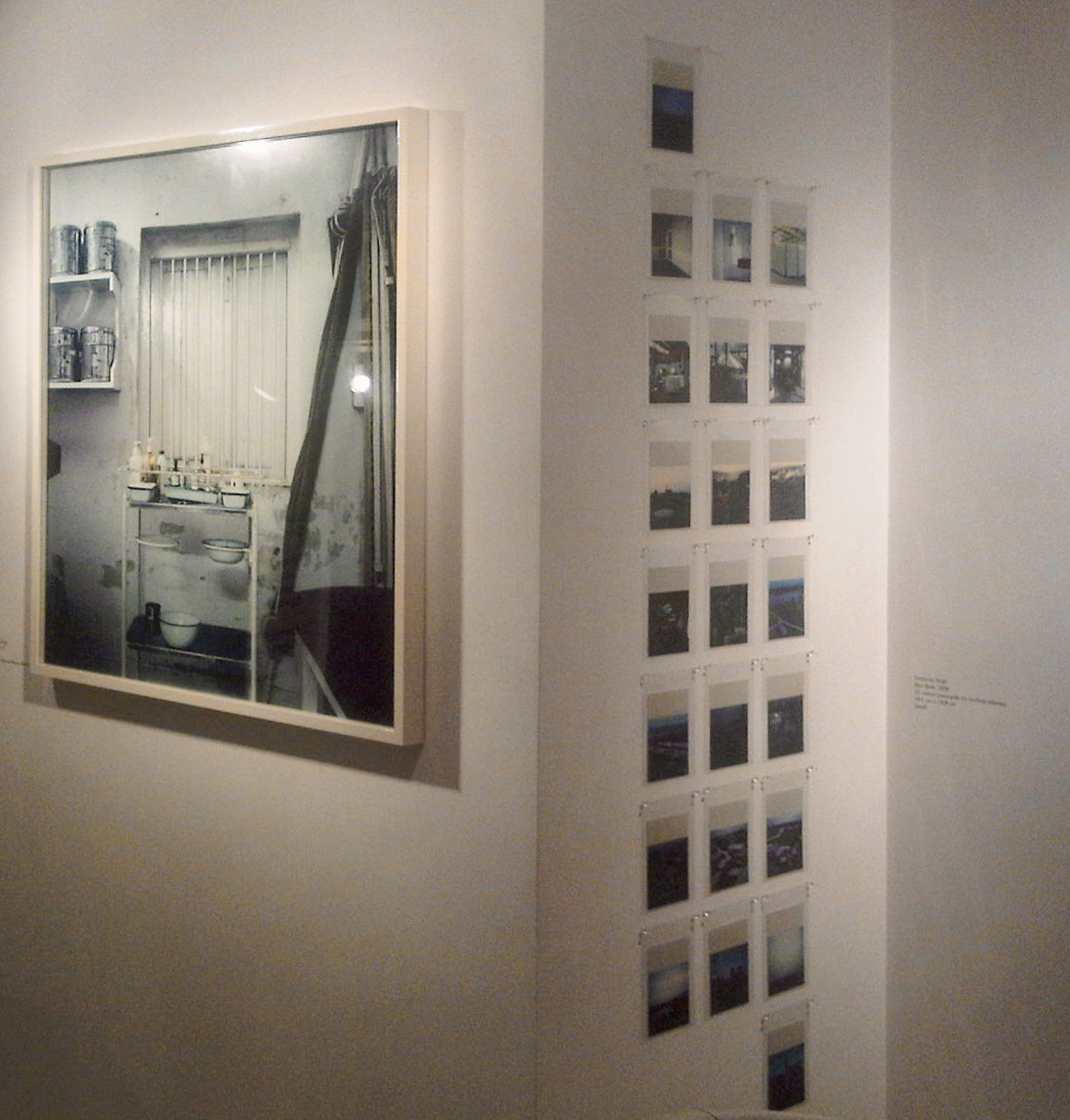
Blue Book was also the first of Singh’s books that was shown, as is, on the wall. When curator Rattanamol Singh Johal approached Singh for prints for an exhibition in 2011, she suggested he pin the book to the wall so that viewers could leaf through its pages. Later, Johal disassembled Blue Book for another exhibition in 2012, where he showed the images as 23 postcards stuck to the wall.
It turns out, however, that the book was not really used as envisioned. Hardly anyone, it seems, plucked the postcards from the binding and mailed them out as they were intended. In this respect, Singh believes that Blue Book is a failed project. Steidl, too, felt they should have sold two books for the price of one, so that one book could have remained intact with the reader while the other was dismantled and dispersed.
Nonetheless, the strength of the book still lies in its latent evocation of the addressee, which it embodies in the form of the postcards. For Blue Book shifts the encounter with the book from a private experience to a more communal, shared one. In Sent a Letter the question may have been, “Who is Singh’s addressee?” But in Blue Book, she turns the tables to ask, “Viewer, who is your addressee?”