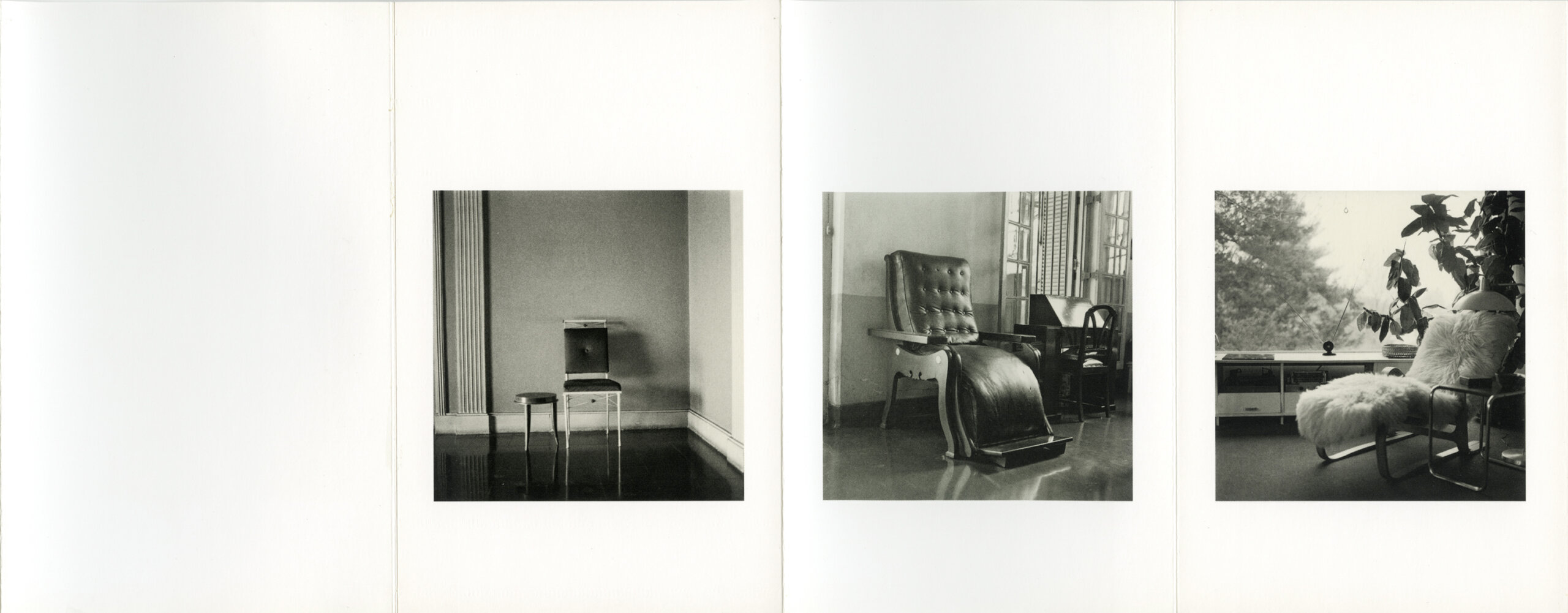
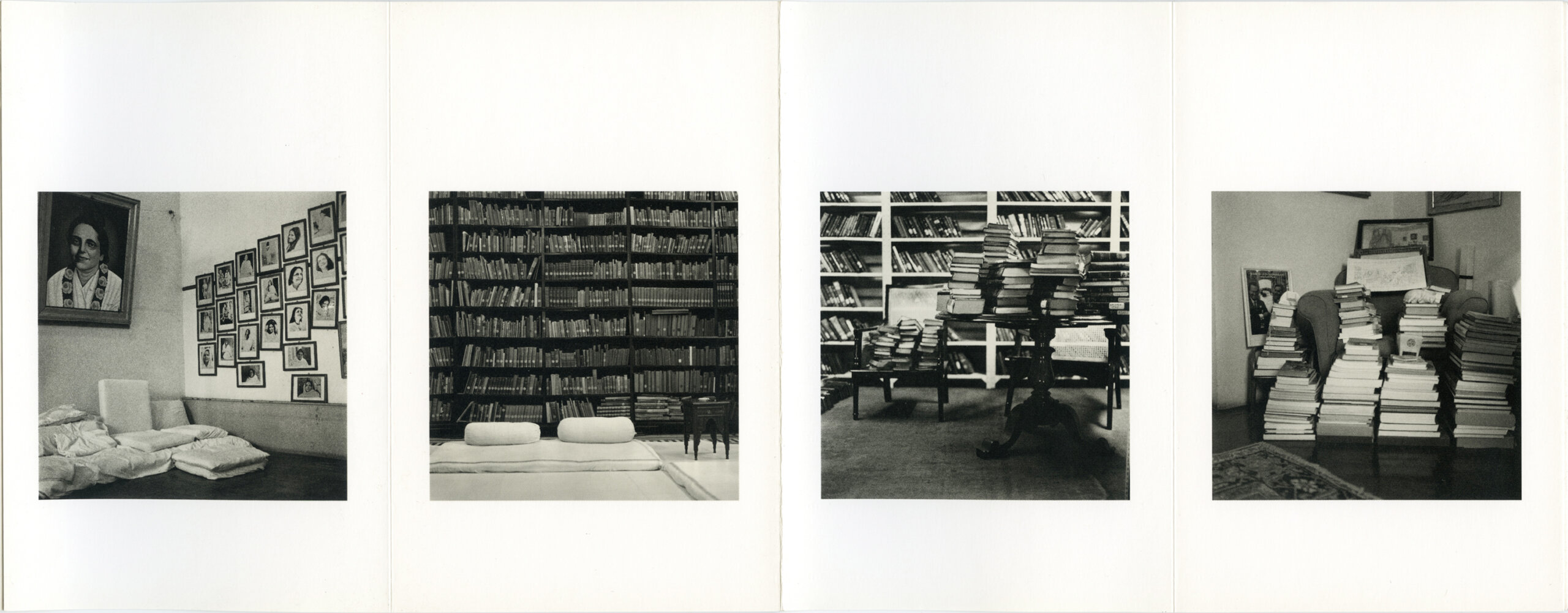
Chairs was first developed while Singh was an artist-in-residence at the Isabella Stewart Gardner Museum, Boston for two short stints in 2002–2003. Overwhelmed by the great art at the museum, it was the chairs in the museum’s collection she became inexplicably drawn to. She began photographing each chair diligently, paying them as much attention and care as she did with her portraits of people and spaces. “I started to recognize their genders and their personalities,” she says, “and found names for all of them. They became my friends in the museum.”
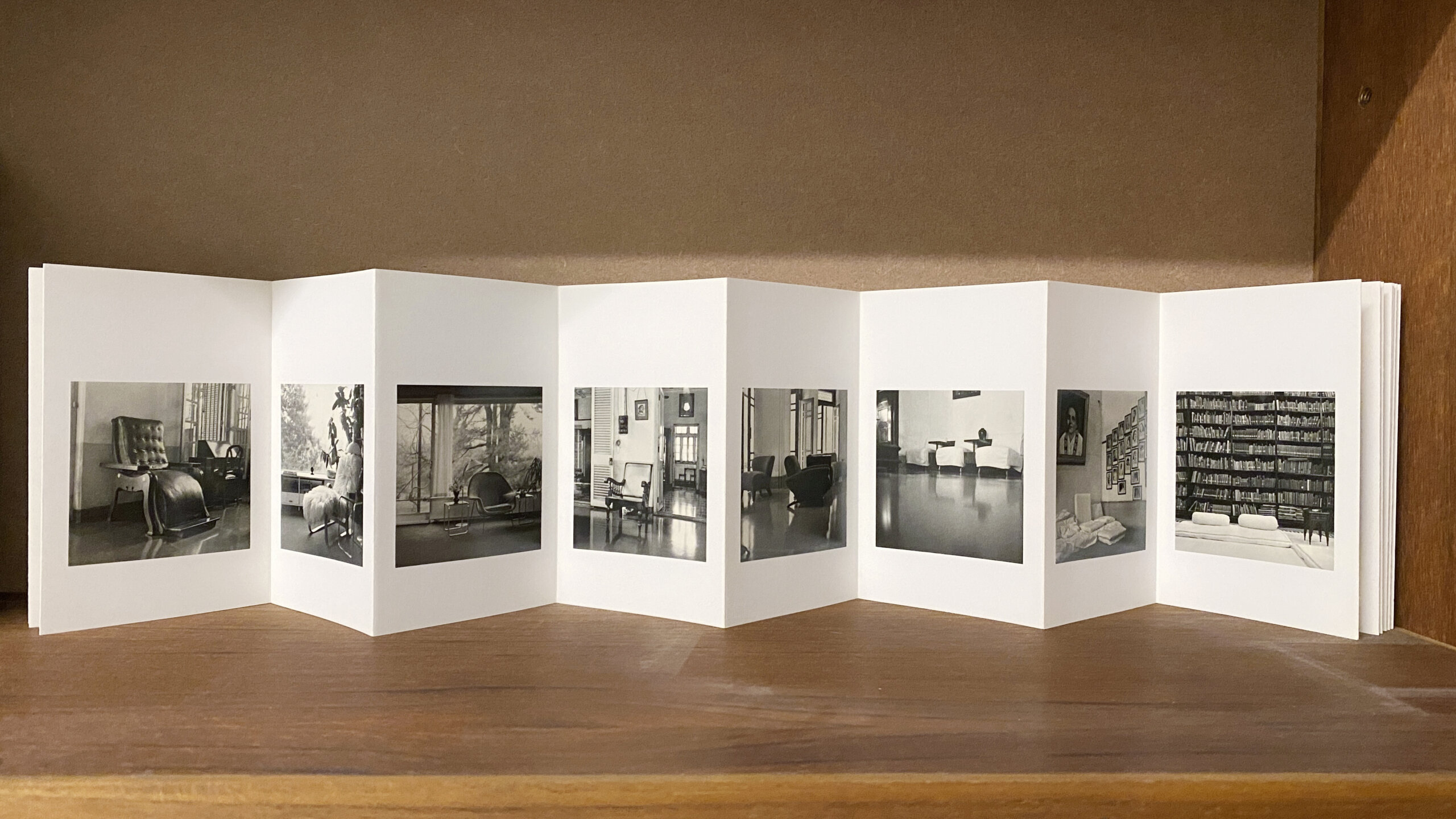
Since she was away from her studio and her prints, she had taken to cutting images from her medium-format contact sheets and pasting them into small accordion-fold notebooks as a kind of riyaaz. The Chairs book emerged from this process, just as Sent a Letter would a few years later. Working with all the images of chairs in contact sheets that she had carried as well as made in the residency, she tried various sequences in her notebooks until she arrived at a final edit of 22. She edited as if she were creating a dialogue between the chairs, almost as if they were sitters in her family portraits.
When Pieranna Cavalchini, the museum’s curator, saw the book on display in Singh’s apartment, she immediately suggested they publish it as an artist’s book in lieu of a catalogue for Singh’s exhibition.
Published in the dimensions and size of Singh’s original, Chairs was printed in tritone on coated paper that was double spot varnished to produce the illusion that the images were glued onto the book. It remains the fastest book printed at Steidl, as it was made of a single sheet of paper.
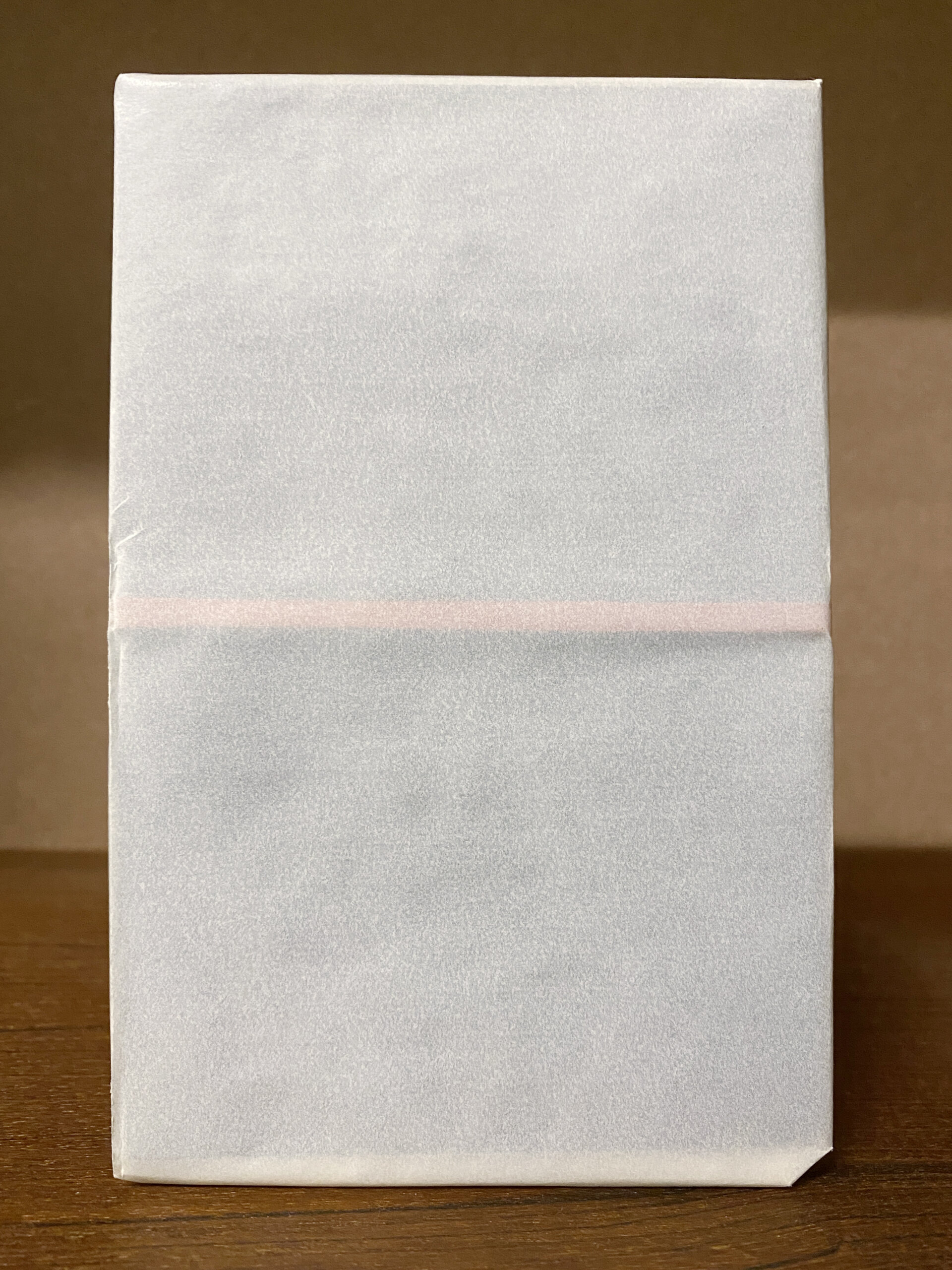
Outwardly, the book is elegant and bare, with a thin, black board cover and an embossed title at the bottom. Inside, a detached sheet of hemp paper, which was also used in Privacy (2003), carries a short text explaining Singh’s process. There is no other text or caption in the book and it almost seems as if this small sheet has been intentionally fashioned to disappear or fall out from the book.
Cavalchini’s confidence in Chairs as an ‘artist’s book’ (as opposed to a catalogue) enlivened Singh’s imagination. In her mind, this distinction allowed her, the artist, some jurisdiction over the distribution plan for the book, prompting her to devise an alternative proposal for its circulation. Cavalchini agreed and this set into motion what would become a major driving force in Singh’s work: taking charge of dissemination.
Chairs was printed in an initial run of 1,000 copies, with 500 copies for the Gardner and 500 for Singh. From her copies, Singh chose 50 friends to become her ‘distributors’.
First, she allocated an edition of 10 copies to each friend, marking individual books with the initials and edition number of each distributor. She then turned every copy into a gift, telling her collaborators that they were free to distribute their edition as they pleased. Nobody was required to keep a record of where the books went; Singh’s only condition was that they not sell the books.
In the absence of a conventional distribution channel, each collaborator was forced to be considered and deliberate with how they gifted their copies. As a result, a variety of distributing systems and logic emerged. One collaborator, for example, gave their edition to the first 10 people they met on a given day, while another decided to gift it to those who complimented it more than once.
Since circulation was no longer contingent on an exchange of money, the chain of distribution was imbued with an entirely different intention and value. The book took on a special significance for each person who was gifted a copy and the collaborator, too, became mindful of their position in the exchange.
Shortly after Chairs was made, Singh had the opportunity to meet the renowned conceptual artist Sol Lewitt. As a gift, she took a copy of Chairs from her own edition of 10. He laughed when he saw it. “Keep it, Dayanita,” he said, “I already have 3.”
At that moment Singh knew that the gifting distribution channel had truly worked and that she had found her own unique way of dissemination, free of the market and of institutions. In taking ownership of the distribution of Chairs, Singh understood that she could carve her own path and begin to build value for her books outside of the formal structures of art and publishing.
Singh’s act of gifting entire ‘editions’ of Chairs served as a provocation, reorienting the ways in which artist books could be valued, acquired and read. Indeed, how do you value a book that seems to have no name, no author and is not sold? Above all, how do you place value on a gift?