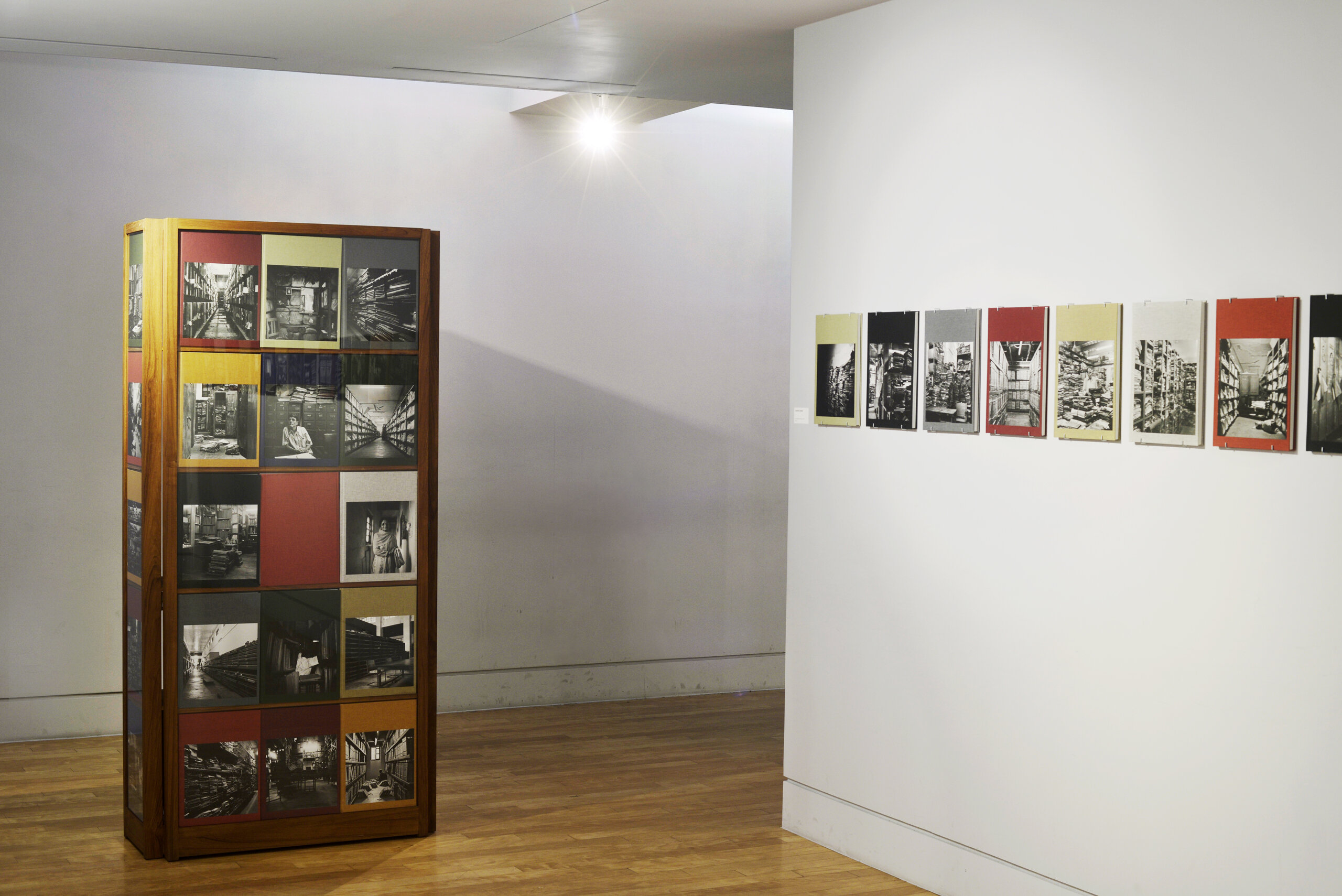
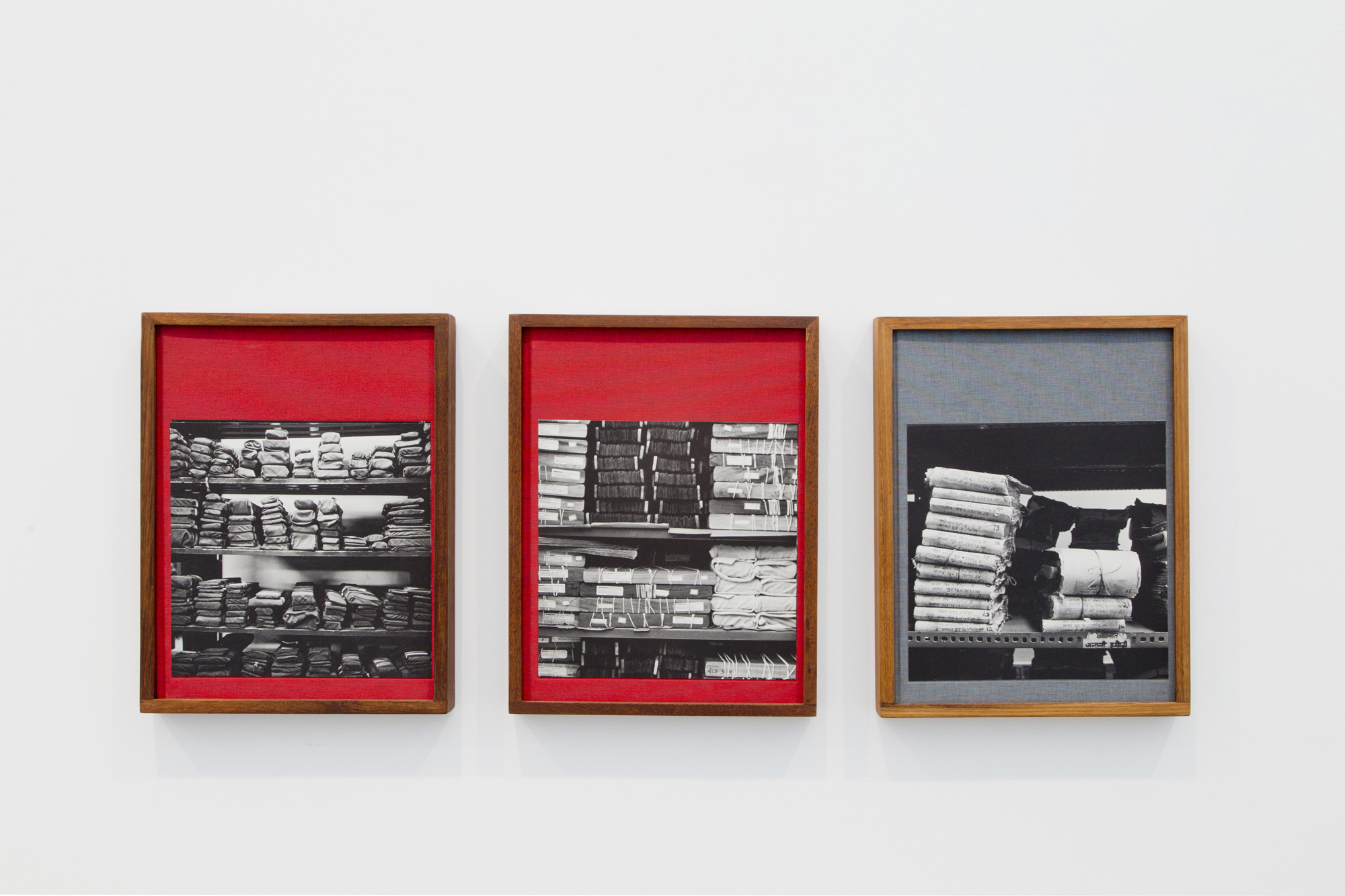
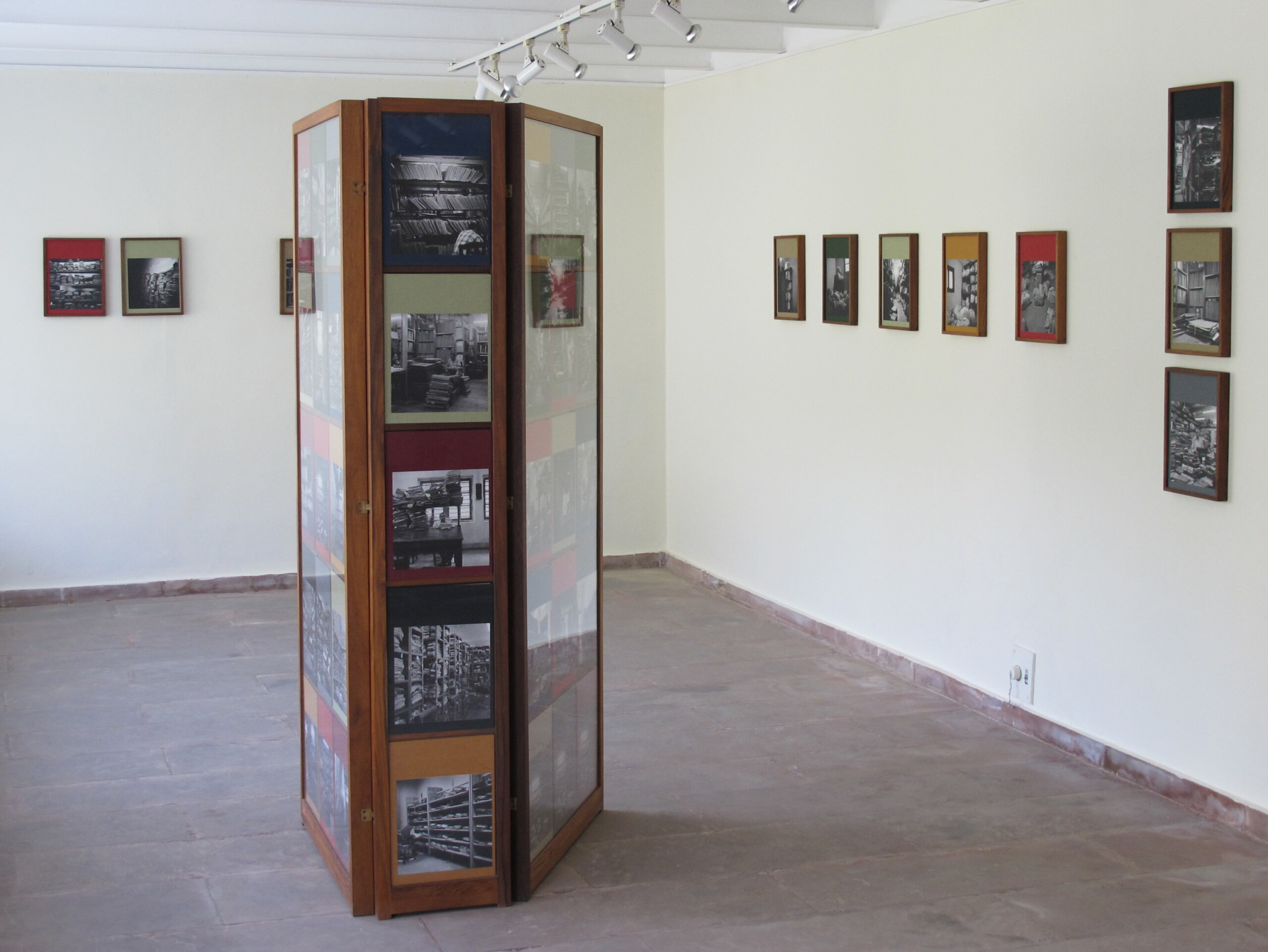
Towers of paper, stacks of files. Cloth-wrapped bundles heaped in a corner of a room. Rolls of parchment tied into tubes, each marked with a number and, perhaps, a date. An empty corridor between laden shelves lit with the incandescent glow of an oblong tube light. And every so often, a gentle, unassuming face.
Dayanita Singh’s ode to both paper and the archive, File Room is a chronicle of an important era in the history of information and knowledge-keeping in India and the world. It documents the many ways in which human beings have organized, confronted, dealt with and preserved both data and memory on paper.
The archives in File Room are functioning archives and are animated by the presence of the people who work within them. They have a distinct spatiality and architecture and are run entirely by people and hand. Although outwardly gargantuan and chaotic, upon closer inspection they are intricately ordered with their own logic.
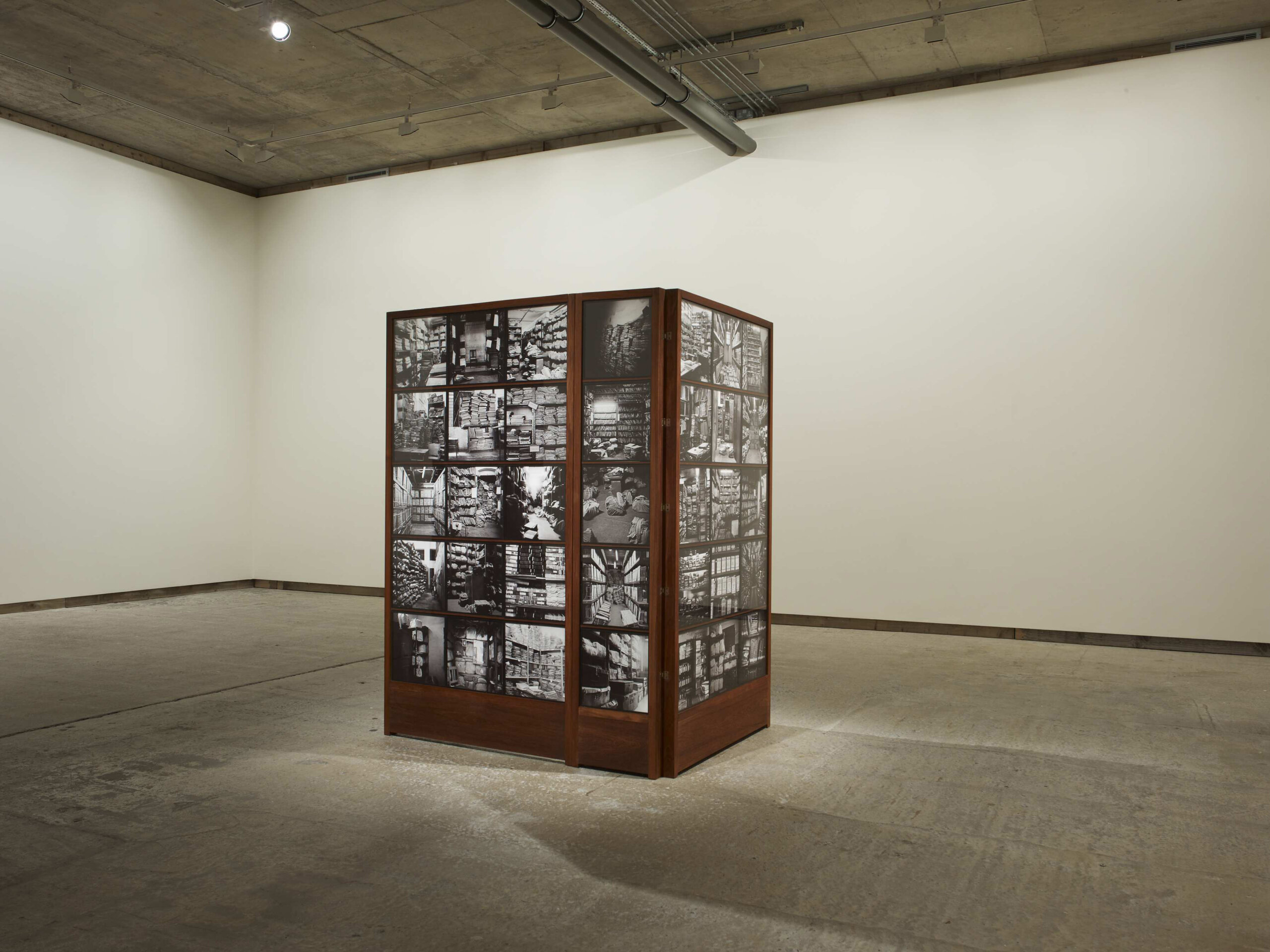
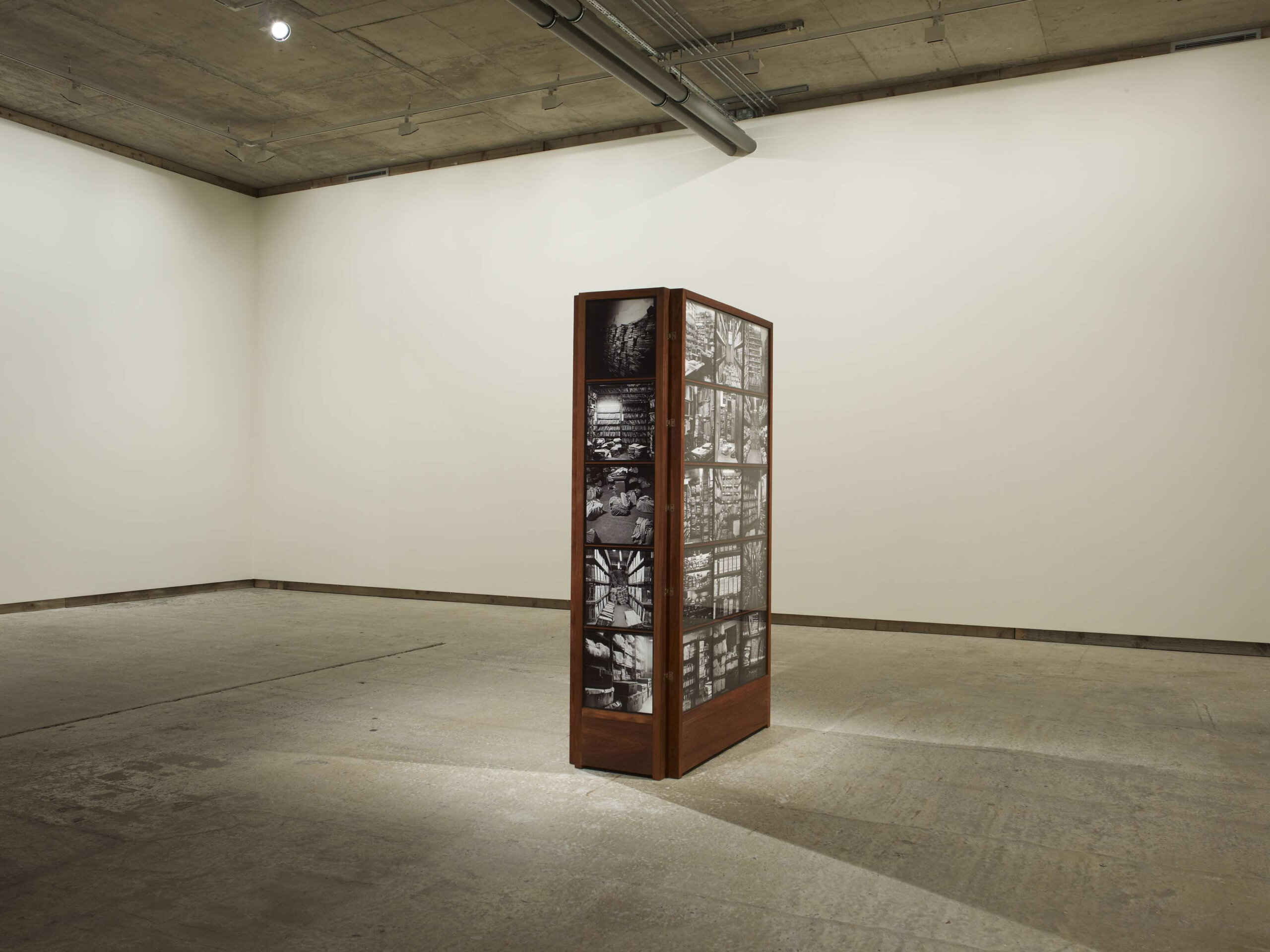
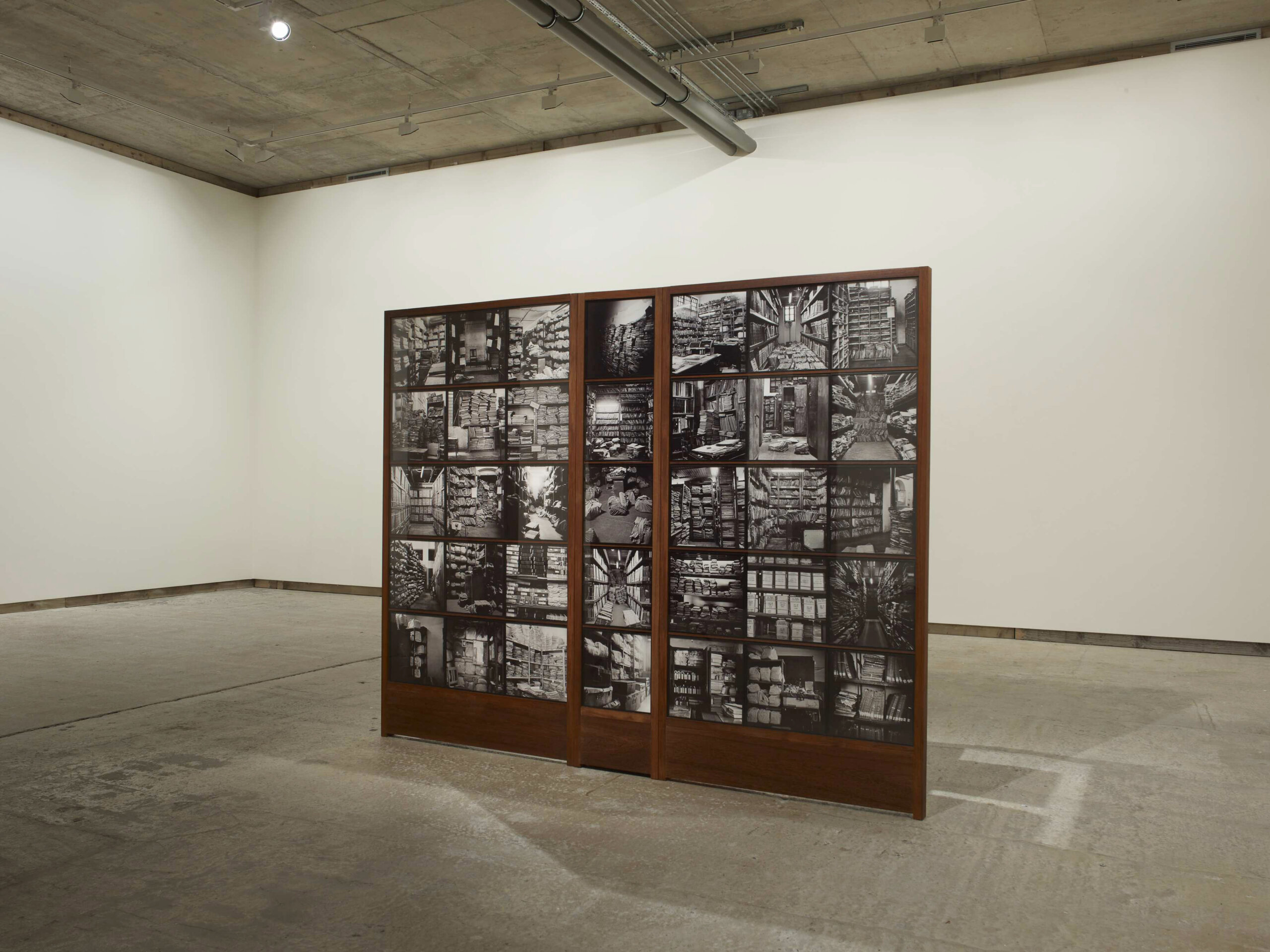
In fact, it was this logic and architecture that inspired Singh to create the form of the ‘museum’ in the first place. She had the idea when she saw how the archivists would make their own structures to organize their files, thereby creating their own classification systems.
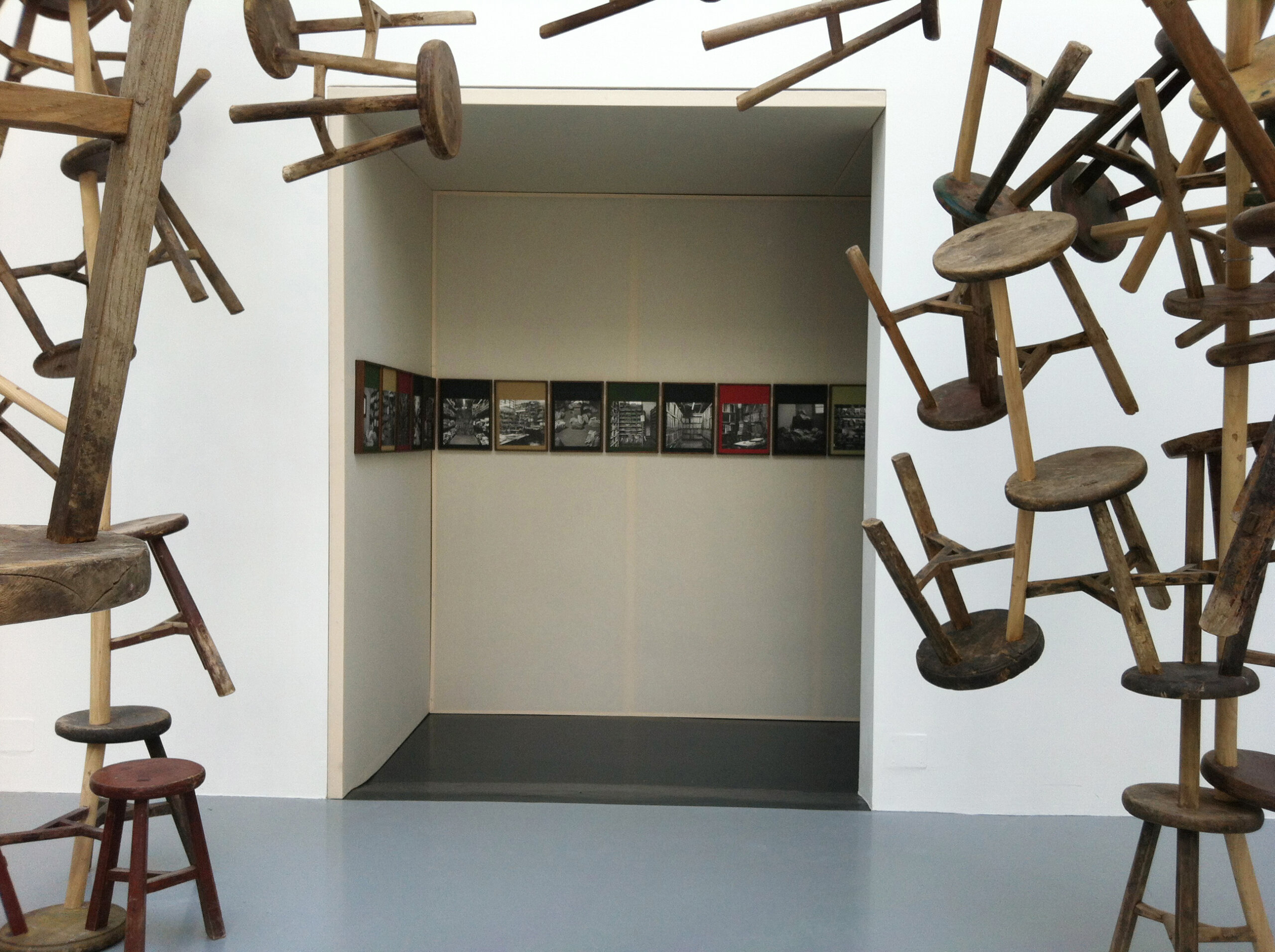
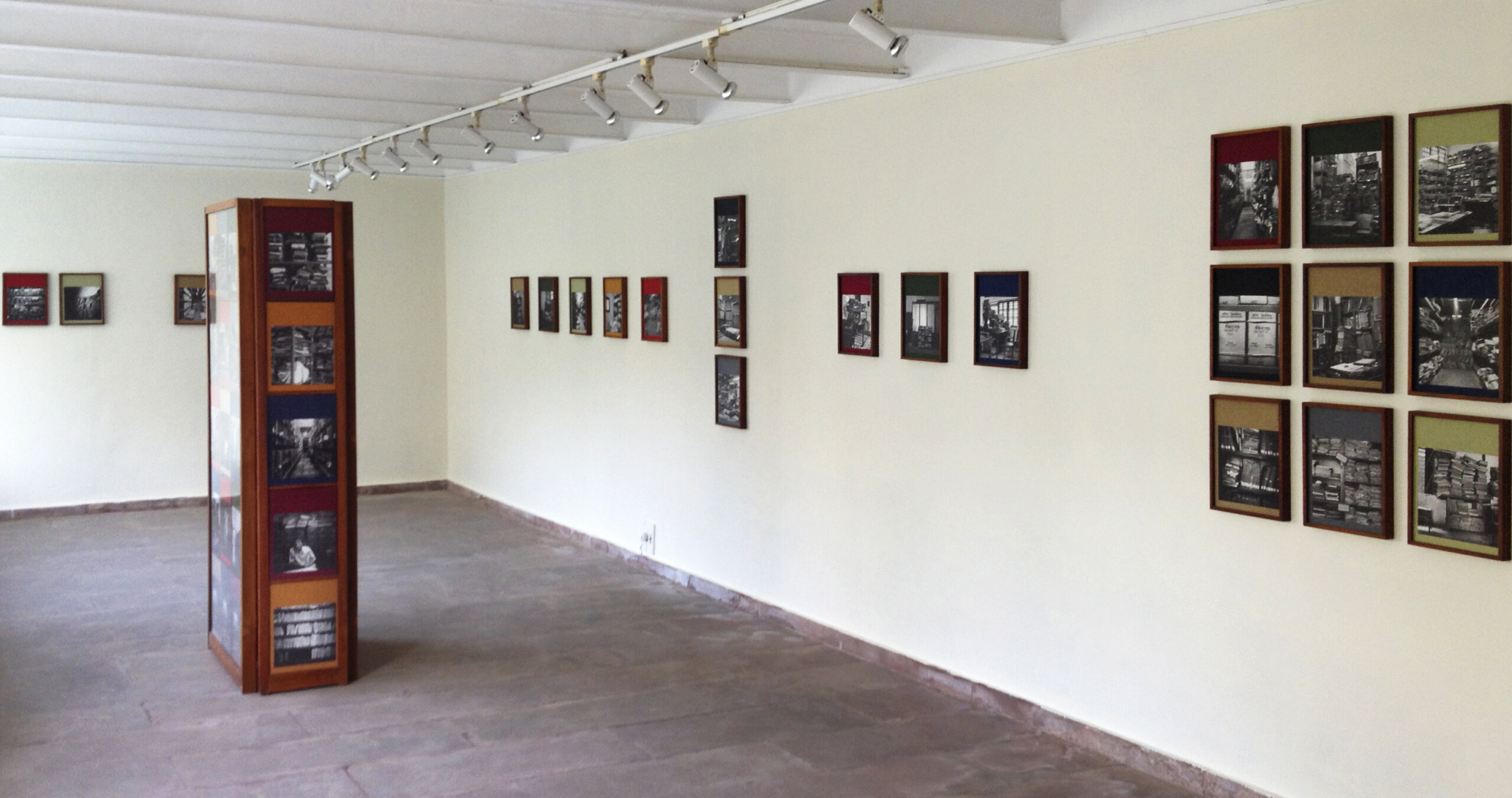
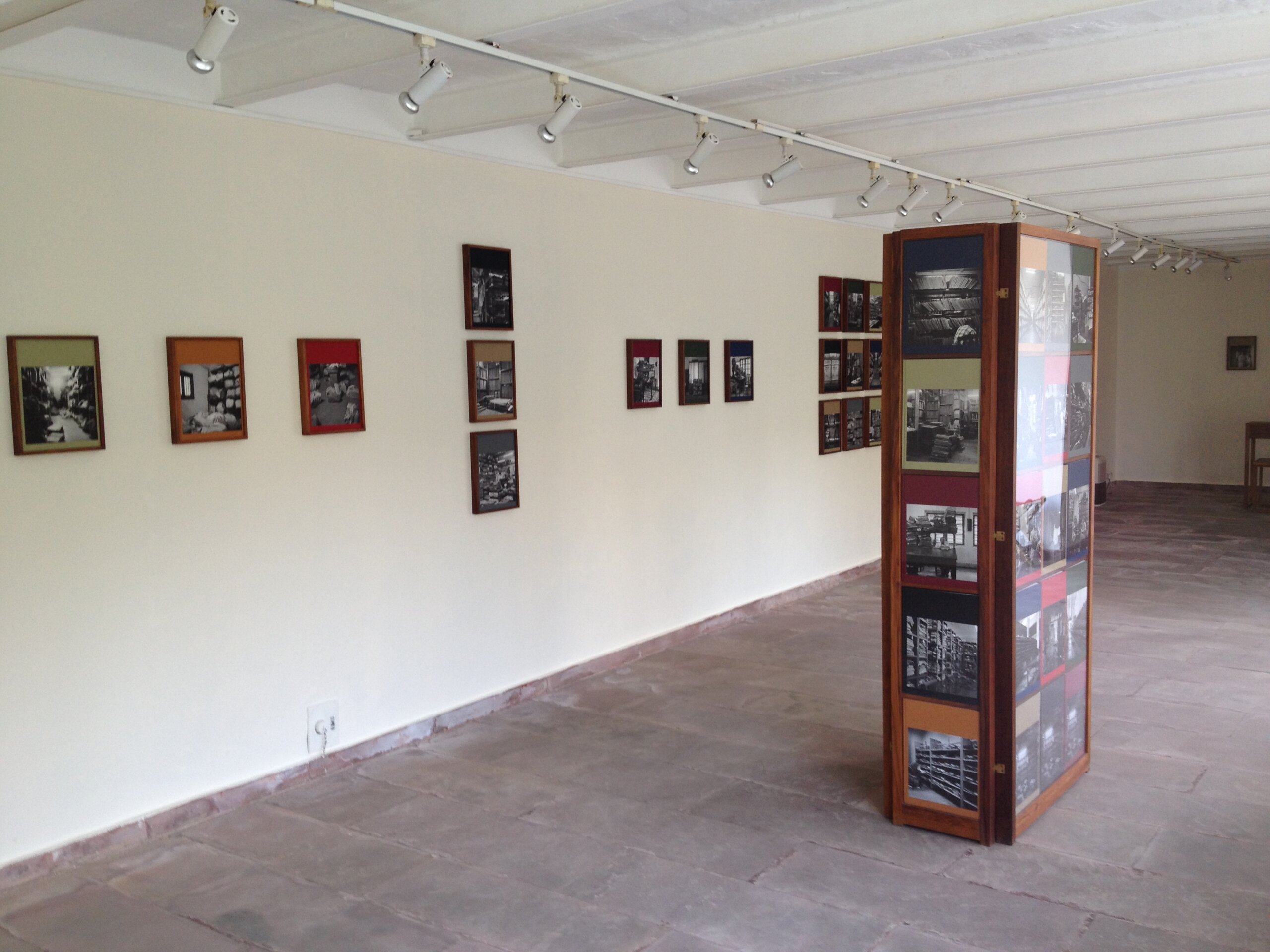
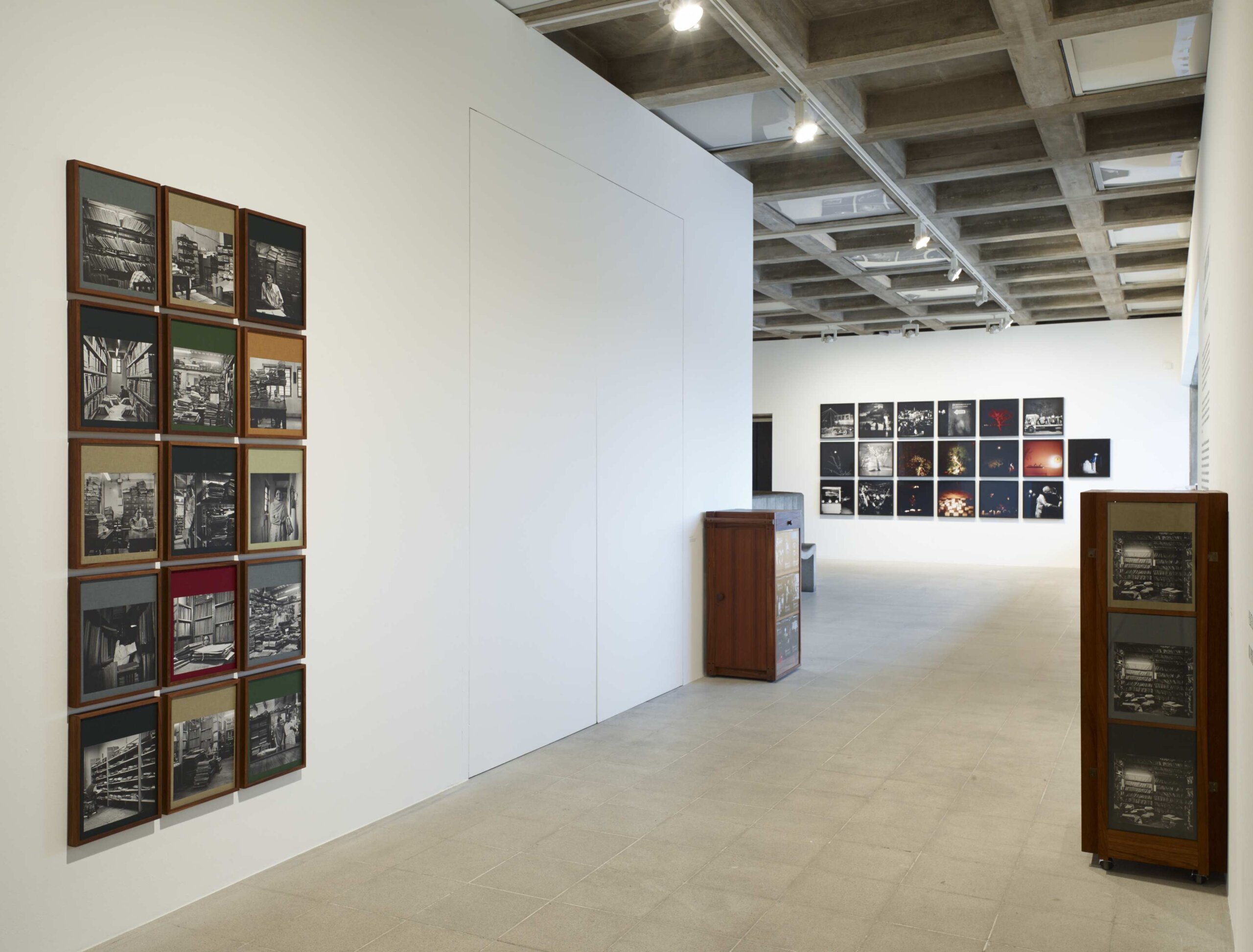
The File Room series was first shown in a grid of 36 digital prints at the 54th Venice Biennale in 2011. The series then found a new form in the ‘File Museum’, which was shown at the Frith Street Gallery in 2012. It was exhibited as a single museum, since Singh had not made any other museums at the time.
Book (2013)
It was after ‘File Museum’ that File Room emerged. At 24 x 32 centimetres, it retains the proportions of a standard Indian bureaucratic file and is the tallest of Singh’s books.
File Room’s images have delicate nuance and detail, a result of Steidl’s quadratone printing process. The printing, coupled with the uncoated Munken paper that both Steidl and Singh chose, produced rich images that sat not on the surface of the paper but were instead soaked into it.
In keeping with the organic texture of the Munken paper, they decided to make a cloth cover for the book. Singh insisted that there be 10 different fabric colours. On the other hand, Steidl felt that the book ought to have a standard defining look. “I thought of it as another way to create many personalities for the book,” Singh says. She wanted to transform the book into a desirable object, one that gave people the option of choosing their own colour.
It is not uncommon for ideas from one of Singh’s books to bleed into her subsequent works. In continuing with the 20 different dust jackets she made for House Love (2011) and then further explored, Singh wondered if she could find a way to make different image covers for File Room in addition to the varying cloth covers.
Singh spoke to book designer Rukminee Guha Thakurta about how she wanted the image on the cover to be the same size as the images within (so that she could cut and paste photographs from inside onto the cover). In doing this, Singh reasoned with Gerhard Steidl that she could create a set of 70 different File Rooms, each with a cover image also contained in the book. Moreover, the different cloth colours also added an additional variable in the possibility of covers.
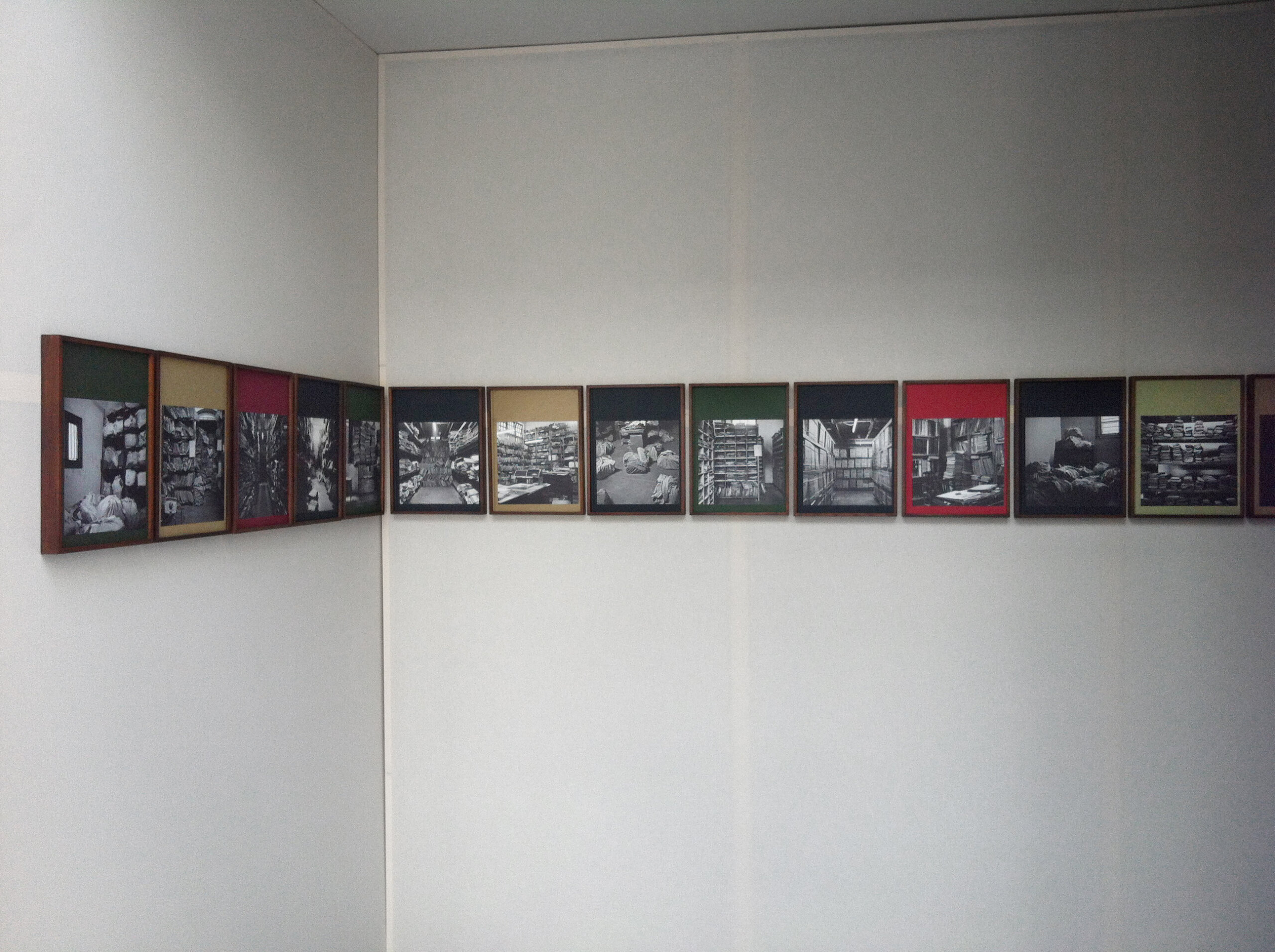
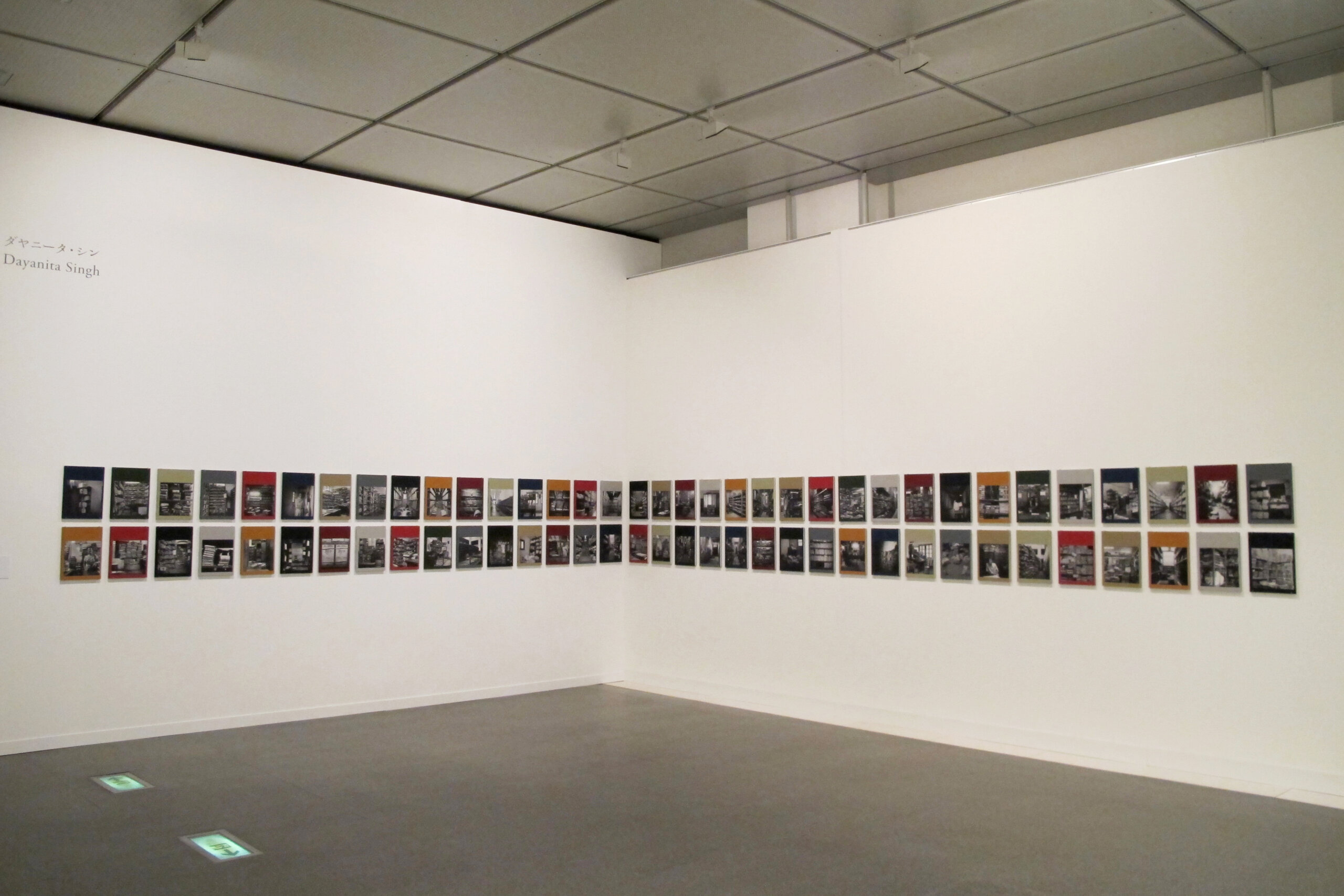
Effectively, this design gave Singh the possibility to create a File Room book exhibition in which she could show the images by putting the 70 books with different covers on a wall.
Steidl and Singh structured this book in chapters with different symphonic movements, interspersing the images and sections with three texts by writer and critic Aveek Sen. Among these is a short, first-person retelling of Singh’s mother Nony Singh’s deep and complicated history with files, litigation and the Indian bureaucratic process following her husband’s death in the early 80s.
“As soon as my father’s body left our beautiful living room, the whole place was covered in files,” Singh says. “My mother practically lived in that room. I would often bring tea for her there because she would regularly fall asleep among the files.”
When viewed in the light of Singh’s obsession with photographing archives, File Room takes on an intimate dimension, so much so that the entire book can be read as a kind of familial biography. Perhaps this is why she says it is her most personal work.
In Exhibition (2013)
File Room was first shown (on the wall as a set of 70 books) at the Kyoto Museum of Modern Art in the fall of 2013, in a group exhibition titled Reading Cinema, Finding Words: Art after Marcel Broodthaers.
Singh asked the museum to acquire 72 books from Steidl and then told them to cut the images out of two books. She then instructed them to paste the freshly cut images onto the covers of the remaining 70 books, so that there was no repetition of cover. The books were then clipped onto the wall.
This marked the beginning of a new direction of explorations in Singh’s works, where she was able to show entire series of images by putting her books—and not prints—on the wall as exhibitions.
Book-object (2013)
“My second eureka moment came in File Room,” Singh says, “when I realized that the different covers would allow the books to actually replace prints on the wall.”
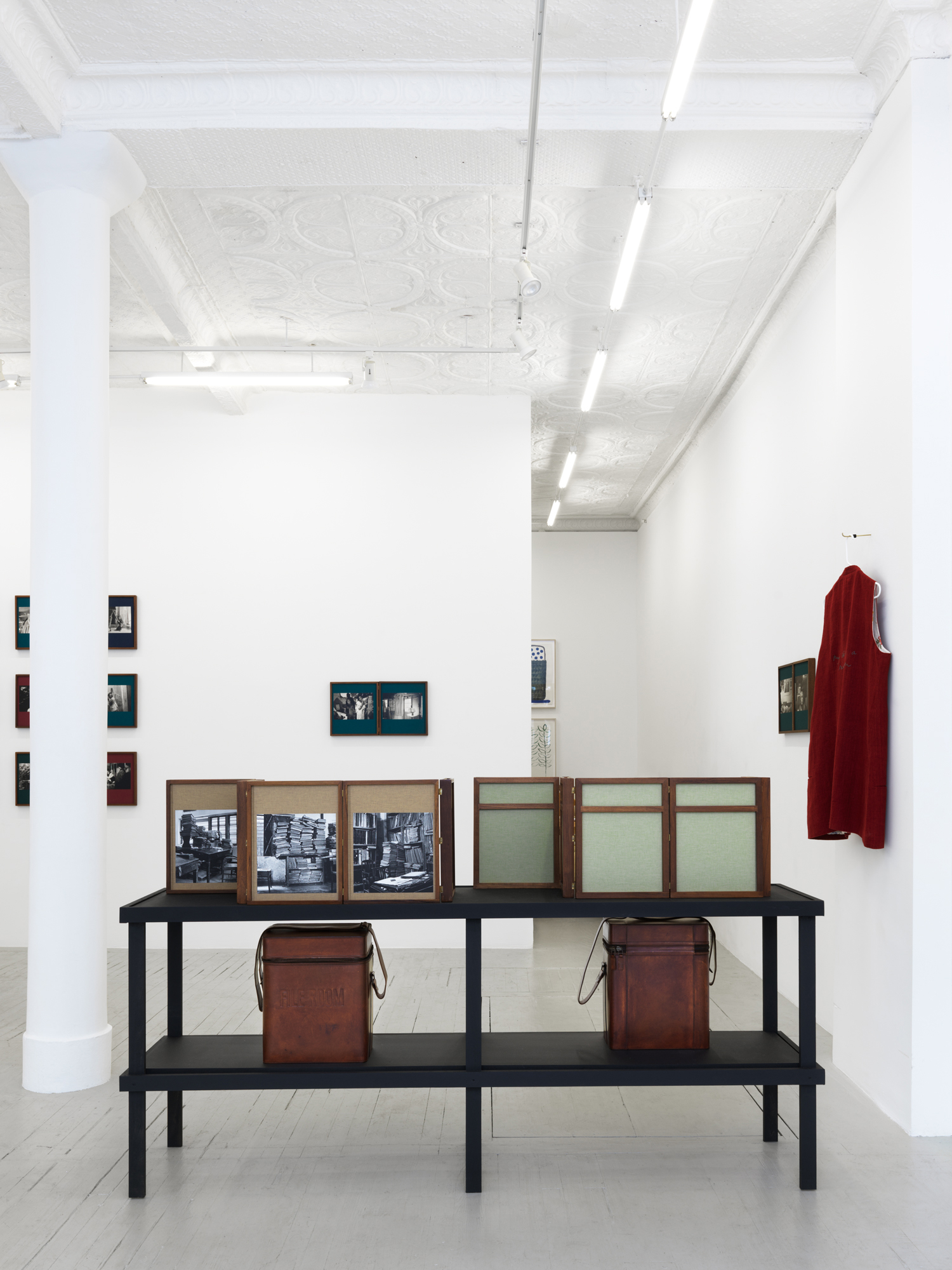
In addition to showing the books simply as is, Singh created the book-object as another way to transform the book on the wall. In lieu of L-clips, Singh designed a wooden structure into which the books could be easily slipped. This transformed File Room into a work that could be installed seamlessly on the wall. It is crucial here that the ‘bookness’ of the book was retained. At any time, the book could be slipped out of the structure and read as an ordinary book off the shelf.
Singh first showed File Room in its book-object form at the Deutscher Pavillon (German Pavilion) during the 55th Venice Biennale in 2013 and subsequently at an exhibition at the Kriti Gallery in Varanasi in 2014.
In addition to showing the book-object in Venice, she performed File Room by selling the book from her Book Cart outside her installation. This became an important statement for her: you could, for €30, buy the book (without its wooden structure) from Singh, who stamped it on the spot, and then go inside to view the same book that you had just purchased.
Singh also ran a parallel and secret event at the Giorgio Mastinu Gallery the next day, where she sold the book-objects in an edition of 70 for €200 each. In a ritual of her own devising, she sat in conversation across a table with the buyer and personalized each book-object using stamps in different combinations. She then bundled and tied the book-object in a specially designed cloth, embroidered with the words ‘File Room’, before handing it to the collector. The collector was unaware that each book was made unique with the stamps and that Singh chose what to stamp based on her conversation with the collector.
“The ritual of the process was very important to me,” Singh says, “the way in which we sat across the table, the conversation we had, the stamps I picked.” It was all in service of creating a mahaul around the purchase of the book-object, a sense of intimacy that would perpetually carry meaning for the collector and transfer itself to the book-object they acquired.
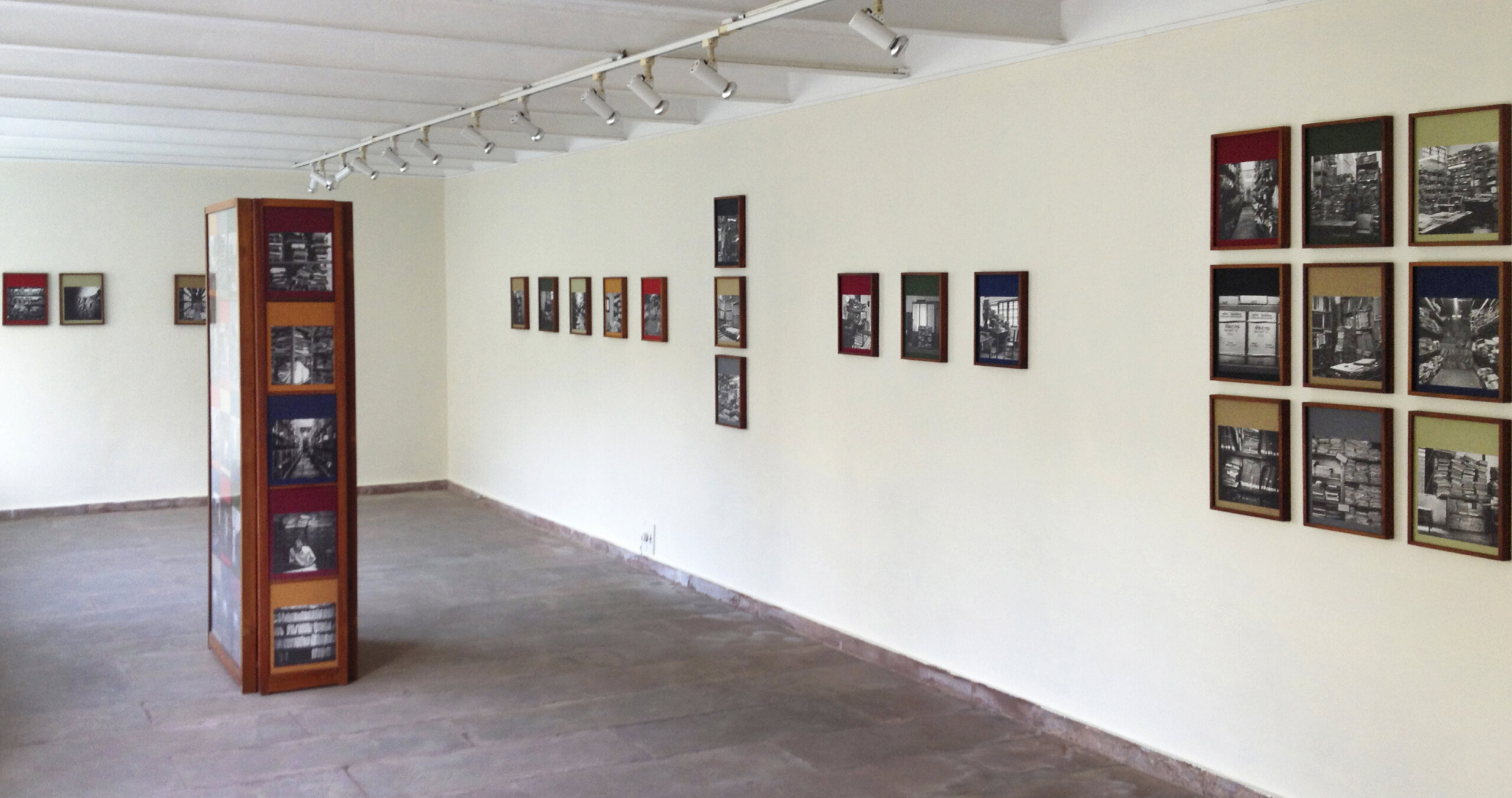
Although she was only able to show a small selection of book-objects in Venice, she showed the entire set of 70 at the Kriti Gallery. Here, she installed the exhibition in exactly the same plan as her Go Away Closer print exhibition—which was held in the same gallery in 2007—to further make the point of her books replacing her prints on the wall. Each book was designed with the intention of becoming an entire exhibition in itself. It is the intentional use of different covers—which was the very basis of the books’ conceptualization and design—that truly allows the transformation of book to book-object.
“Performing the book is about giving another life to the book,” Singh says. “That is why it is essential to activate it.”
Singh was always uncomfortable with how prints became fossilized behind glass on the wall since, for her, images are living things that shift, grow and change meaning with each move. It is in performing the book-object and book museum that Singh found a new way to infuse fresh life into her works and activate her exhibitions.
Book-case (2014)
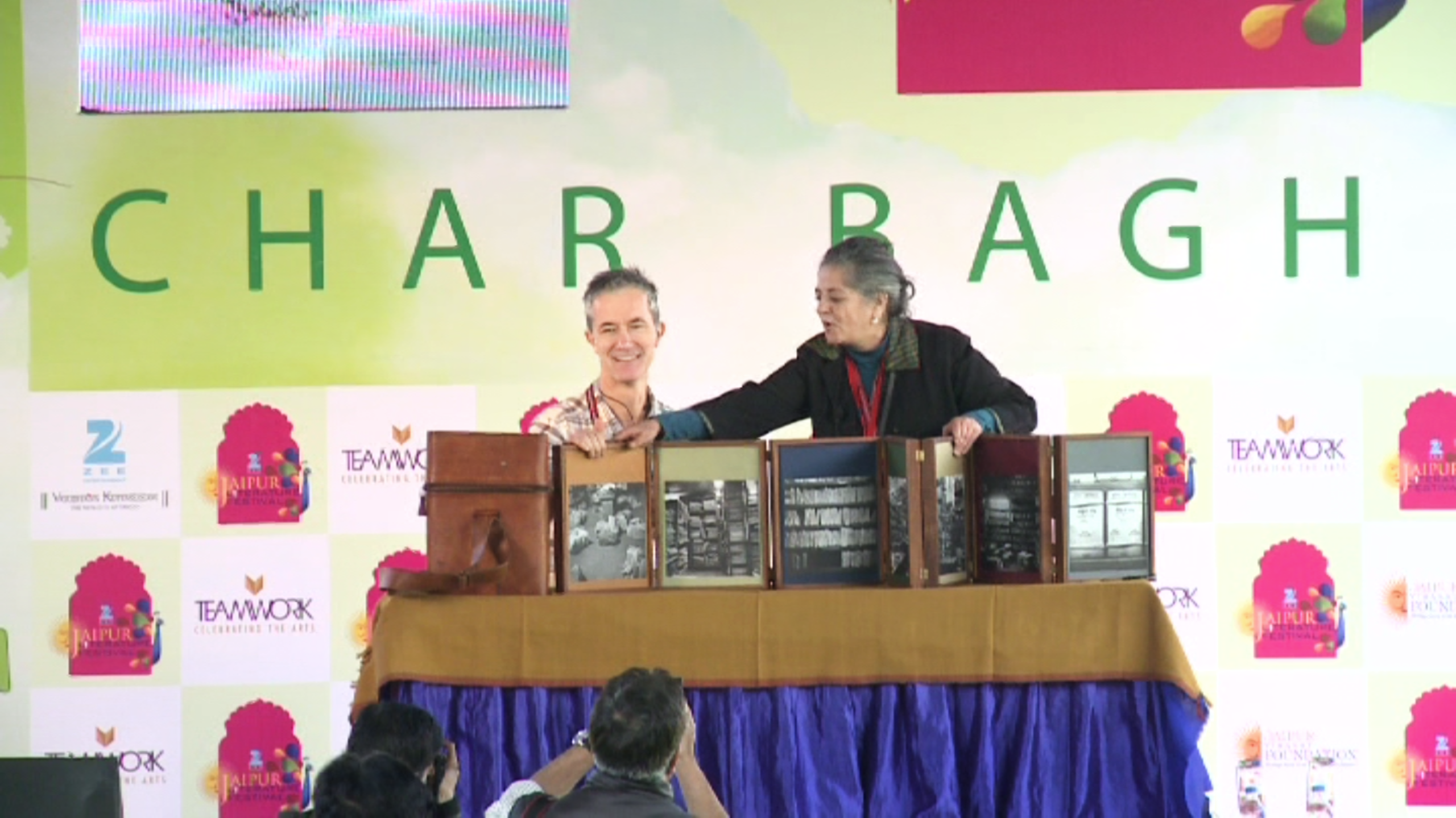
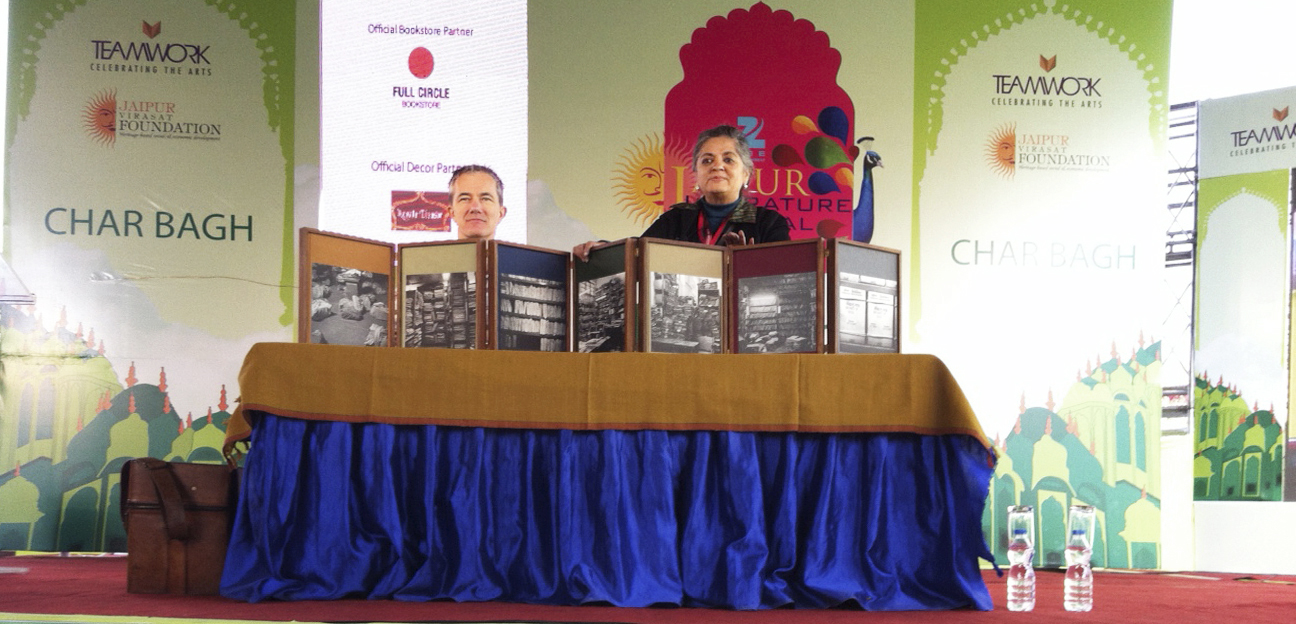
In a further experiment with form, Singh created her first book-case for a book launch with the author Geoff Dyer at the Jaipur Literature Festival in 2014.
She had originally wanted to launch File Room from her Book Cart at the festival, but the organizers felt it would be a security hazard. Taking each challenge as an opportunity for new innovation, Singh set about looking for a solution. She hinged together seven File Room book-objects to create an accordion-fold structure and designed a leather bag to carry it in.
When Dyer unzipped the book-case in front of the festival audience and Singh opened the seven-book accordion, there was a collective gasp of awe in the audience. Singh realized that she had found a new form, one reminiscent of a travelling salesman.
Book Diptych (2016)
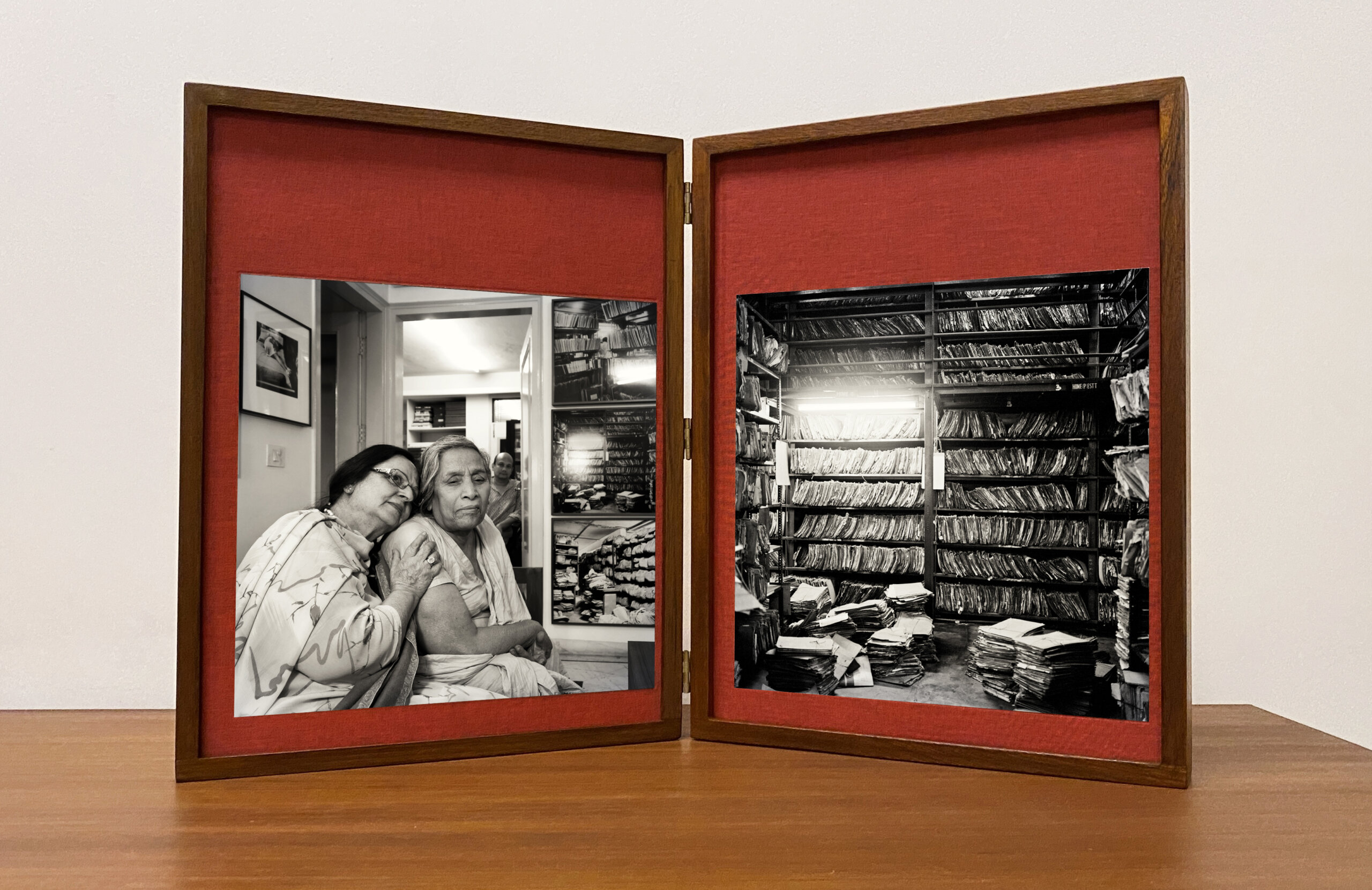
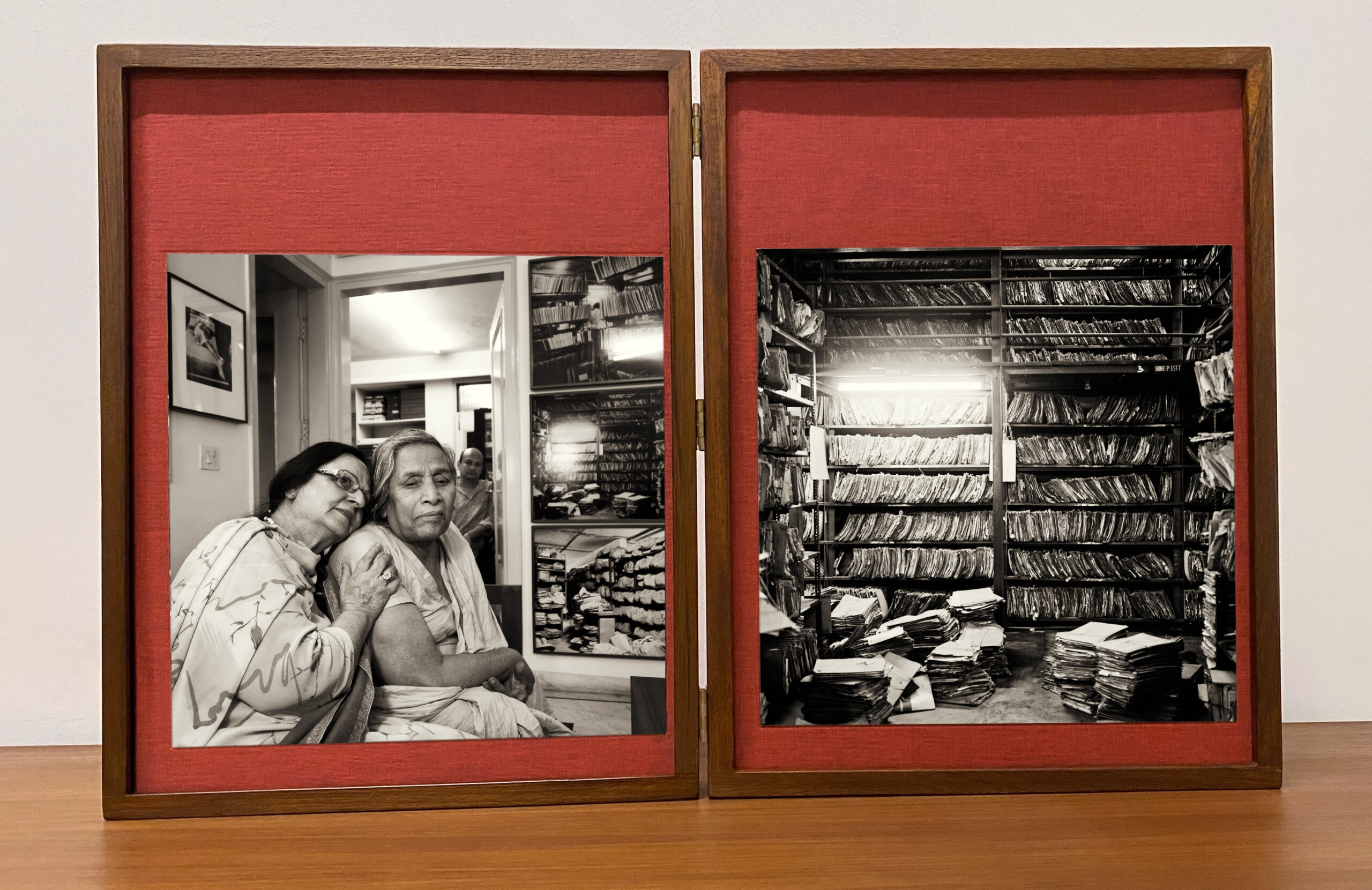
In 2015, the Tate Modern, London invited Singh to create a special work for their Tate Editions series. Singh created a diptych—titled Mona, Mother, Mohun and the File Room—by hinging two File Room book-objects together. In the left frame, she inserted a book with an image she made in the studio and in the right, she placed a book with File Room’s original cover.
Subsequently, Singh made Museum of Chance diptychs for My Offset World at Callicoon Fine Arts, New York (2018).
File Room Book Museum (2013)
The very last section of File Room is a text titled ‘File Museum’ and it contains two separate conversations that Singh had with the curator Hans Ulrich Obrist in 2011 and 2012.
In it, she says, “My dream would be to have a warehouse like this and within that there would be many museums of different sizes.” Singh had yet to realize the full scale and depth of Museum Bhavan at the time, but the archives of File Room had already inspired in her a whole new world of photographic form.
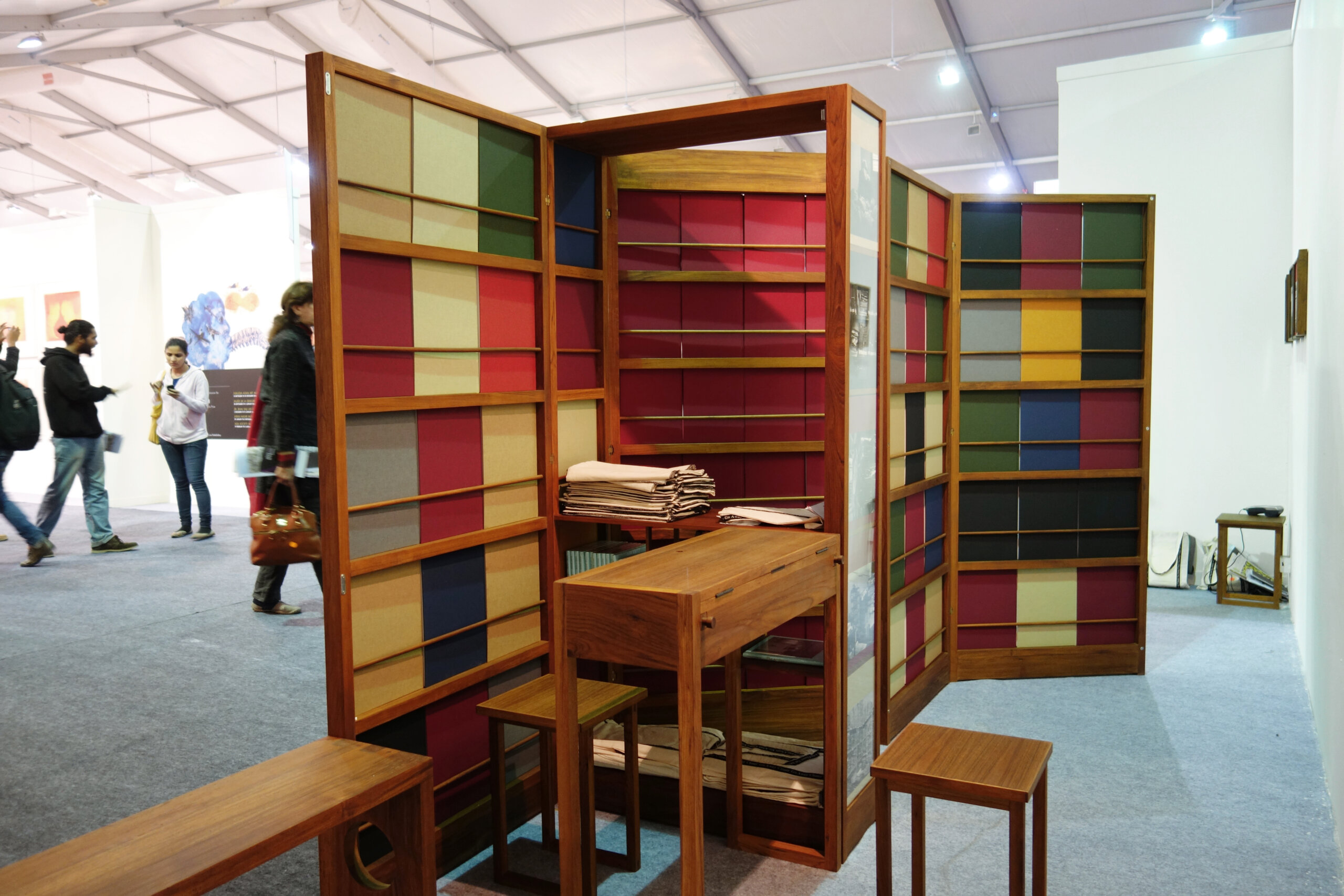
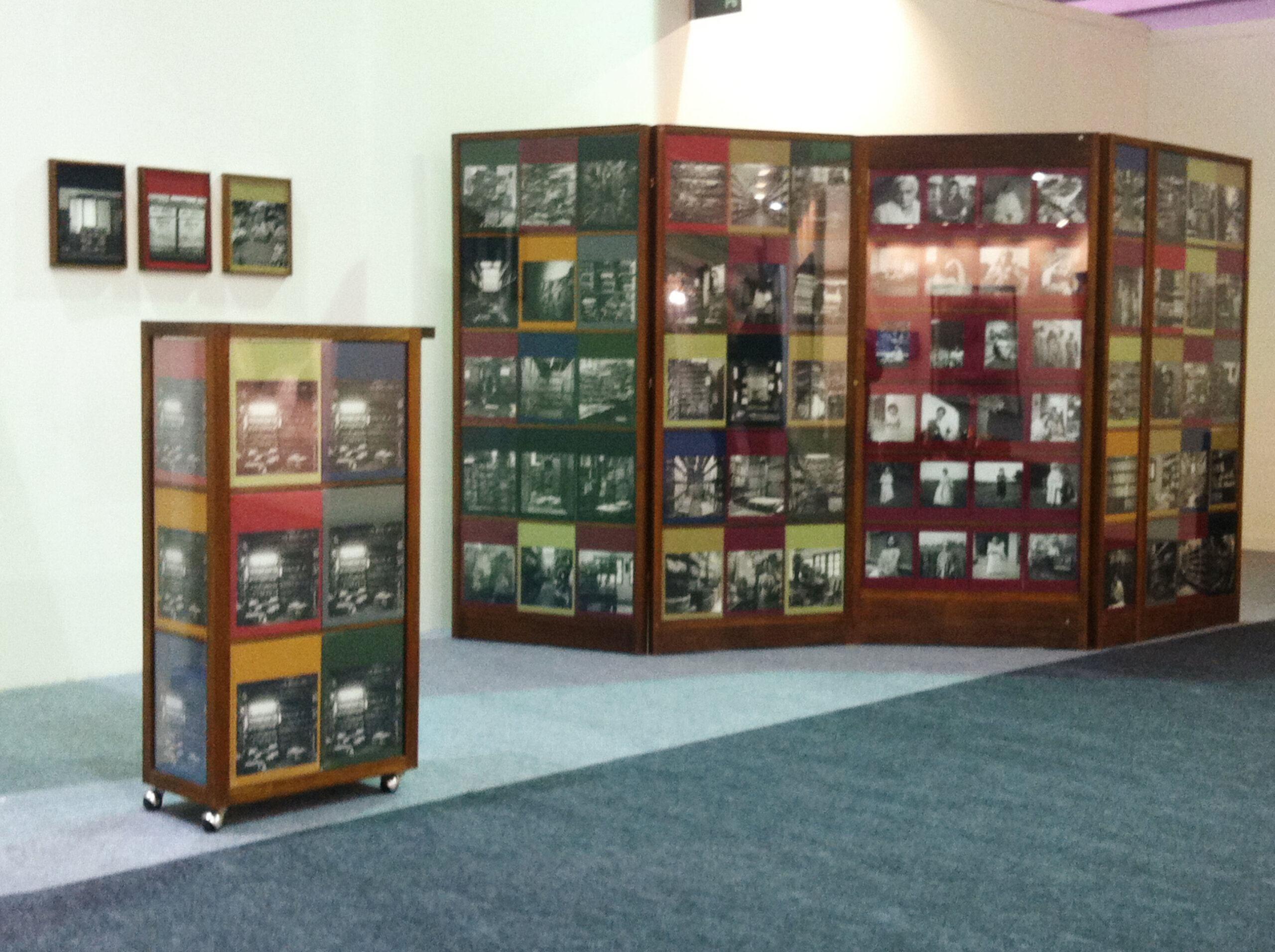
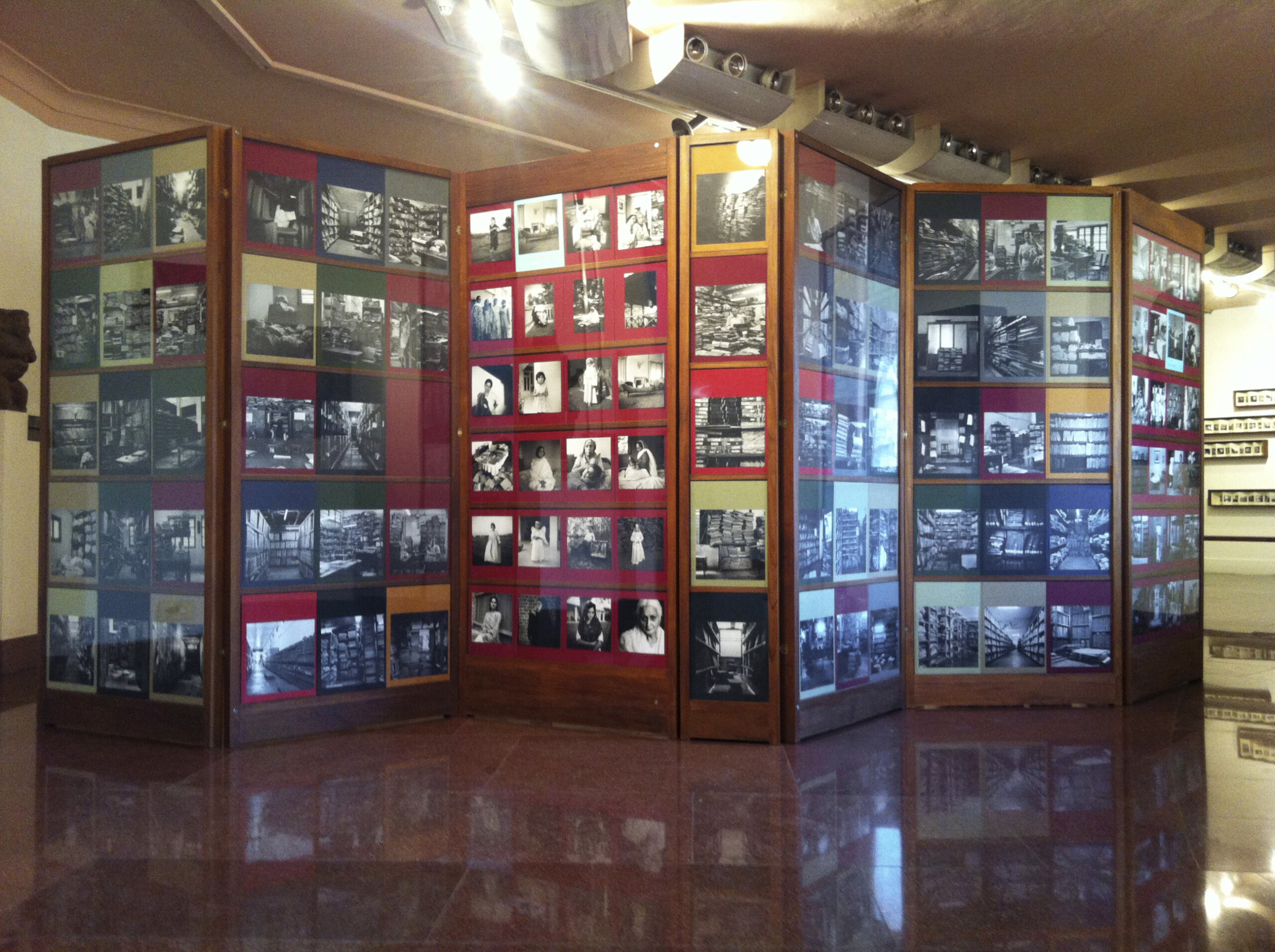
Perhaps fittingly, the set of 70 File Room books eventually made its way into one of Singh’s museum structures, where it became, for a time, the ‘File Room Book Museum’. Never formally part of the Museum Bhavan group of nine, it was shown in several places around the world and had its own distinct life.
Most memorably, it was shown at the National Museum, Delhi in 2014. For this exhibition, Singh inserted her mother’s book, The Archivist, into the museum, interspersing it with her File Room books.
“I was beside myself,” she says, “that I was able to show my books, in their own museum, within the National Museum of the country. It was the first time my books were shown in any museum.”
The book museum’s most potent showing, arguably, was at the India Art Fair in 2014, when Singh ‘performed’ the museum by opening and closing the structure at certain times each day. Here too she sold File Room from a cubicle she created by arranging the wings of the museum to encase both her and the collector. She created a very precise seating arrangement that cultivated a moment of quiet in the middle of the bustling art fair.