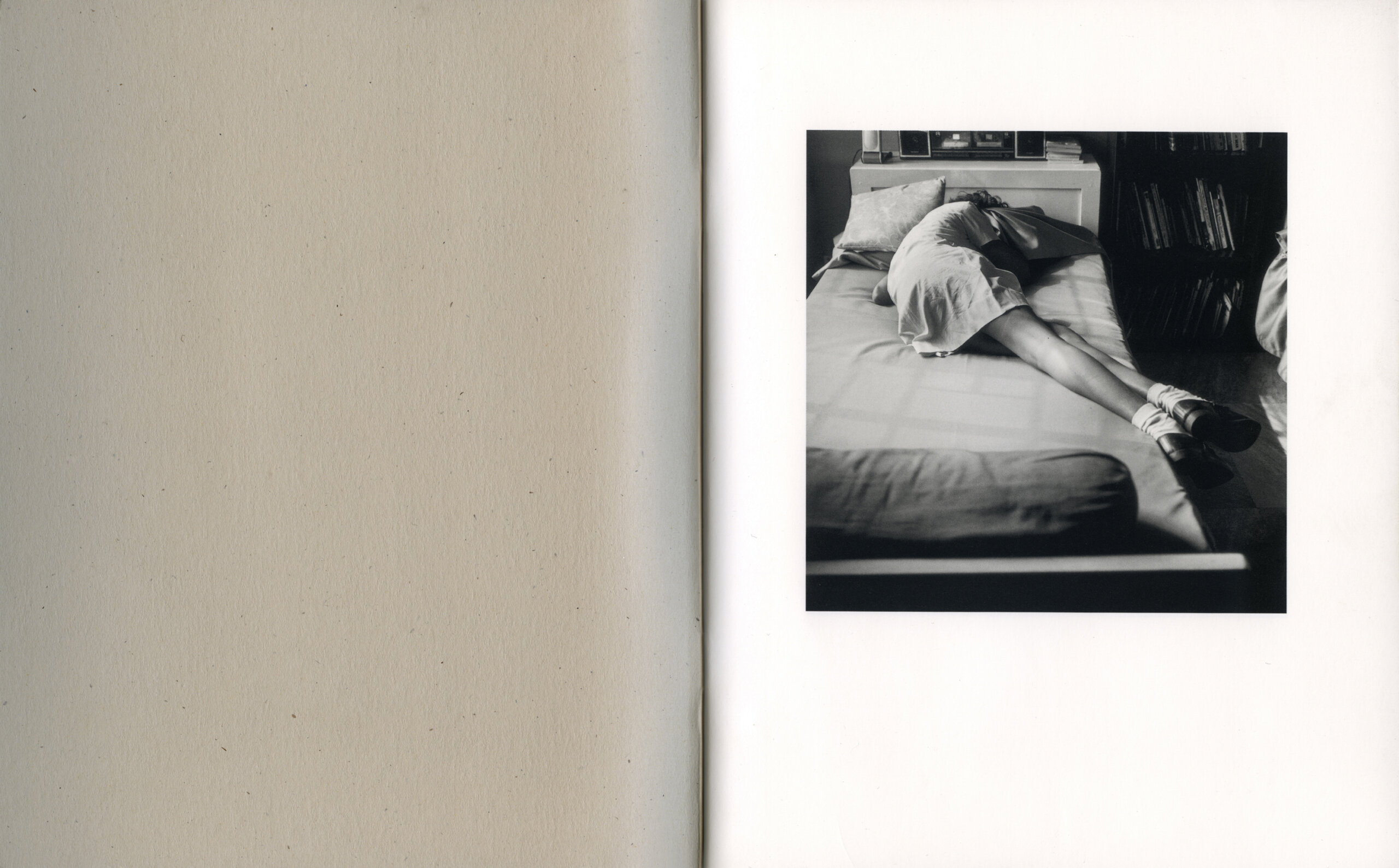
“Perhaps for a moment we can imagine that the girl in the photograph is Singh herself and that she is dreaming about a book; a book that contains all the photographs she has ever taken, and all the photographs she will ever take; a book that will never be finished and will never be fully revealed; a book that continually begets other books; a book without end. Perhaps she is dreaming of an impossible book.” – James Lingwood
The first image in Go Away Closer is a photograph of a girl. Fully dressed, she lies diagonally across a bed with her face buried in the rumpled sheets. It’s not immediately clear if she is hiding, sleeping or even crying. It’s a resonant image, one that Singh has a deep connection to. In the moment that she made the image, she recognized the emotion she was both seeing and feeling. It was one that she had known before but could not quite name: “Go Away Closer”.
Alluding to the constant pushes and pulls of close relationships, Go Away Closer strikes at the heart of an inherent contradiction not only in love but also in photography: that an image is made to hold onto what has just passed. Complex in its ability to carry several opposites at once, it is an experience that has no verbal vocabulary, akin, perhaps, only to the experience of music.
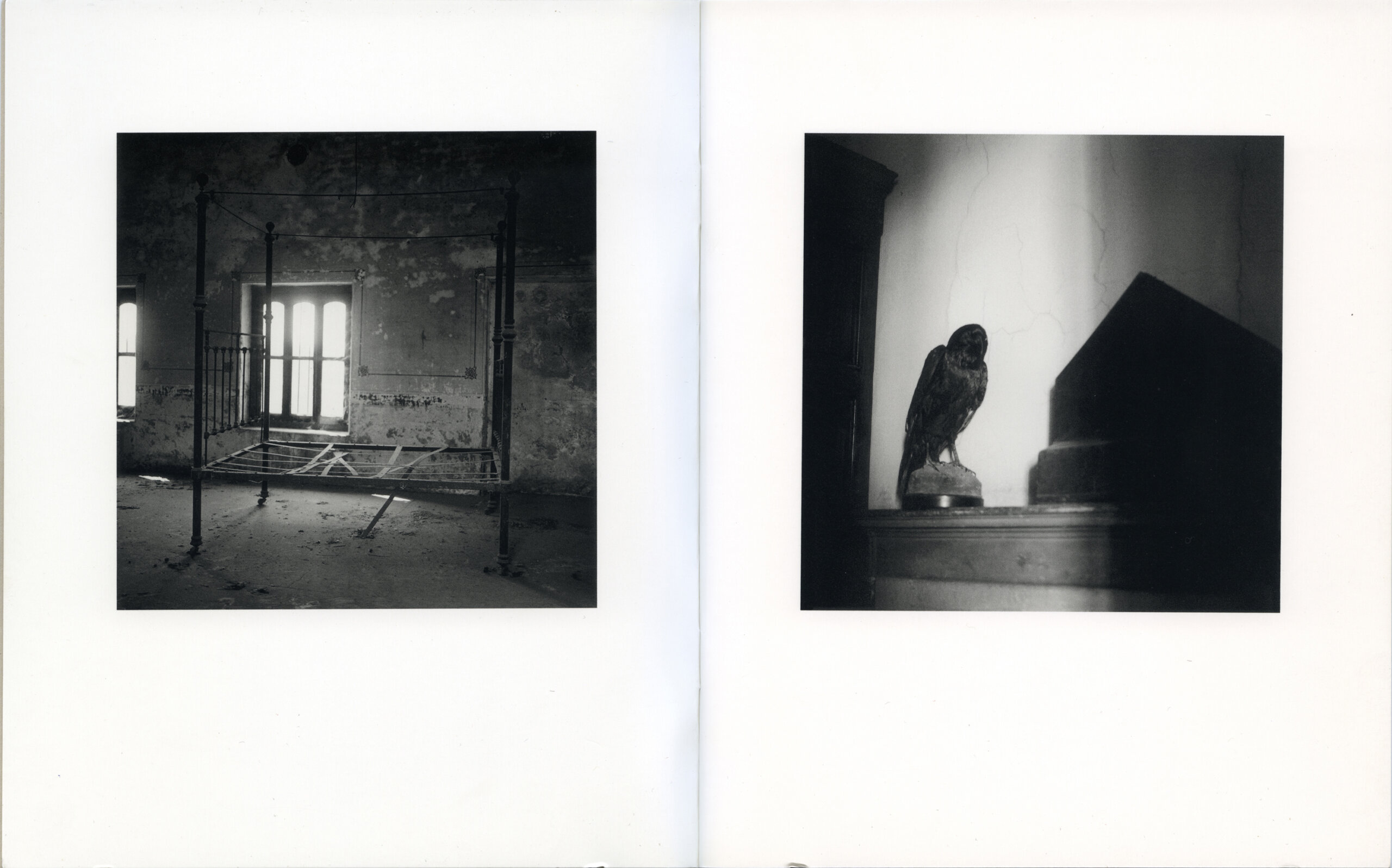
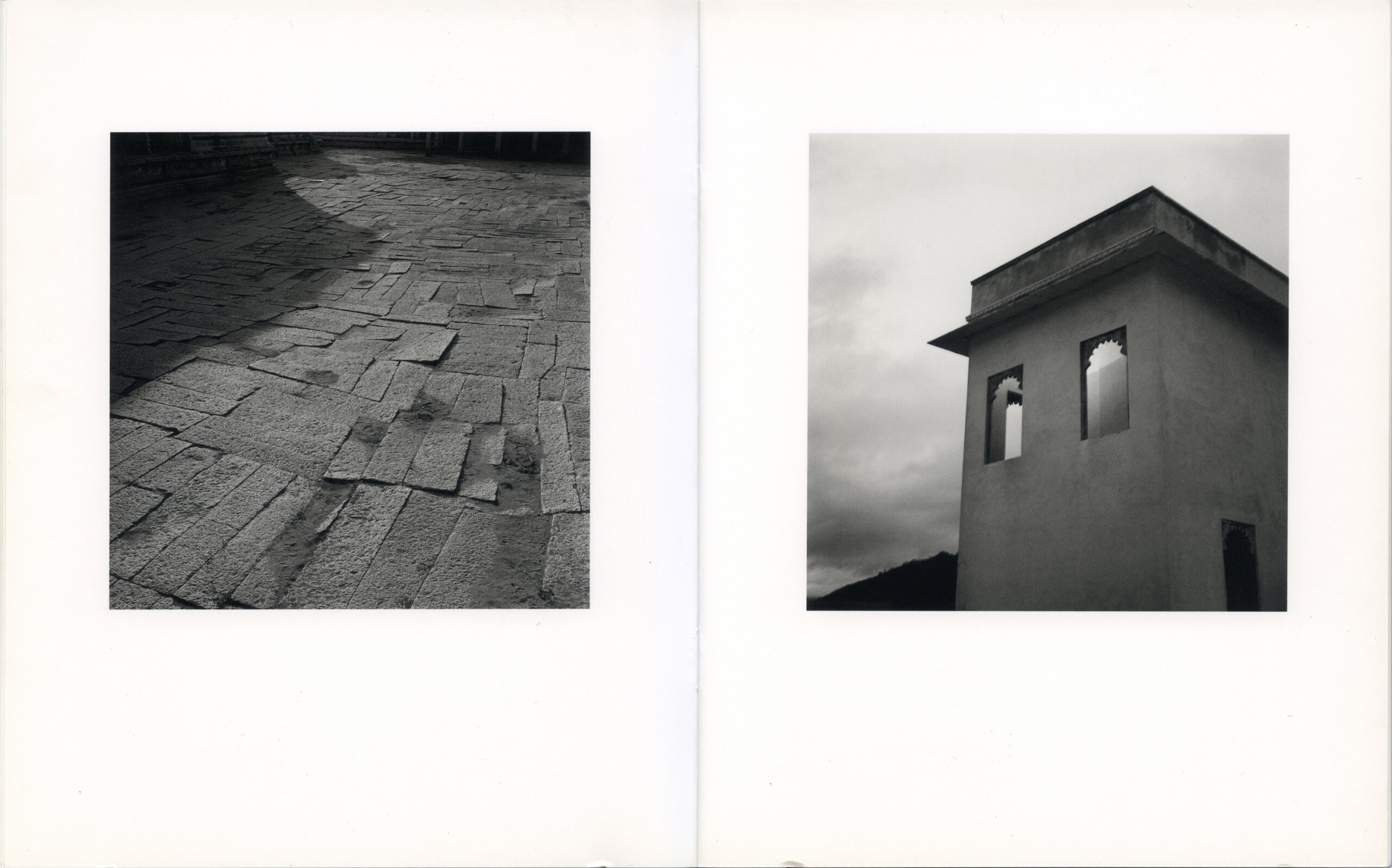
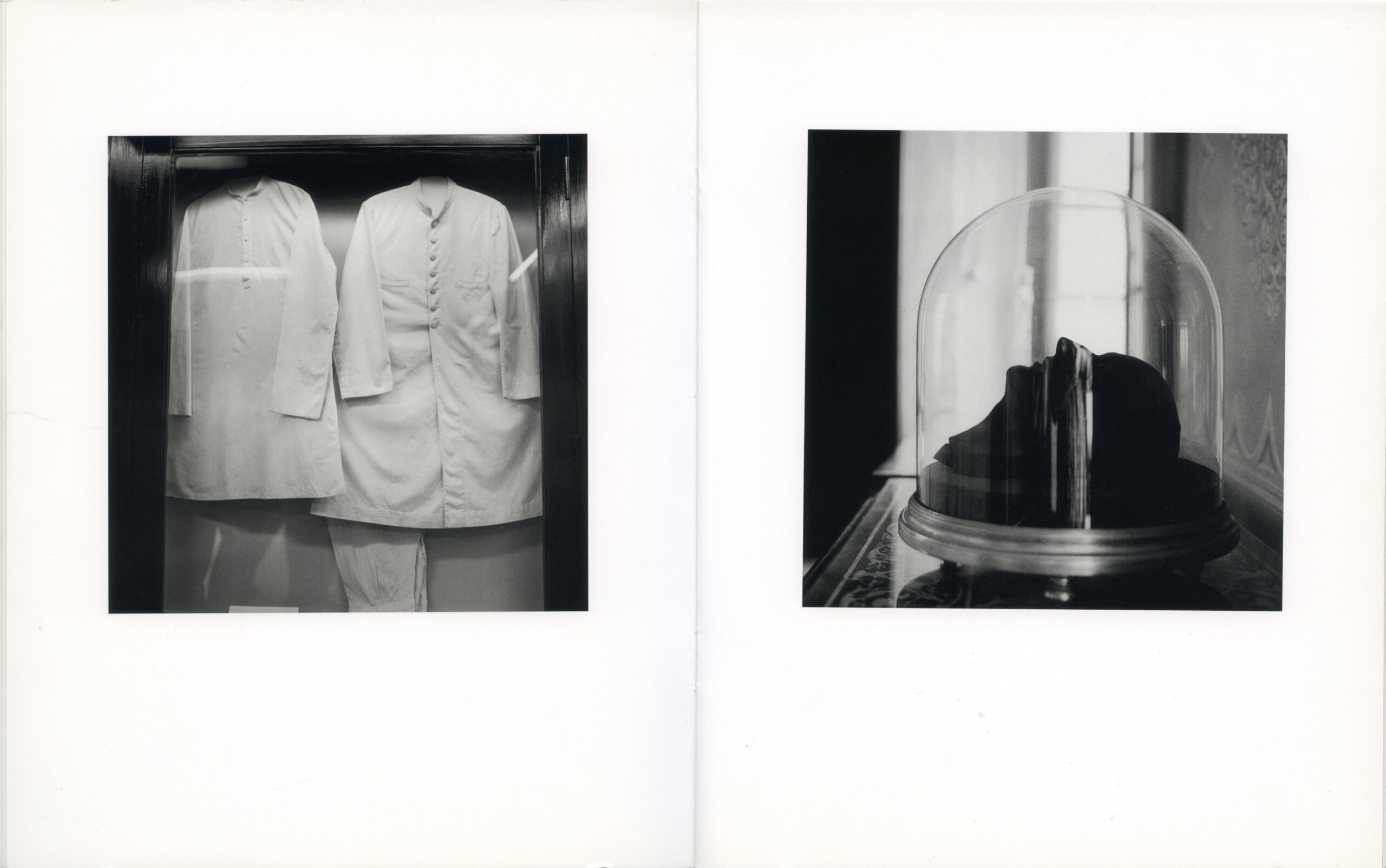
A simple and unassuming book on the surface, Go Away Closer is Singh’s self-described “little jewel”. Conspicuously plain on the outside, it is a small, slim volume that holds a delicate symphony of 31 black-and-white photographs within. Designed to mimic a simple notebook, it was kept purposefully bare to highlight each photograph and its place in the sequence. It has no title page or page numbers and none of the images have captions or commentary. Sometimes Singh describes it as “a novella without words”.
Go Away Closer is Singh’s first book that is edited not around a thematic series, as was custom, but around an emotion. In the process of editing, she realized that there was “a sound to each image” and that she could build a sequence based on their “note and feeling”. Arranged against the background of Mahler’s first symphony, second movement playing continuously on a loop, the sequence was made by ‘listening’ to the photographs and combining them by matching their aural tones. Curiously, many of these images were ones that Singh had considered her ‘rejects’, photographs taken by the way, alongside other series that she was pursuing at the time. They lay dormant in her contact sheets, for several years waiting to reveal themselves.
The conspicuous absence of text, caption and commentary allows readers to bring their own words and stories into blanks that ordinarily the text would fill. It relieves the images of “the burden of their where and when”, freeing them to be understood and read in the context of their sequence. It also nudged readers to engage with the photographs differently, forcing them to bring their own descriptions, imagination and vocabulary if they wanted to discuss them.
In fact, the phrase ‘Go Away Closer’ remains a singularly important driving force in Singh’s work even today. From time to time, it has made appearances in unlikely places: printed on her pink sari during the launch of File Room at the Venice Biennale, on stamps that she used in the sale of her book-objects and in the title of her retrospective at the Hayward Gallery, London in 2013.
Go Away Closer was printed prior to exhibitions of its corresponding print series and, ironically, this cemented an irreconcilable gap between book and print for Singh. “Seeing the exhibitions made me sad,” she says, “because I realized that the collectors would pluck out individual notes when, really, I wanted them to have the whole symphony.”
“It was a very visceral feeling,” she emphasizes. “I couldn’t bear to see my sequence separated.”
It was in the reaction to the ‘Go Away Closer’ silver print exhibitions that Singh came to fully appreciate the book as a form that kept her edit and sequences intact. That her work was the book—the whole book: images, design, material, dissemination—and not just the individual image or print, as the art world dictated.
Singh did not have the courage or possibility at the time to insist that collectors keep the sequence intact by buying all 40 silver prints as a set. Instead, she wondered if she could insert a Go Away Closer book into the back of each frame. But even here she was met with an unfavourable response: “Dayanita, a book is a book and an exhibition is an exhibition. Don’t try to mix them.”
Yet, for Singh, this was not so. The response only further entrenched her desire to get the world to see her books “on par” with her prints.
In subsequent years, Singh would devote her whole practice to finding new ways to show her books on the wall. But it wasn’t until the Museum of Chance book that she was finally able to arrive at a form that maintained a single note along with her entire symphony.
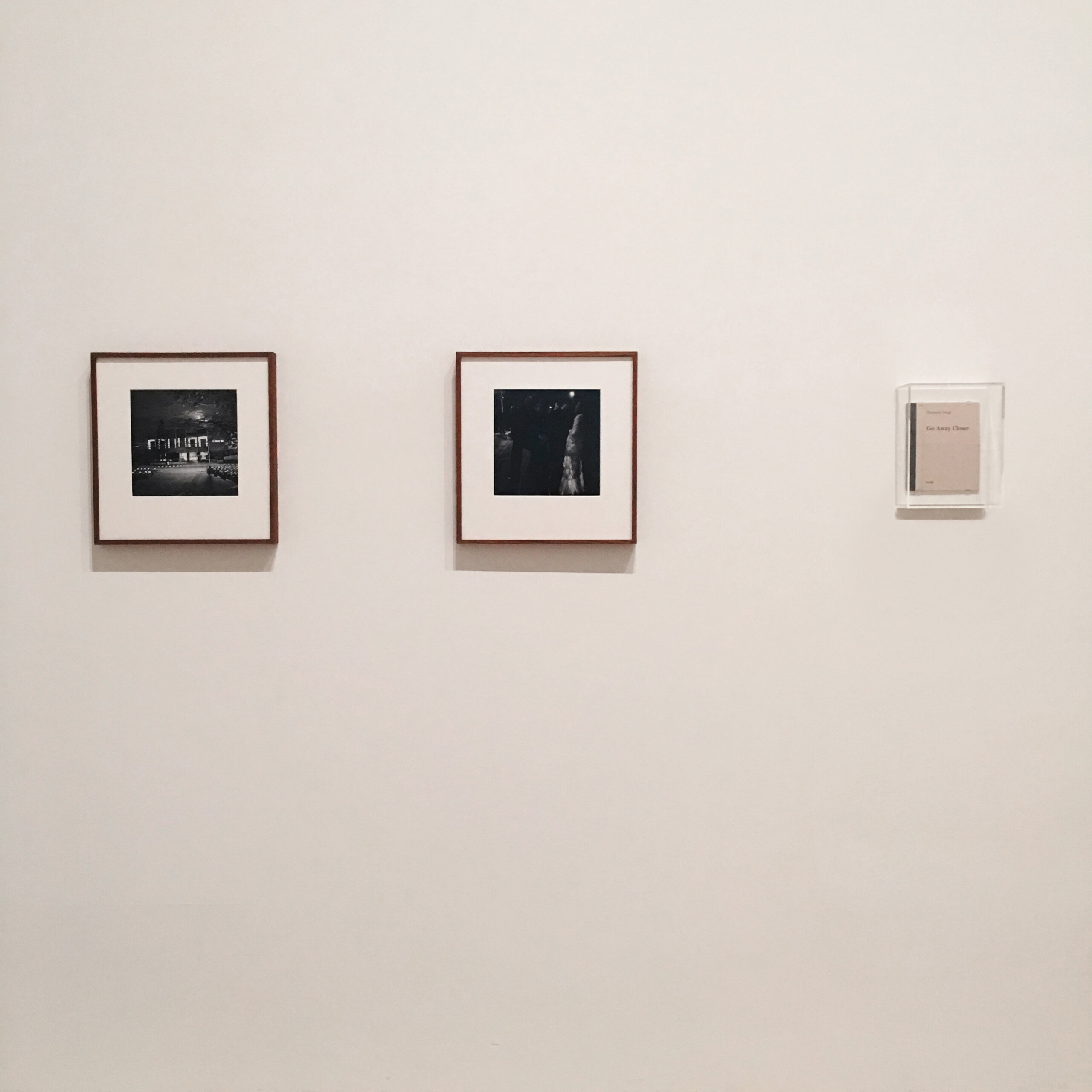
In 2018, when the Tate Modern exhibited the 40 silver gelatin prints from the ‘Go Away Closer’ series, Singh convinced the museum to show the Go Away Closer book next to the prints on the wall. This time, the Tate agreed and a mass-produced photobook was shown alongside photographic prints.
“That to me was a triumph,” she says, “I think it was the first time that the Tate Modern showed a mass-produced book on its walls.”
A book, her book, as an art work in and of itself.