“What is a book? Can a mass-produced book be an artist’s book? Can a mass-produced artist book be considered a work of art in its own right? Can a book be both a book as well as an exhibition? And can a book, shown on a wall as a work of art, also become a catalogue of its very exhibition?”
Museum of Chance (2014)
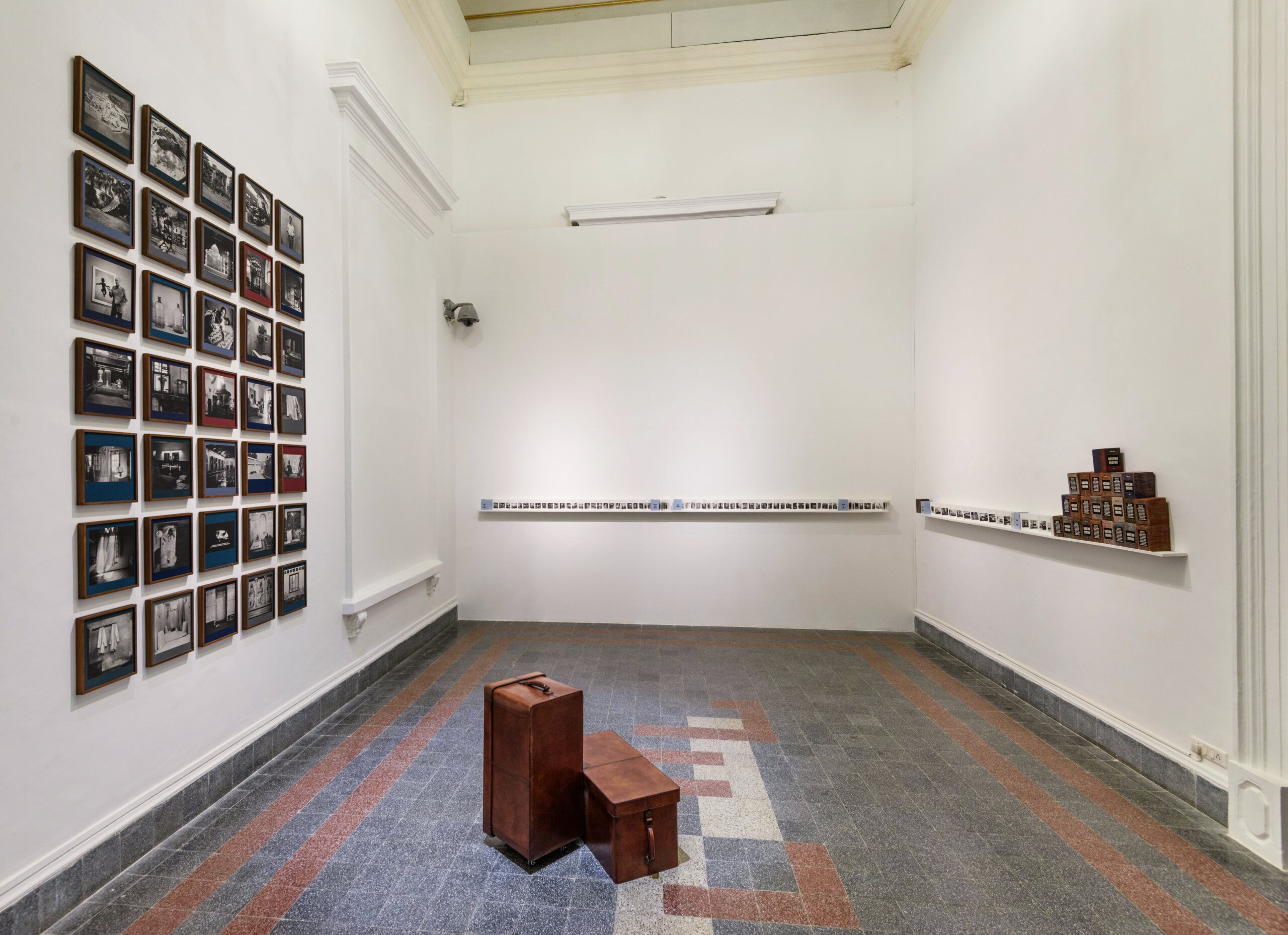
Before Museum of Chance became a book, it existed as a museum in Singh’s Museum Bhavan. Designated the ‘mother museum’ by Singh, it is the heart of the family of nine museums.
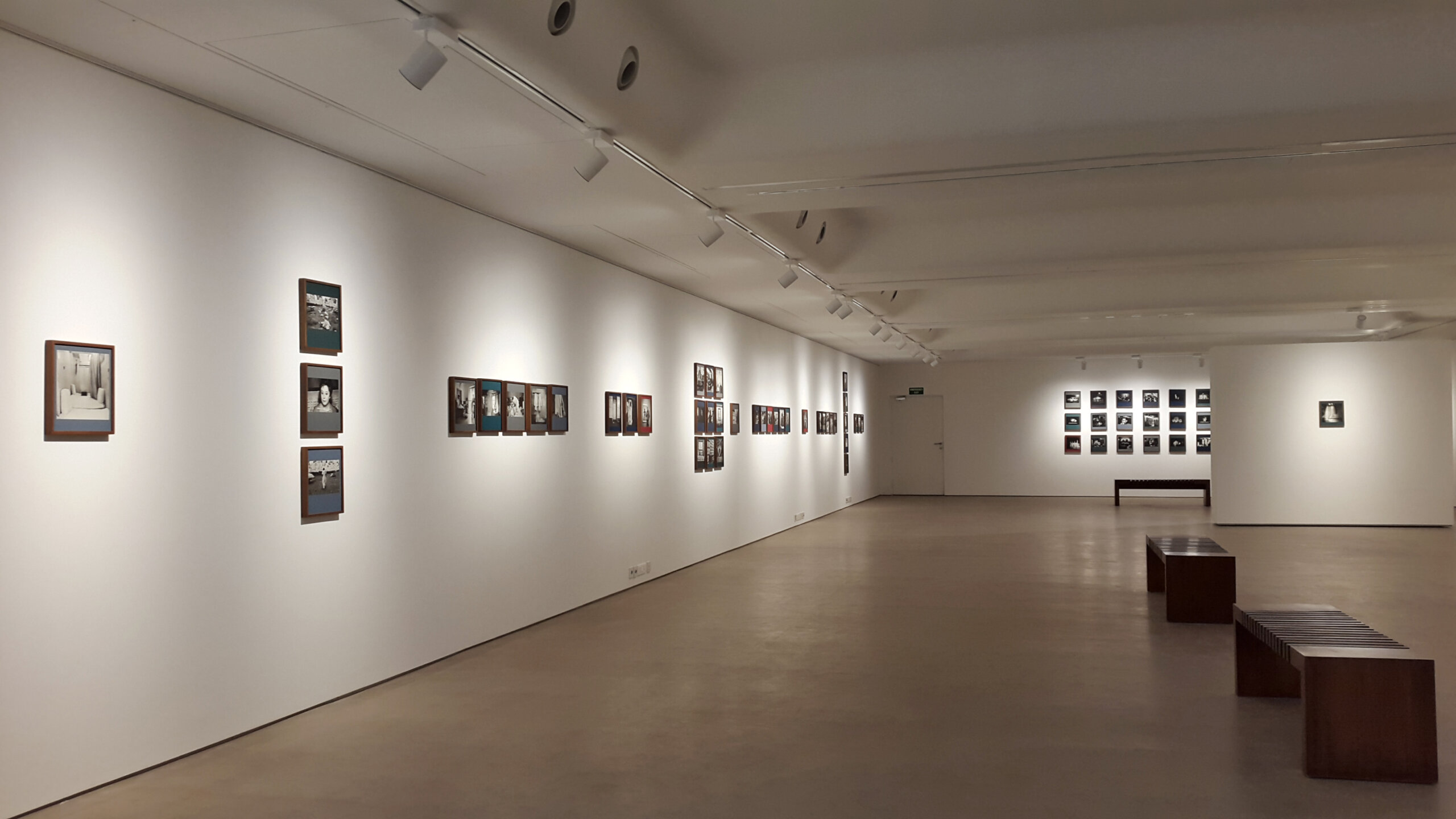
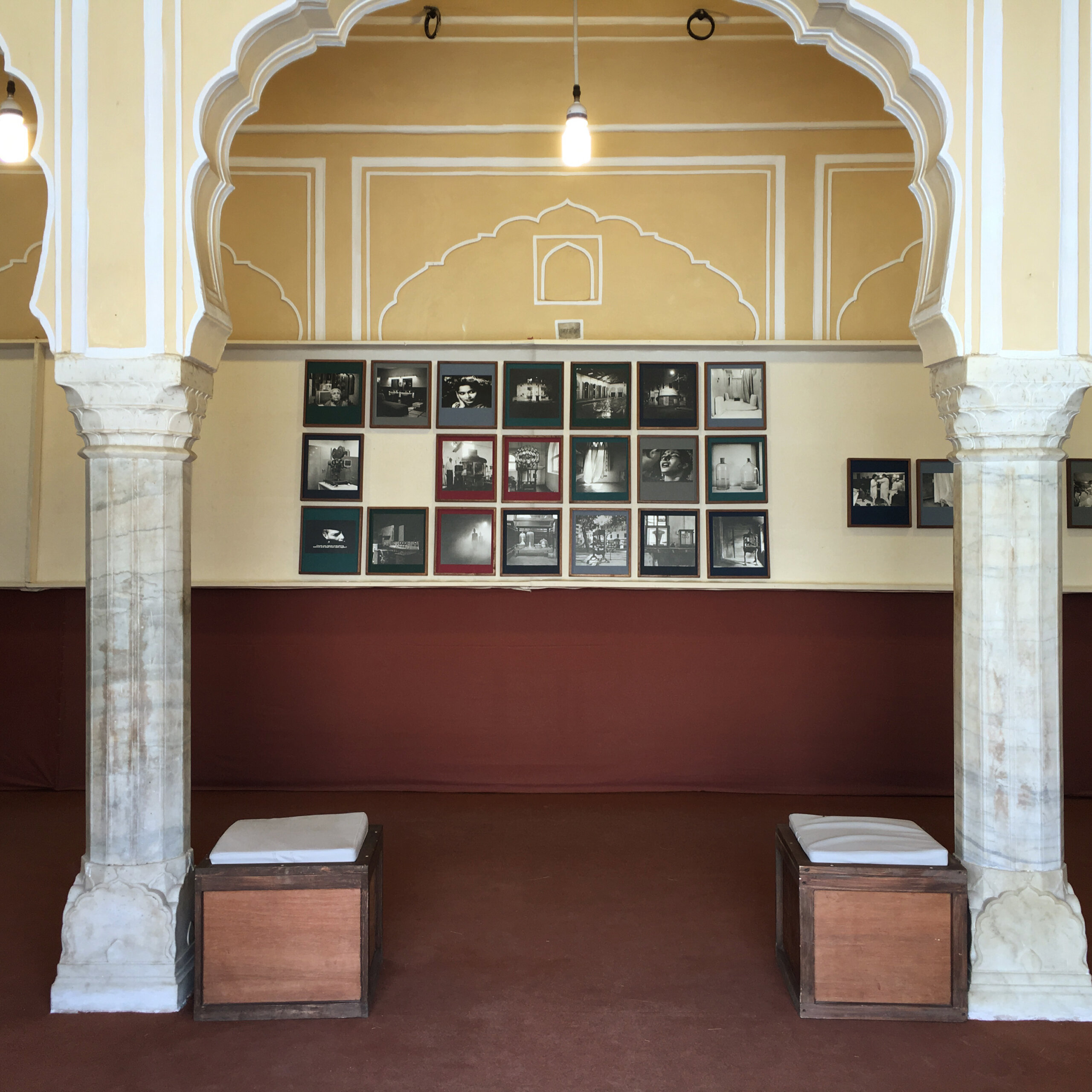
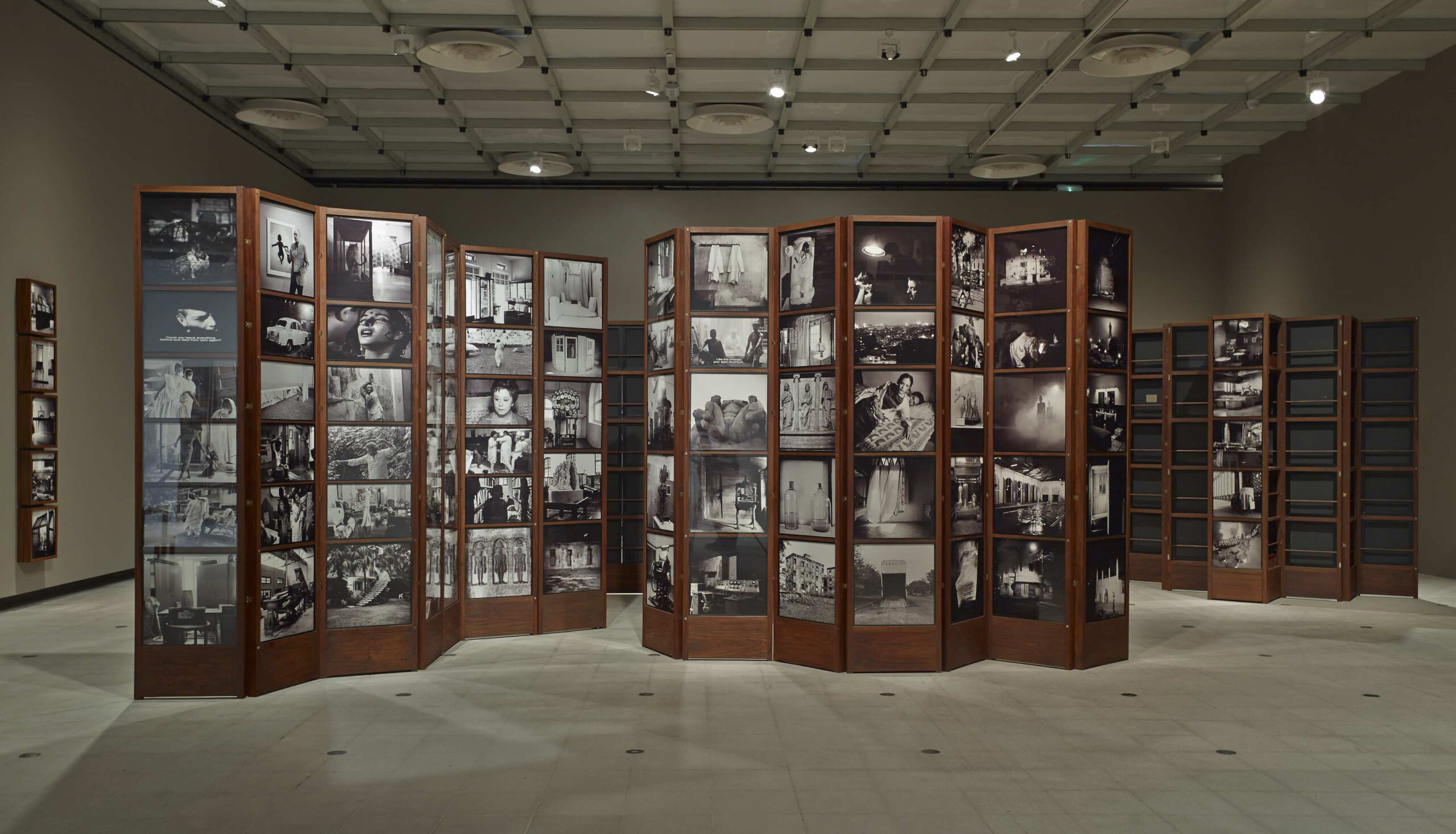
‘Museum of Chance’ was the culmination of all of Singh’s museums and she arrived at it after creating others with more traditional classifications. More monumental in its scale than the other structures, it holds the largest collection of images amongst all the museums. In it, Singh drew from her 35-year-long photographic oeuvre to create a set of 163 images tied together by what she describes as “the incidence of Chance”.It is Chance that forms the very foundation of the edit, which follows the logic and rhythms of a dream:
While I was in London I dreamed that I was on a boat on the Thames, which took me to the Anandmayee Ma ashram in Varanasi. I climbed the stairs and found I had entered the hotel in Devigarh. At a certain time I tried to leave the fort but could not find a door. Finally, I climbed out through a window and I was in the moss garden in Kyoto.
Crucially, the set existed without a fixed sequence and the images were selected to be arranged and read in any combination. It took Singh two years to arrive at this edit for the museum but, ultimately, she created a labyrinth-like arrangement more akin to an entangled web than a linear narrative structure.
Singh had always imagined a corresponding publication for each museum (which Steidl agreed to publish) and since ‘Museum of Chance’ was the mother museum, she turned her attention to its book first. She began by creating and sequencing a subset of 88 images for the book from the large structure’s original 163.
These were then printed in a delicate quadratone on an uncoated paper called Munken (which was also the paper used in File Room). Steidl’s quadratone printing process departs from his usual tritone process that makes use of three black inks. He prints, instead, with four separate self-mixed blacks to create a rich and more detailed image. With Museum of Chance, the combination of printing and paper created a subtle image quality, which further accentuated the sequence’s inherent dream-like attributes.
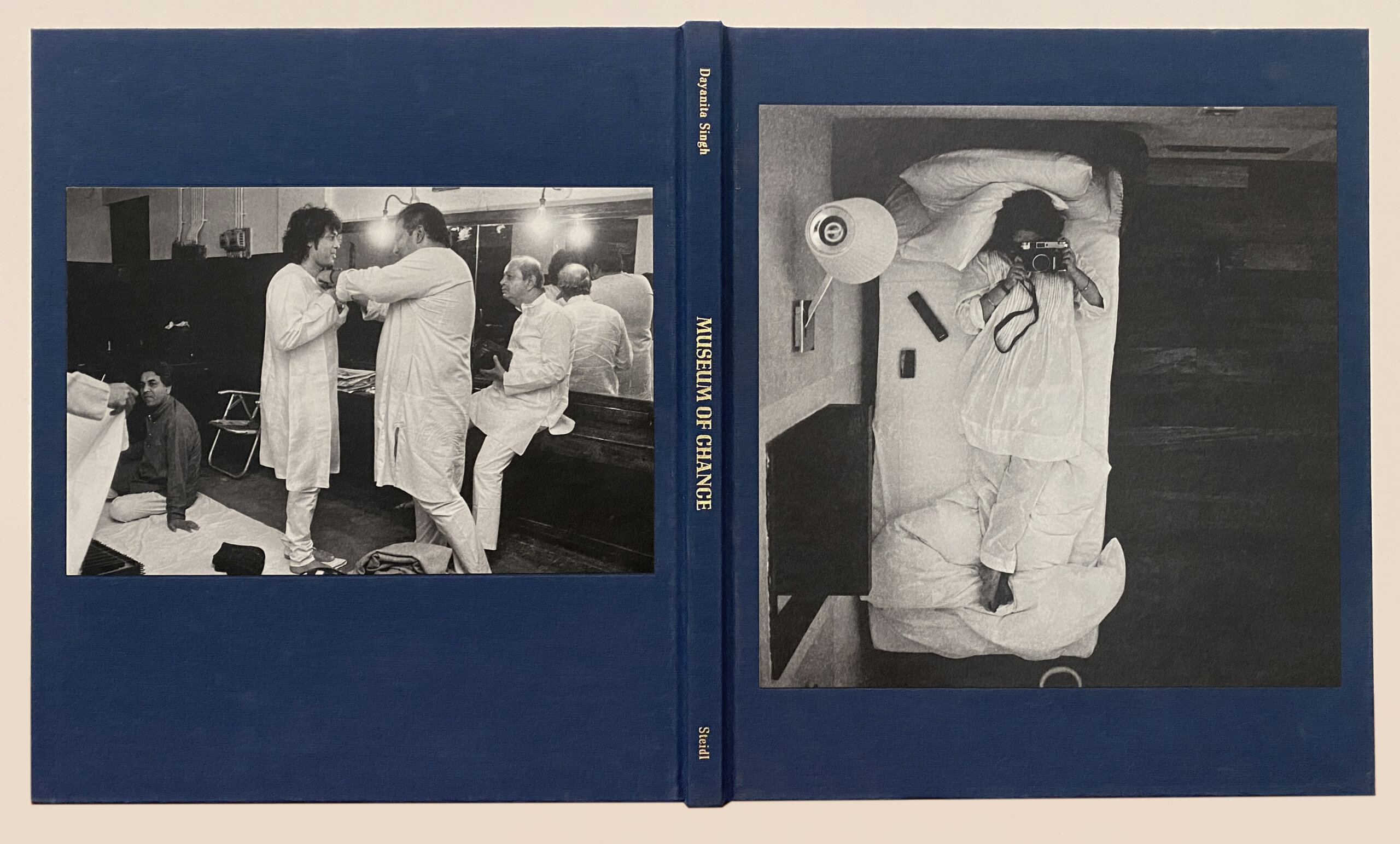
In tackling the design of the cover, Singh added one more layer of chance: she asked Steidl if they could make 88 different covers for the book using all the images from the sequence. At first Steidl thought it a preposterous idea. Conventionally, the cover is considered ‘the defining’ image of the book and he was not keen to dilute the book’s identity. Nonetheless, Singh convinced him that different covers would allow her to exhibit the book on the wall and he agreed.
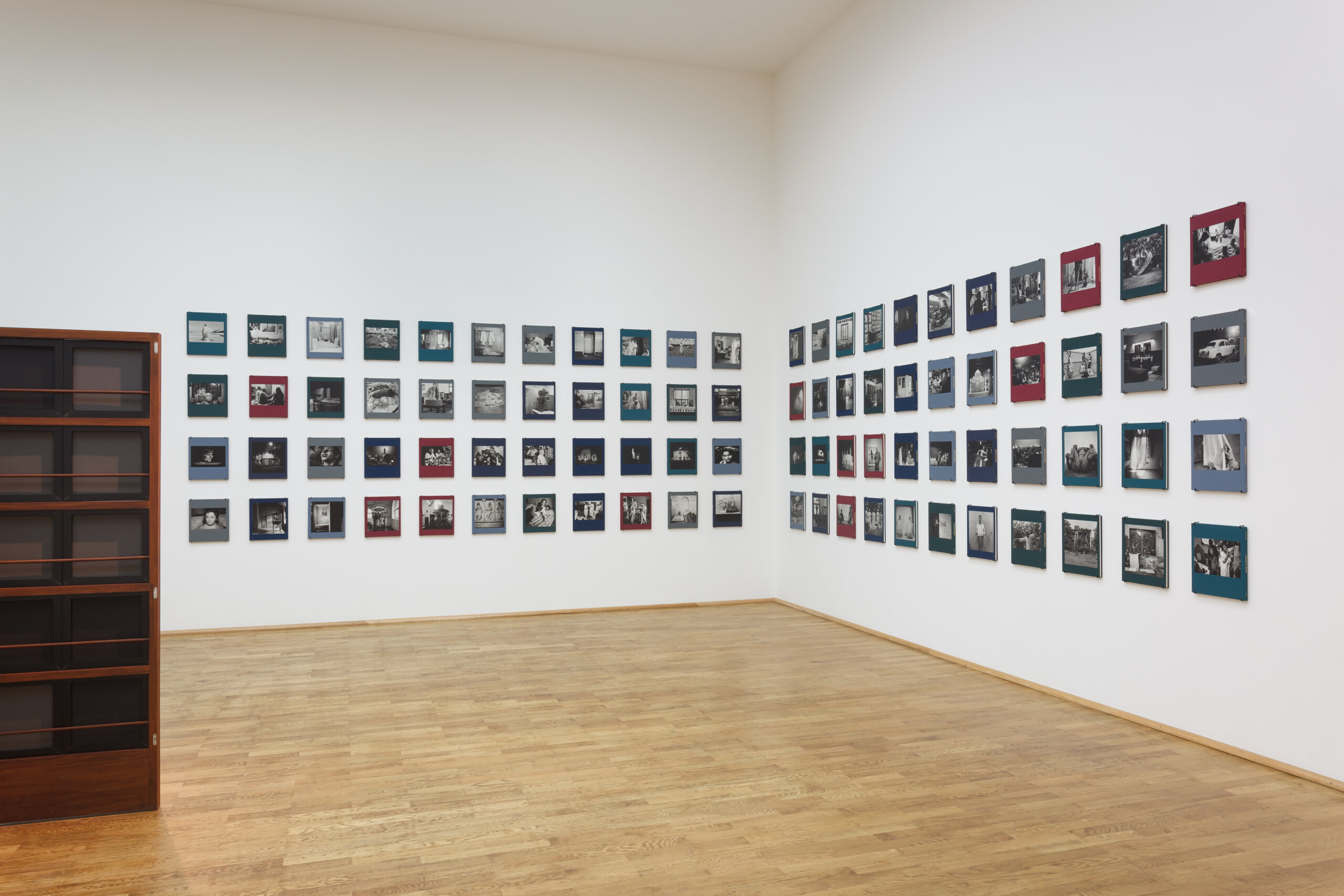
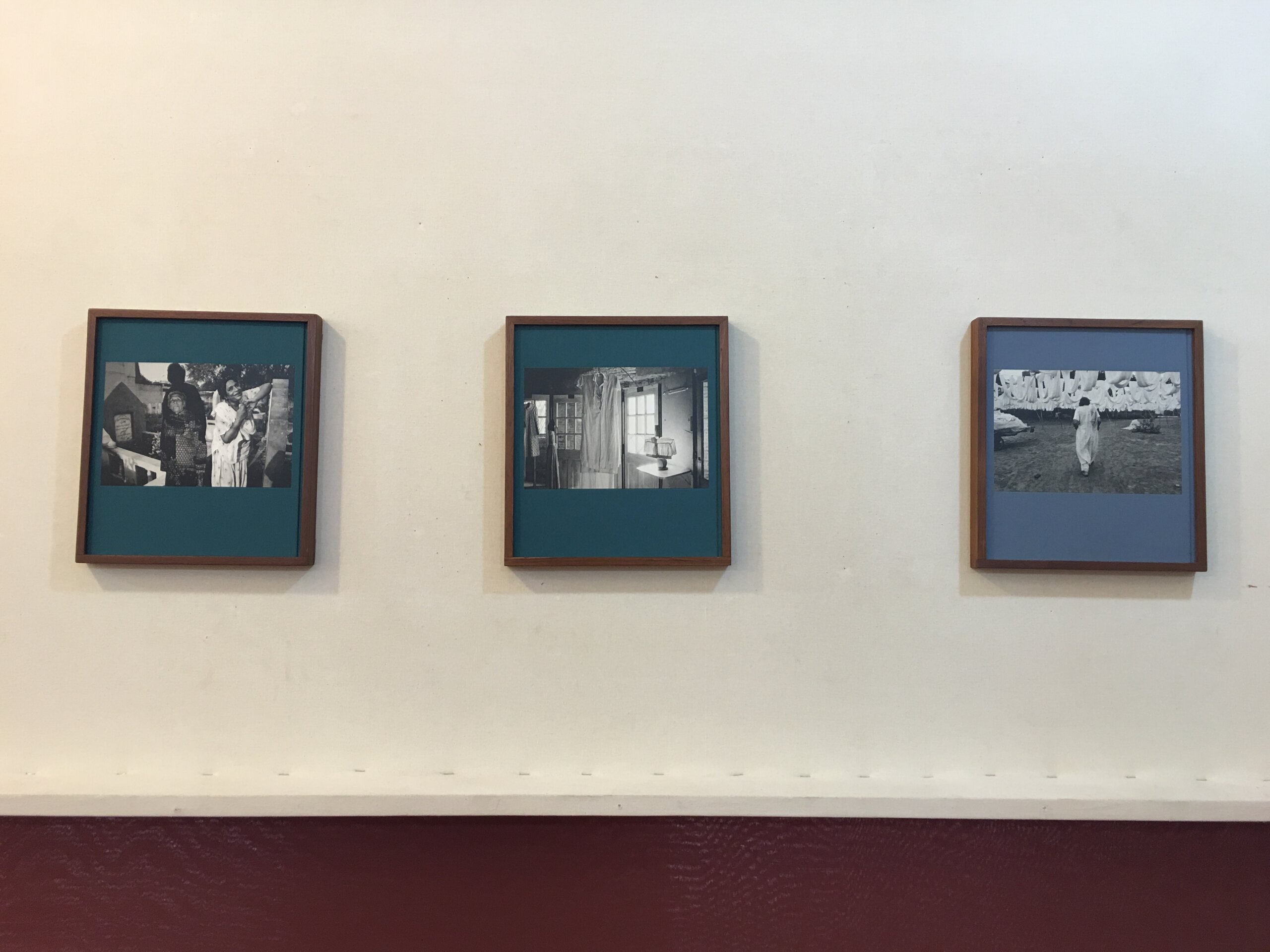
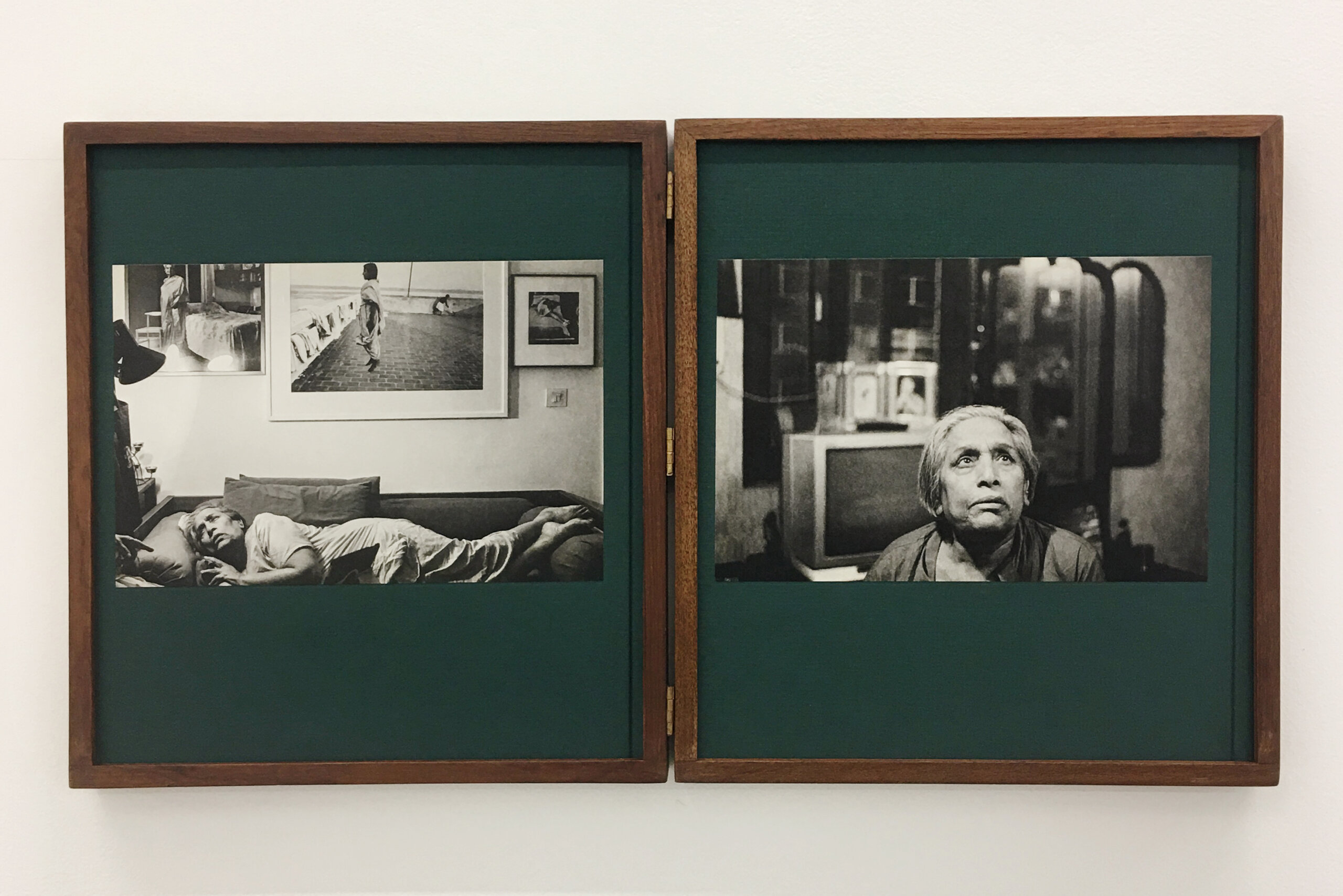
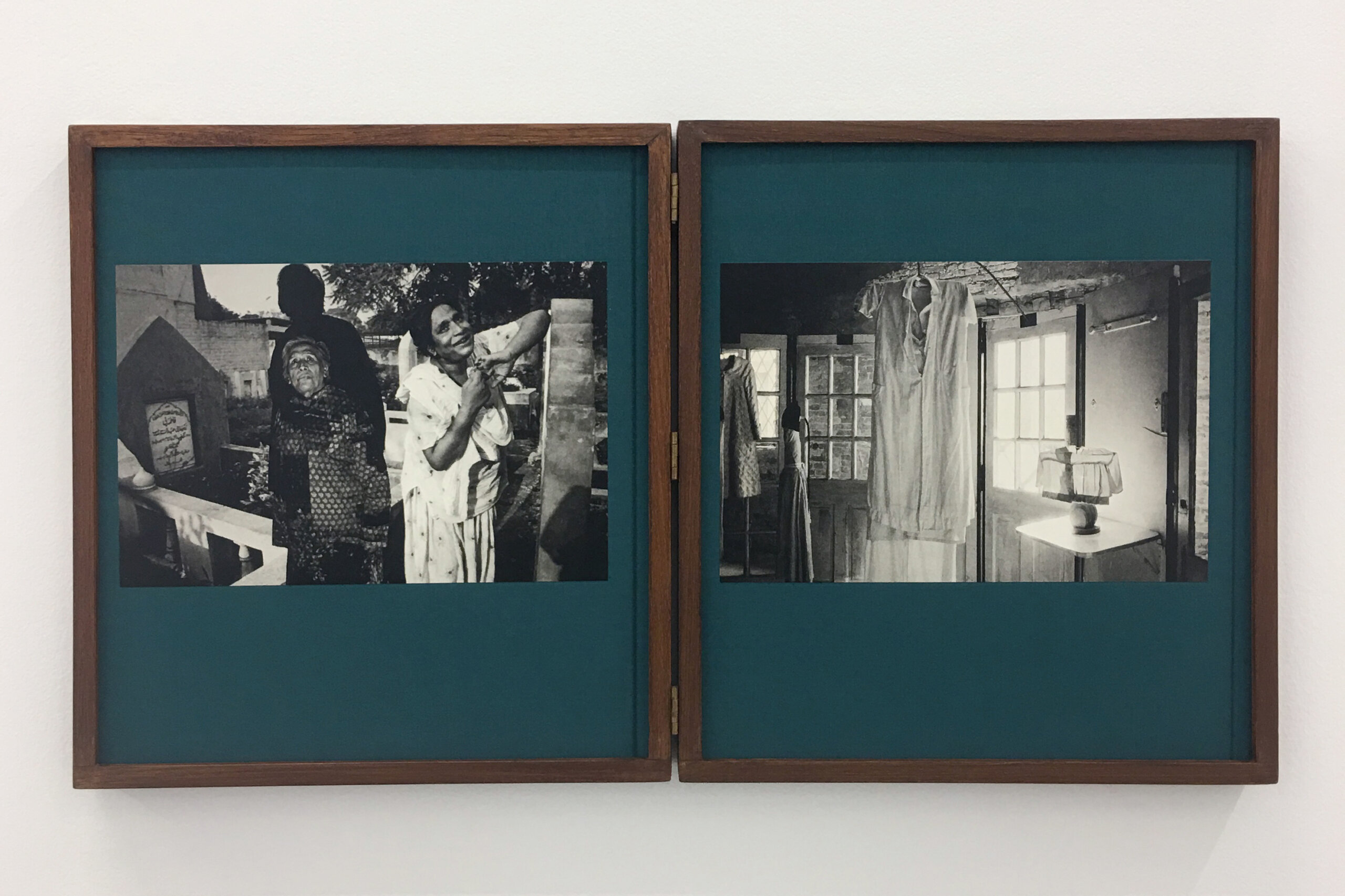
They settled on 44 covers in which the 88 images were paired and placed on the front and back. The square 120-mm images were placed on the front and the rectangular 35-mm images at the back. These 44 unique covers effectively allowed Singh to make variations of the sequence held in the book by playing with the arrangement of the covers. This meant that the sequence was no longer tied to its original order, opening the book to countless arrangements and readings. This allows the sequence to remain simultaneously broken and intact: disrupted through the order of covers on the outside and yet preserved inside the pages of each book.
Chance even finds its way into the distribution process of the book. Collectors have no way of knowing which cover they receive if they order the book online, thus leaving their selection totally up to Chance.
Museum of Chance is a thread or web of images that finds shape in several of Singh’s forms: first as a large museum, then as a book, book-object, book-case and, finally, as the Suitcase Museum. It even exists in an alternative version as Ongoing Museum in Singh’s Museum Bhavan book.
In each of its forms, Museum of Chance always works in a specific sequence or larger set, while simultaneously allowing for the same sequence or set to be continually broken, disrupted, reduced and re-arranged. A museum with endless possibilities and a work that never ends, Museum of Chance is an ongoing museum.
Book Object (2014)
Traditionally, photographers or their publishers would attempt to add value to a photobook by creating special editions of the book with a silver or digital print placed inside it. “It bothered me to see that the book’s enhanced value would come from combining it with a single print,” Singh says. She felt that the value ought to come from the book itself rather than from the accompanying print.
The mass-produced nature of her photobooks posed a challenge. Singh’s interest, therefore, increasingly veered towards creating a photobook that transformed into an art object, one that retained the integrity of its mass-produced origins and yet did not rely on the addition of a photographic print.
To tackle the dilemma, she created a wooden structure fashioned to the exact size specifications of Museum of Chance. The structure was built to allow the book to slide in and out and functioned as a device with which to hang the book on the wall or stand the book on its own. This intervention disrupted the separation between art object and mass-produced object, allowing Museum of Chance to exist as both simultaneously.
It is in placing Museum of Chance into this structure that Singh transformed the book into a work that could be acquired, looked at, read, displayed on the wall and lived with. In doing so, she departed from the convention of exhibiting editioned, framed photographic prints and turned the mass-produced book into an art object in itself.
Yet the inherent ‘bookness’ of the book is retained amongst all these transformations. At any time, the book can be removed from its structure and perused. This allows the book-object to retain both the value of Museum of Chance as a book and its value as a book-object.
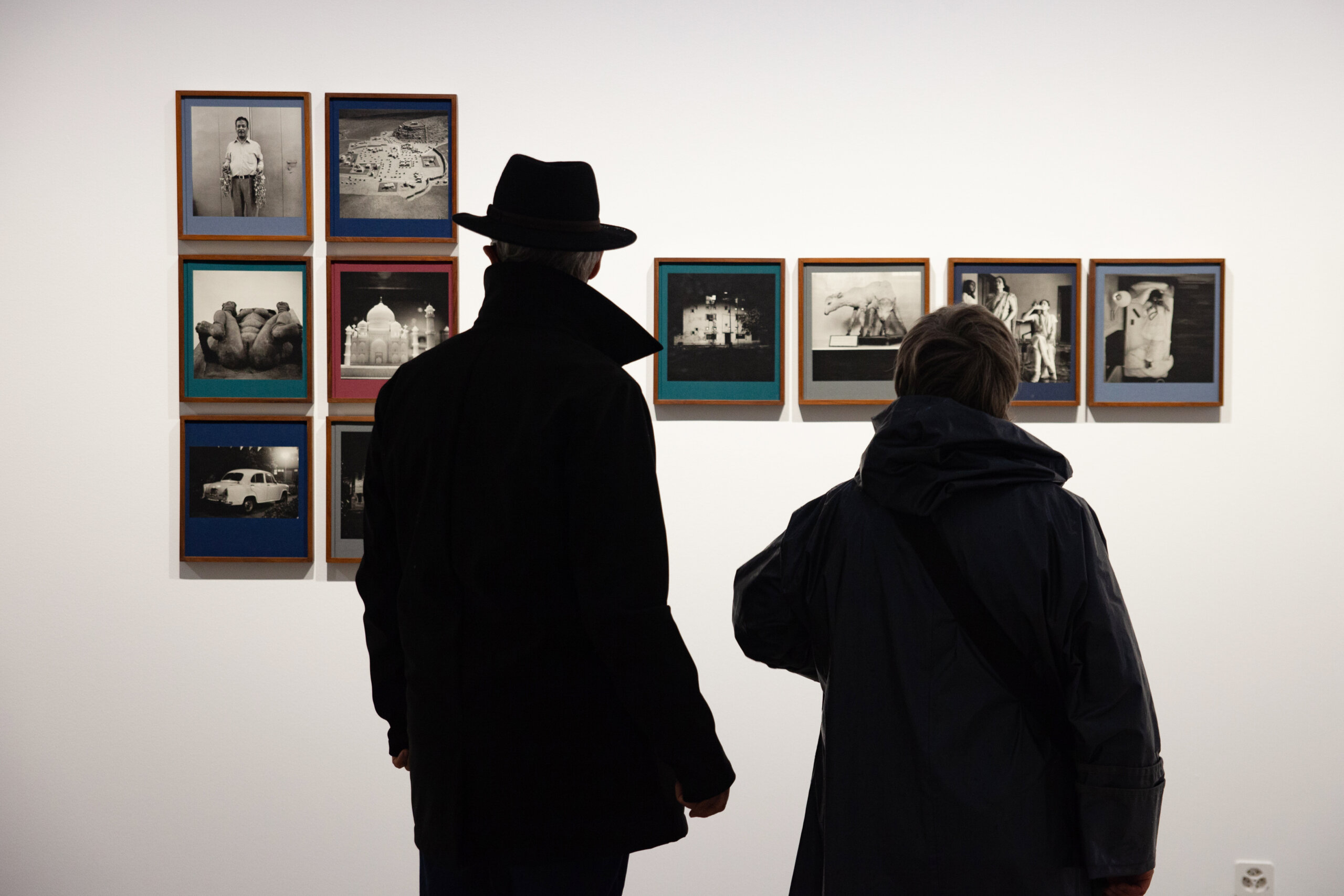
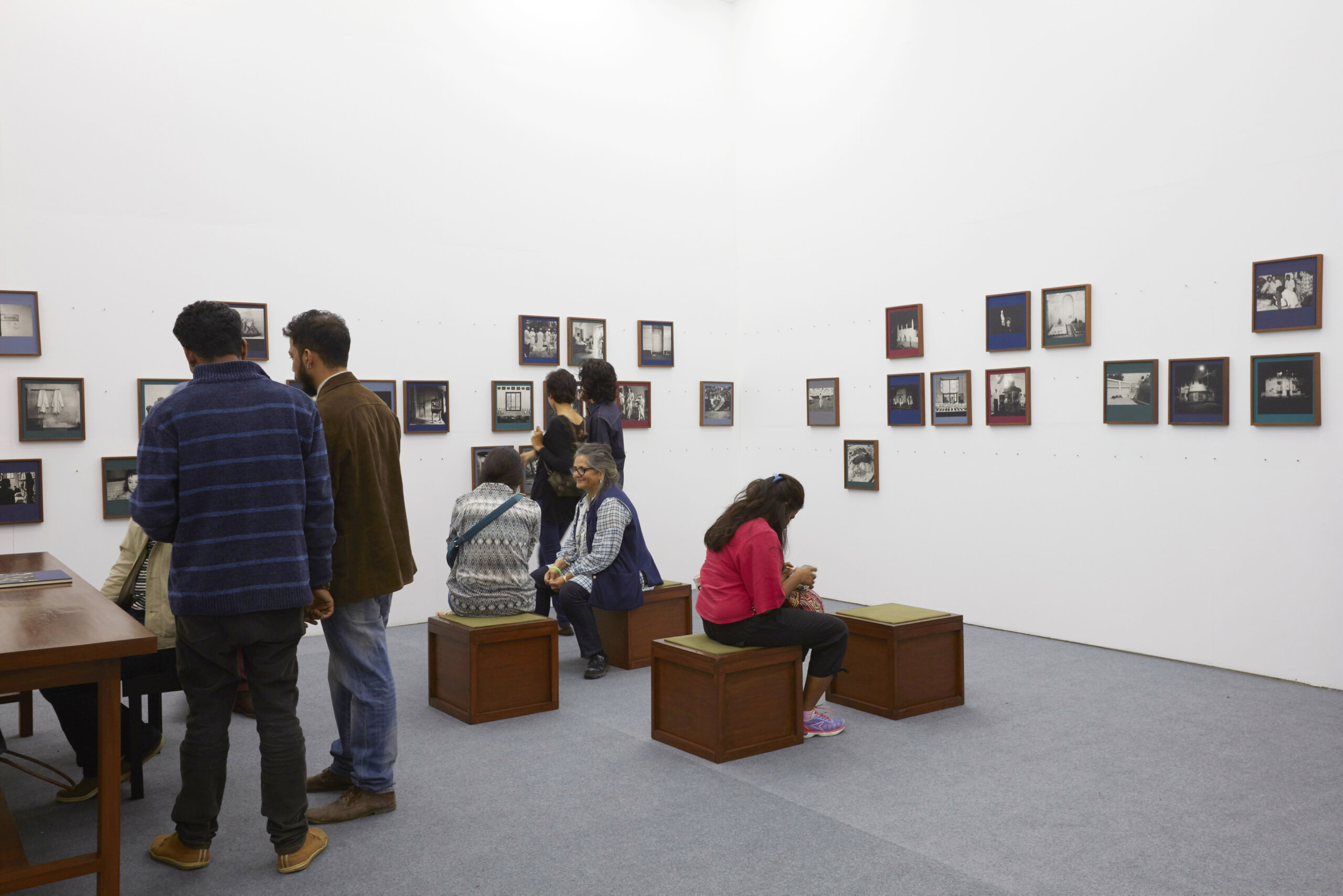
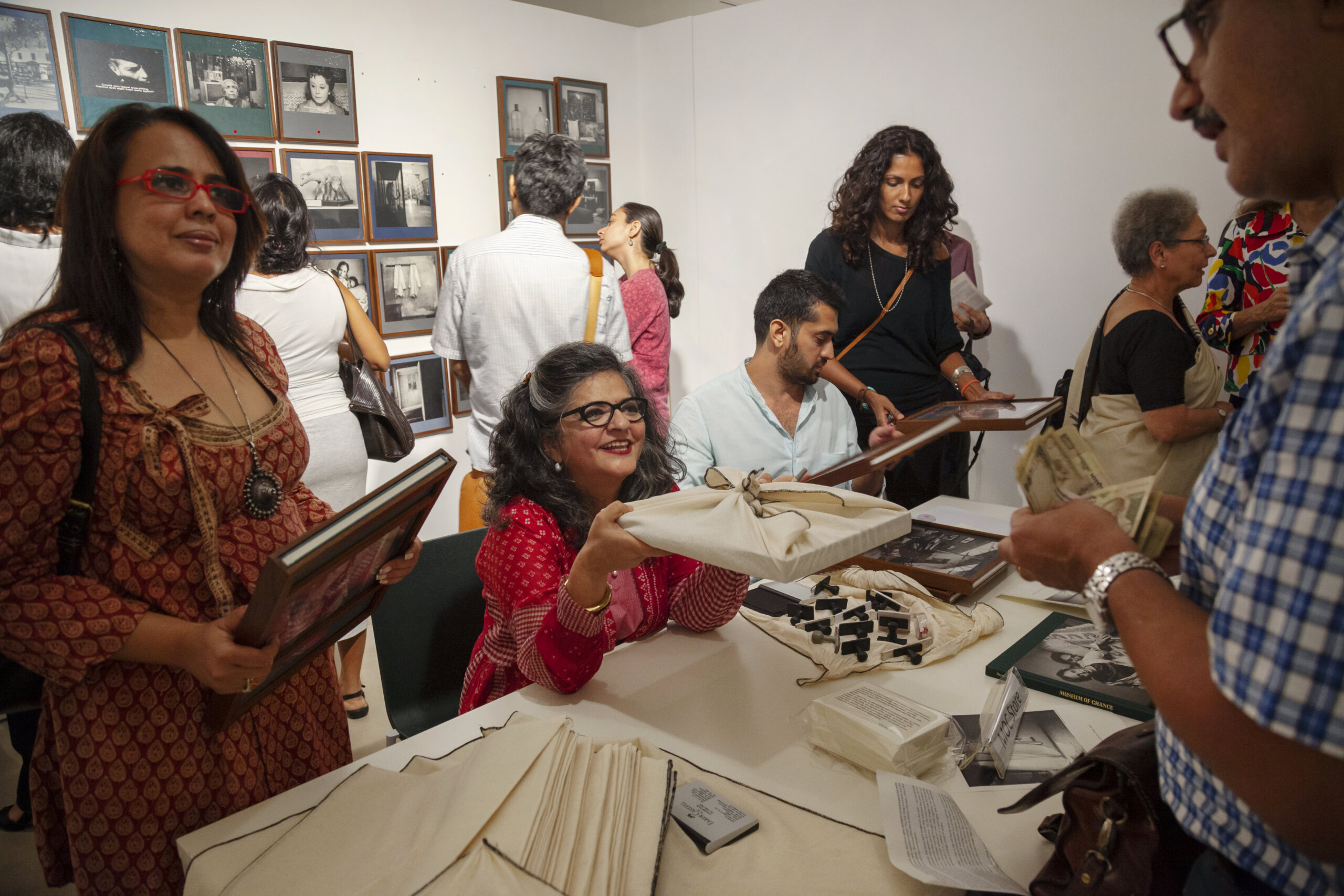
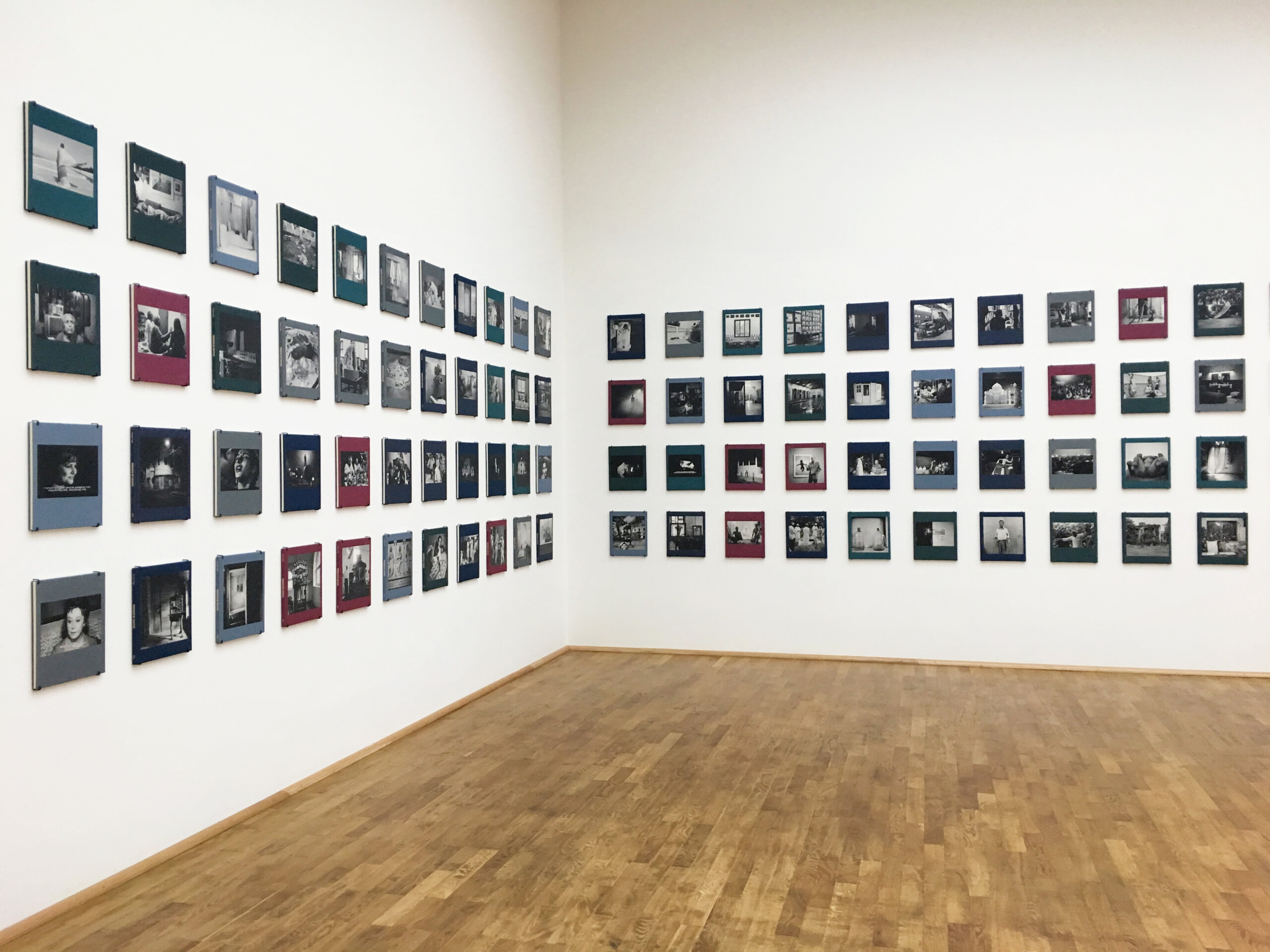
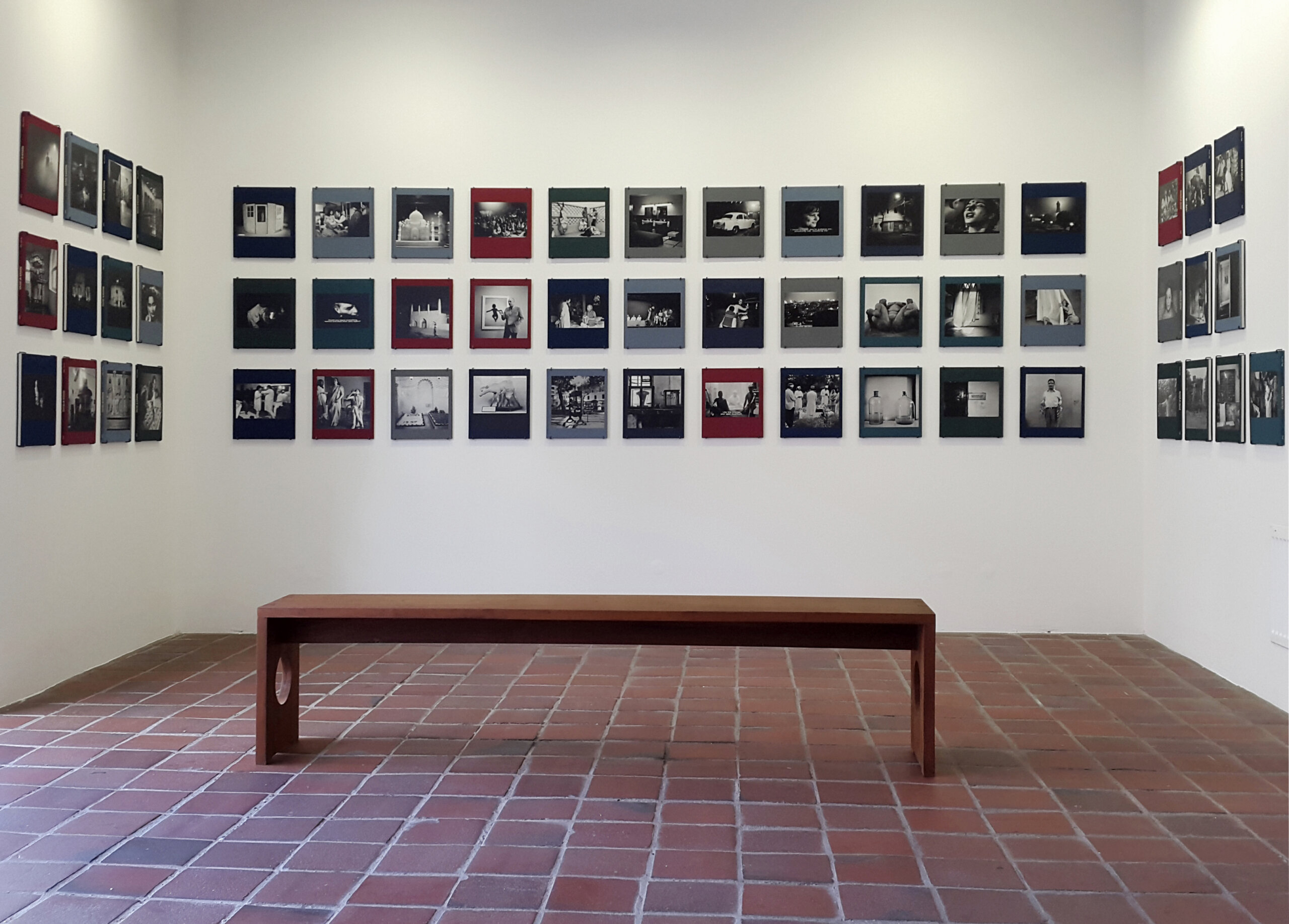
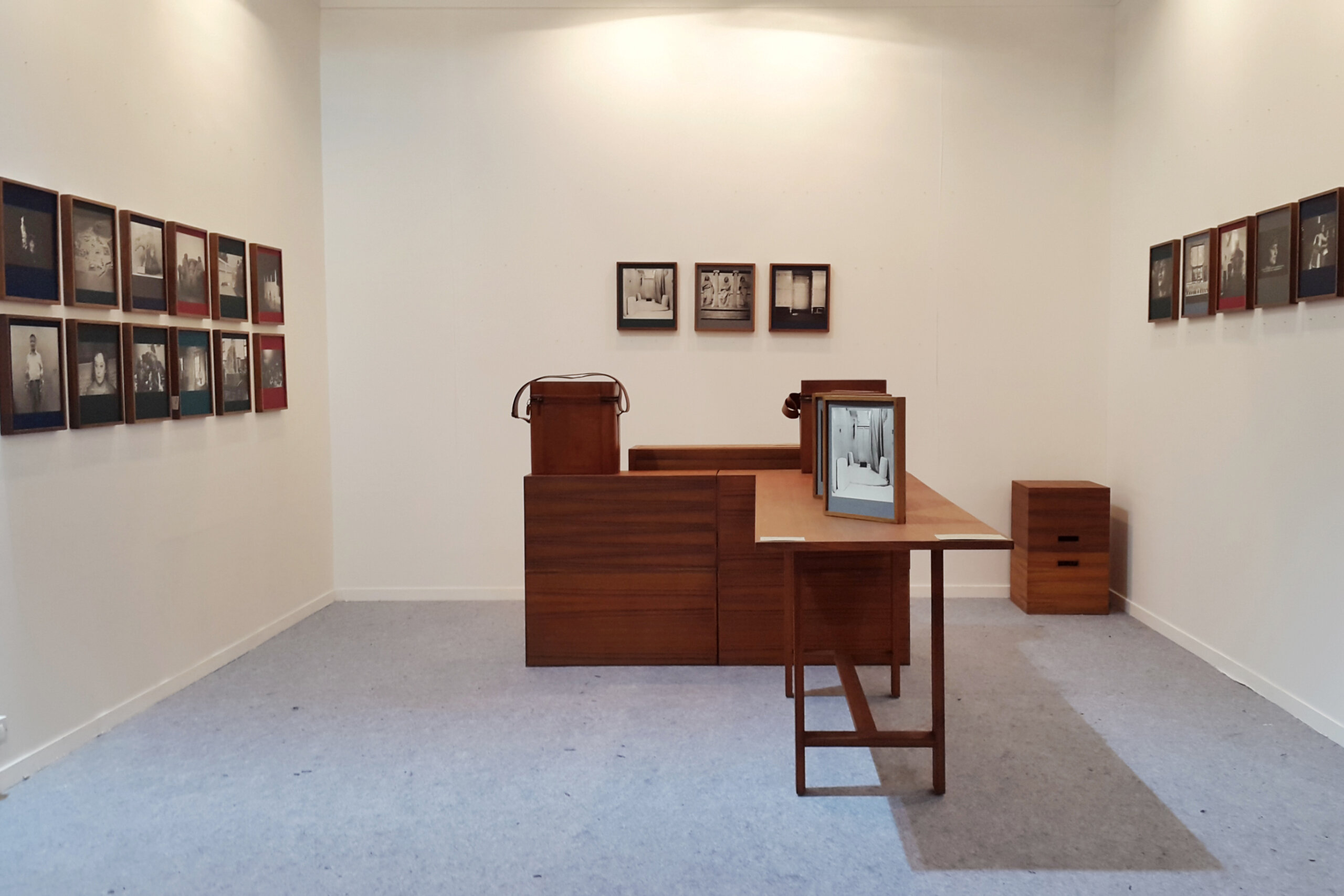
The Museum of Chance book-object was offered in an edition of 352 and available for sale exclusively at several exhibitions that Singh held around the world. At each event, she exhibited full sets of the 44 different Museum of Chance covers in their book-object form and invited viewers to purchase the book-object of their choice by choosing the cover directly off the exhibition wall.
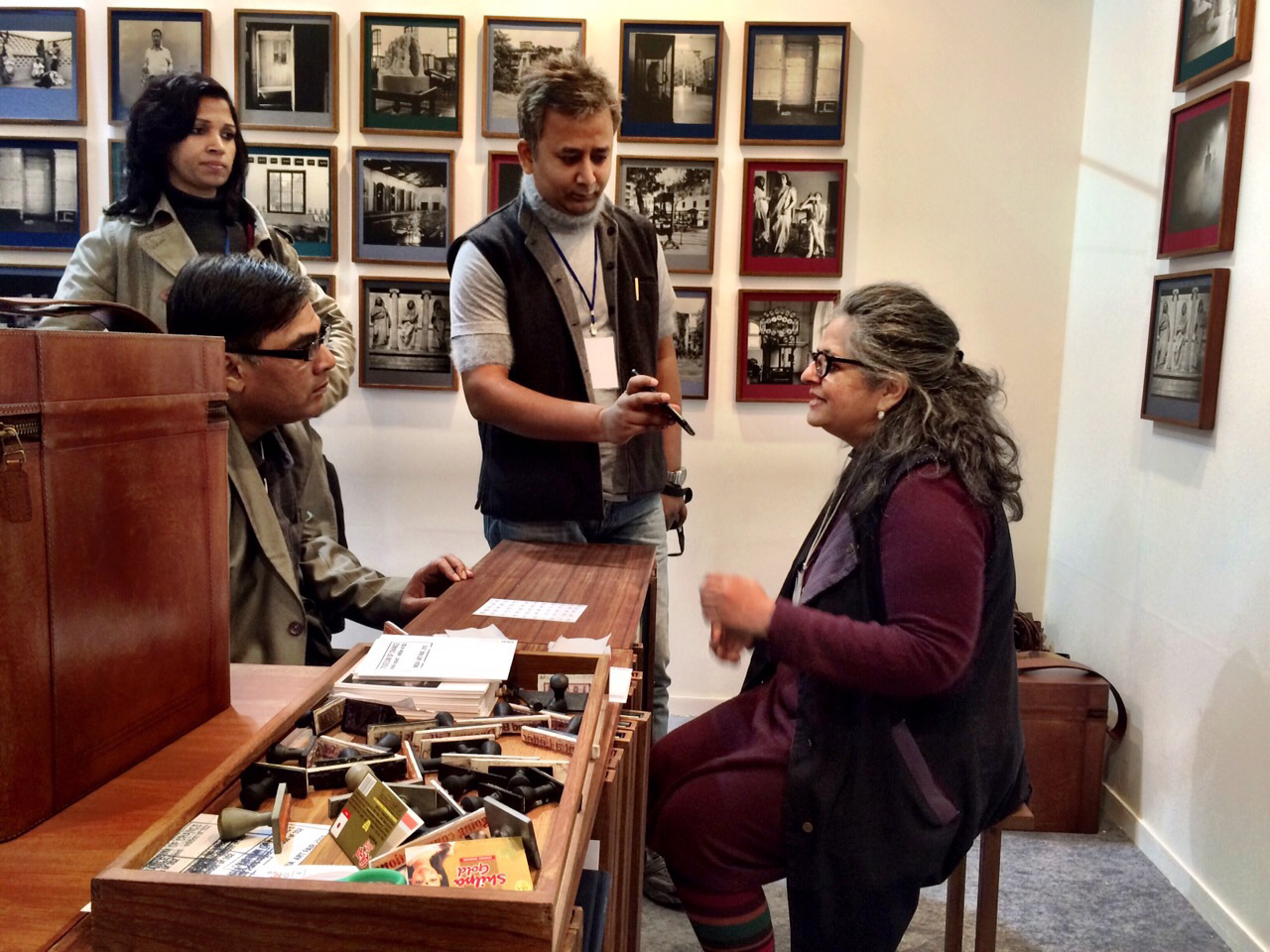
By this stage of Singh’s practice, she had completely imbibed the idea of creating a mahaul or ambience for each event, so the ritual of sale was situated as much around the conversation she had with the collector as it was around the transaction.
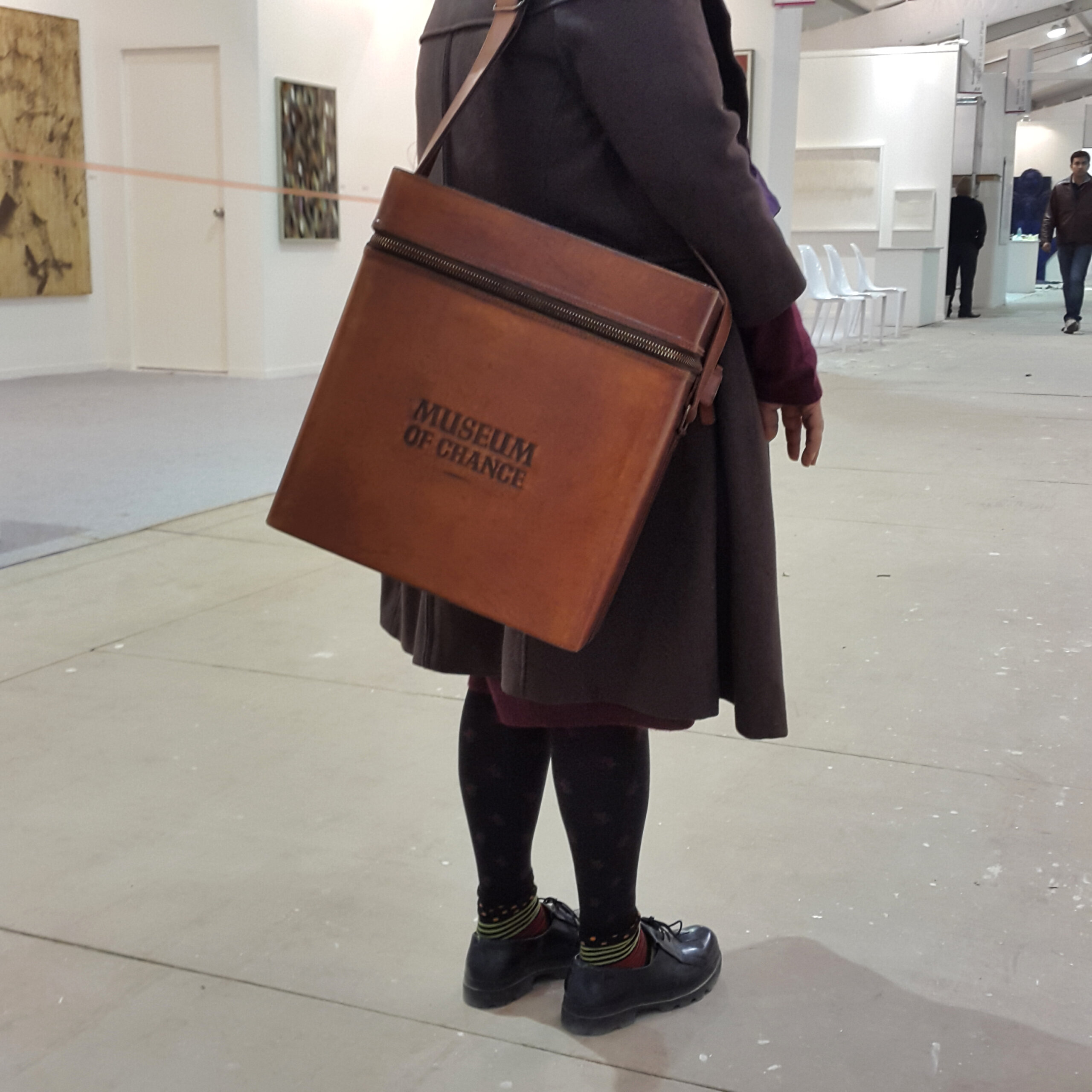
First, she sat across from the buyer, engaging them in conversation as she stamped and personalized the book-object of their choosing. Next, she wrapped and placed them into canvas and leather tote bags with a Museum of Chance design. At some events, she even designed the table and stools on which she would sit with the collector.
The attention to detail in the exhibition events was part of a very deliberate calibration on Singh’s part. Her intention was to create an intimate encounter in which every element—from the book-object to the stamping, the bags, and the furniture—was infused with a specific trace or memory of the atmosphere of the event and exchange. This was done in order to reorient the way in which the collector related to the book-object.
“Since the work was, in a sense, completed by me in their presence, either with a knot or a stamp, my hope was that collectors would own the work differently from objects they bought anonymously online or even at a gallery,” she says.
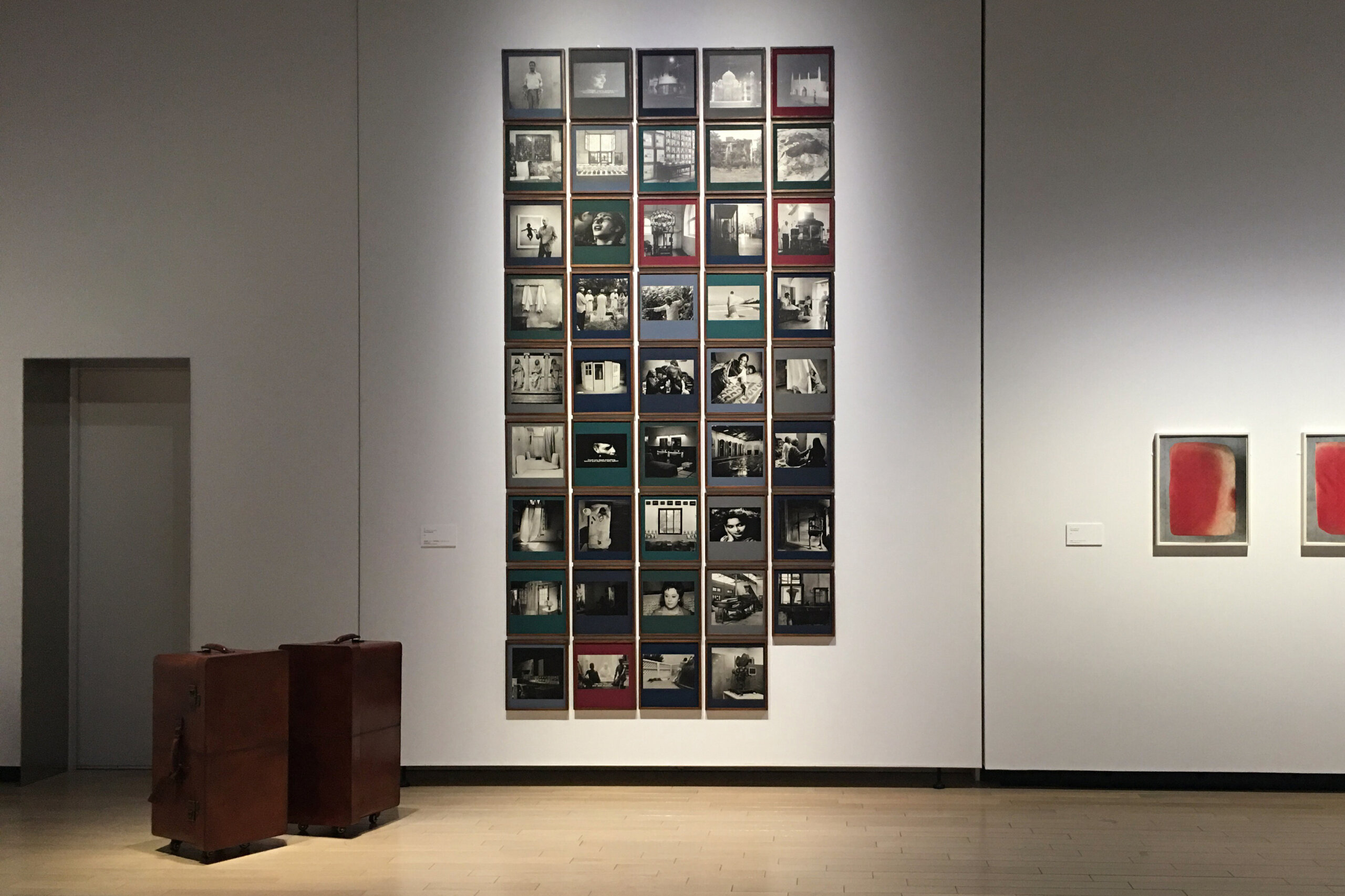
It was only at these events that all 44 book-objects were shown together and that the book transformed into a complete exhibition of itself. Now the book was no longer just a book, it was simultaneously a book, an art object, an exhibition and the exhibition catalogue.
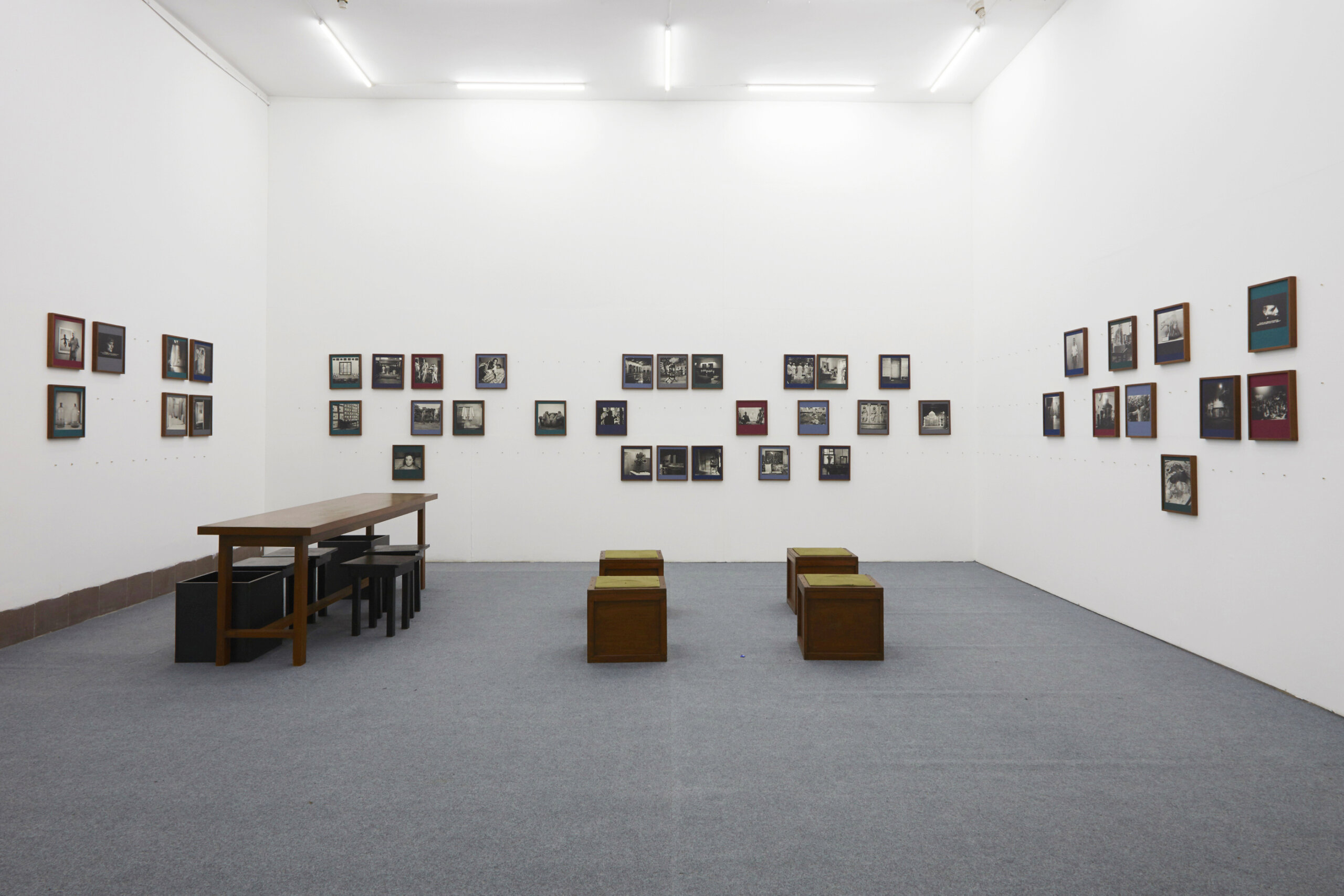
Singh hung her first Museum of Chance book-object exhibition at the Max Mueller Bhavan, Mumbai in 2014 as if she were hanging an exhibition of silver prints. The book-objects were installed in grids, rows and columns and were lit in the same spare vein as a traditional showing of her own photography. “This became my way to say to people that I considered the book as valuable as my prints,” she says.
At each event, the exhibition would slowly disappear as book-objects were taken off the wall until, finally, only rows of nails were left in the installation. All the book-objects got a new lease of life, making their way in their special bags to various homes and walls across the globe.
Book Case (2015)
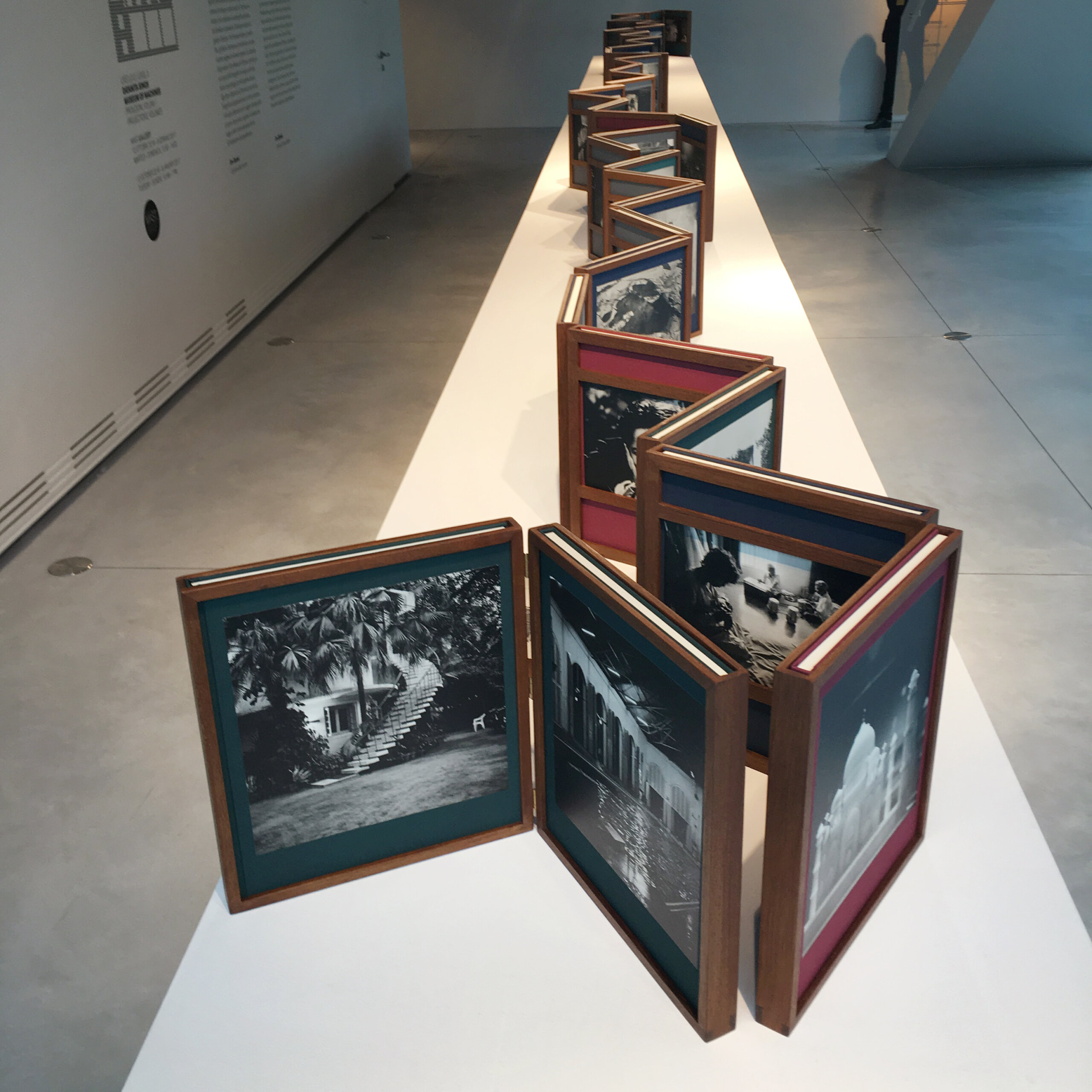
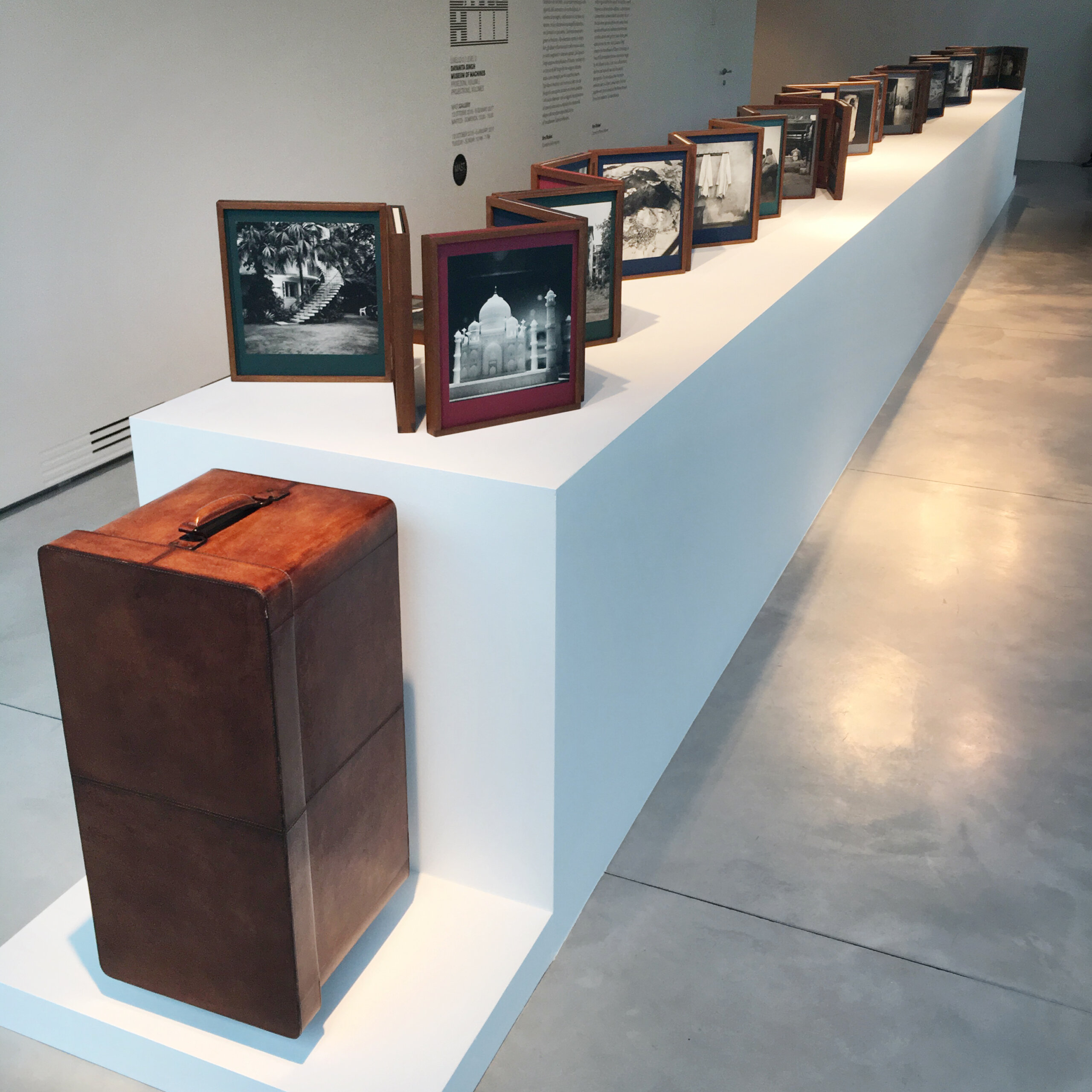
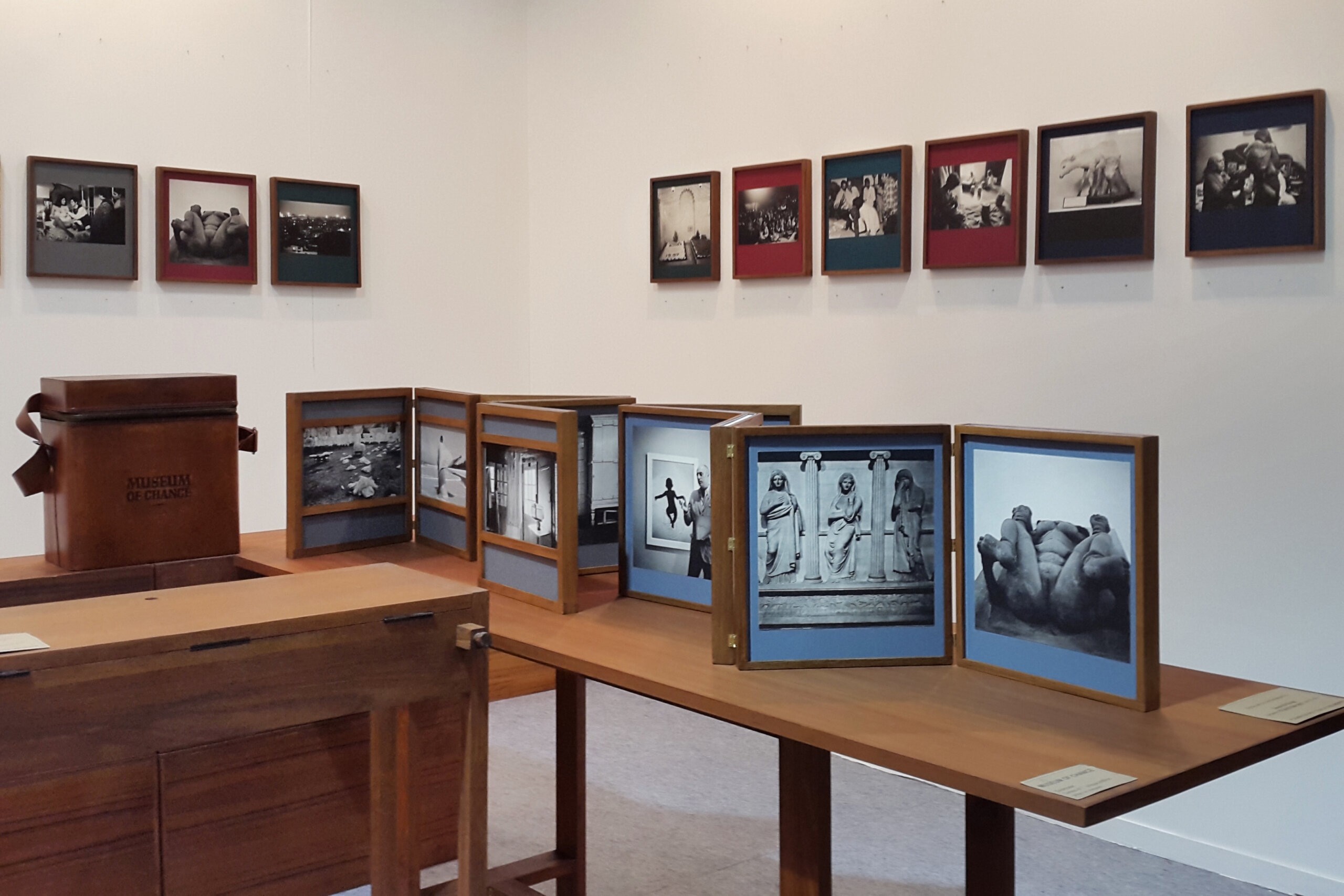
Singh created the Museum of Chance book-case to exhibit her book-objects in short, fixed sequences. She combined five book-objects together to form an open-face accordion with hinges that allowed it to fold into itself. Created in an edition of seven, it was made to be carried in a leather case of her own design.
The book-case is domestic in its scale and lies somewhere between a single book-object and the Suitcase Museum. Ideally, it is meant to live in someone’s home but can just as easily be travelled with as it was designed to be the size of carry-on luggage.
Suitcase Museum in Venice (2016)
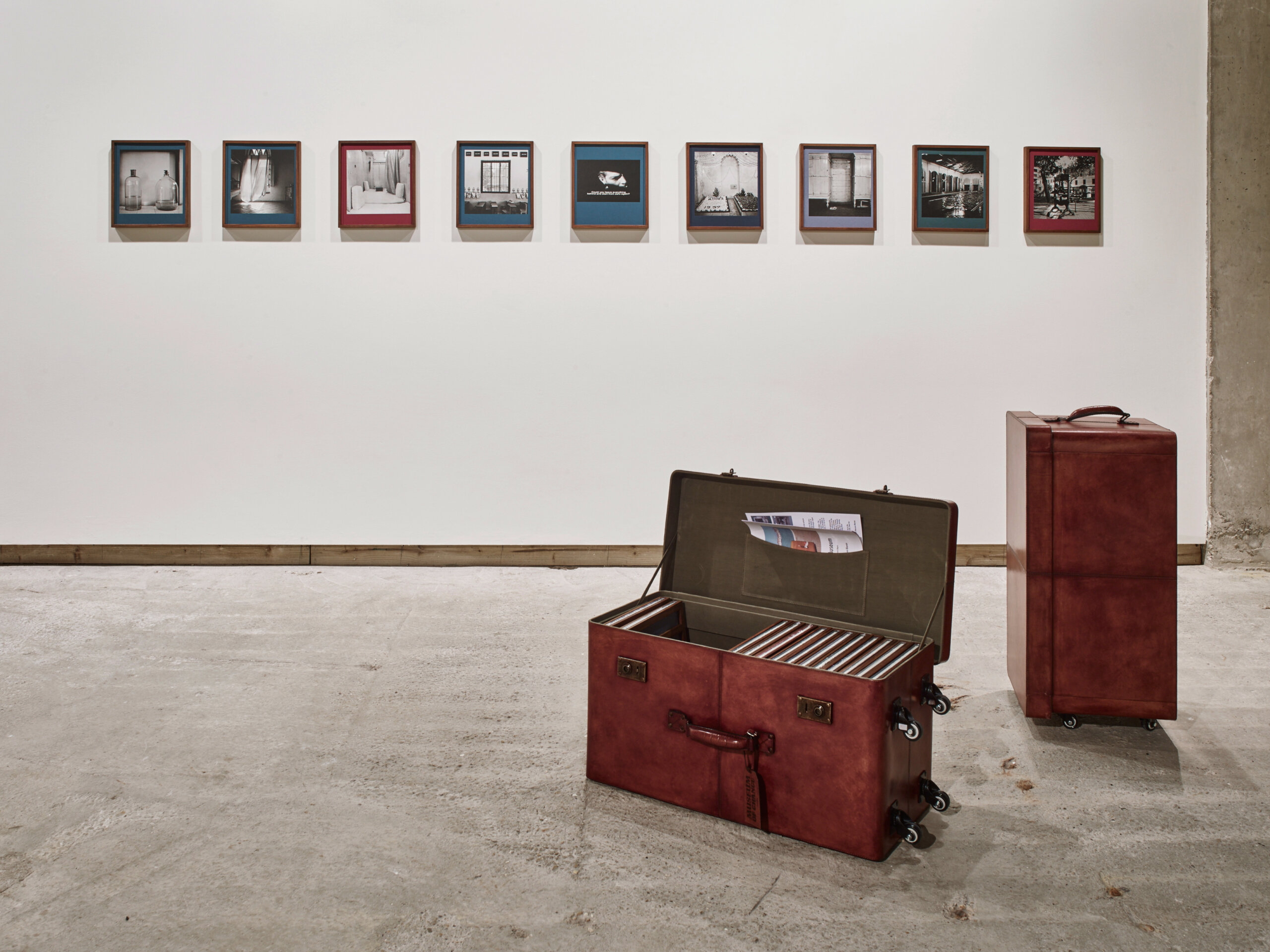
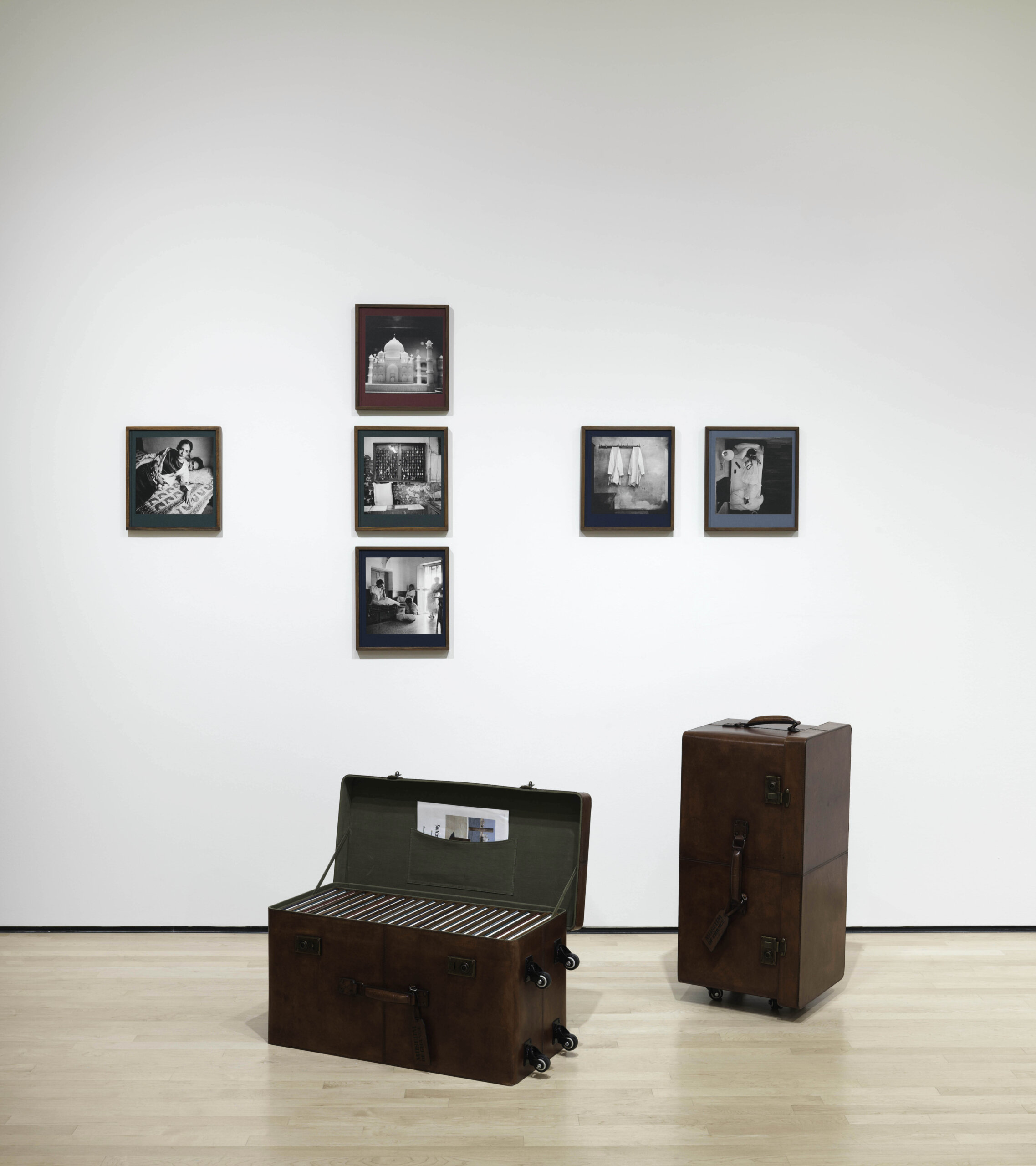
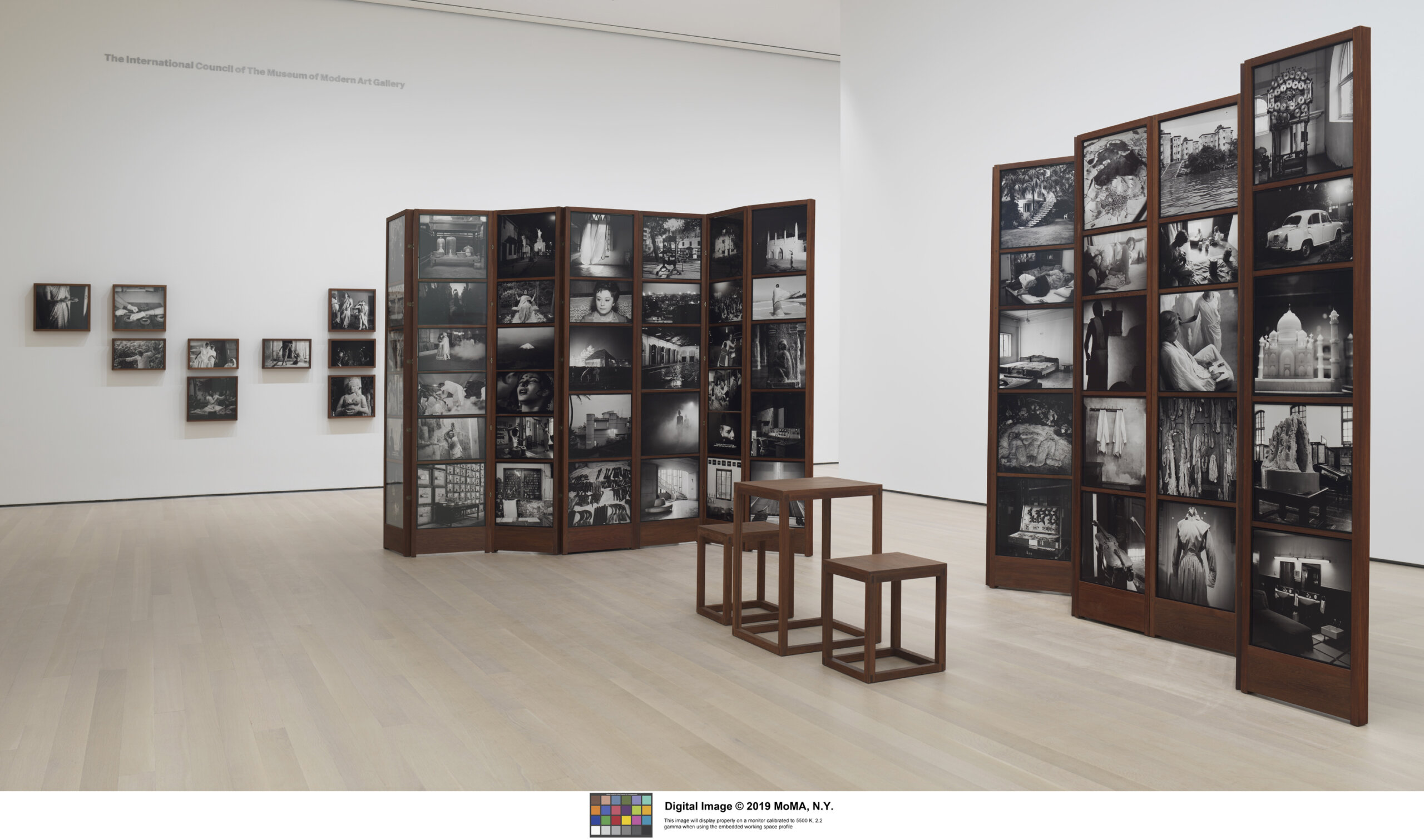
The Suitcase Museum allows Singh to take a full set of 44 Museum of Chance book-objects to exhibitions around the world.
Made in an edition of three, it consists of two suitcases with 22 book-objects each. During an exhibition, the book-objects are taken out of the suitcases and hung on the wall or placed on long tables, while the suitcases remain in the exhibition space. Singh, the book artist, can now be a suitcase artist—arriving anywhere in the world to show her work, pack it back in the suitcases, and leave:
To me, the museum of the future is small and portable. It’s organic and allows for change and growth continuously. It is a Suitcase Museum, on wheels. It has ambassadors who transport it on flights and trains. The suitcases are the display, as well as the storage units, and must include a reserve collection. They may be affiliated to larger institutions—such as the Tate—and take facsimiles from their collections, or be stand-alone exhibits like my Museum Bhavan. One could say they are pop-up museums that may be on show for an evening or an entire year. They have a PDF as a catalogue which can be printed on demand. The ambassadors seek new venues for them in the places they travel to and patrons they meet to make an event for their opening. The museums of the future will need to reach a wider cross-section of people and not depend on those visiting them. So, the suitcase museum.
—Tate Etc, Issue 35, Autumn 2015