“I came to photography through book-making. One made photos to make a book, just as my mother made photos to make albums for each child or event.”
– Dayanita Singh
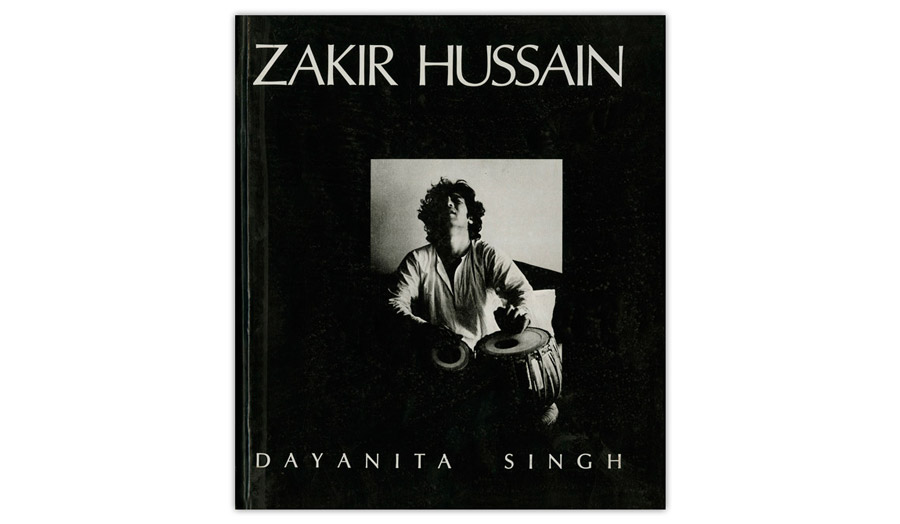
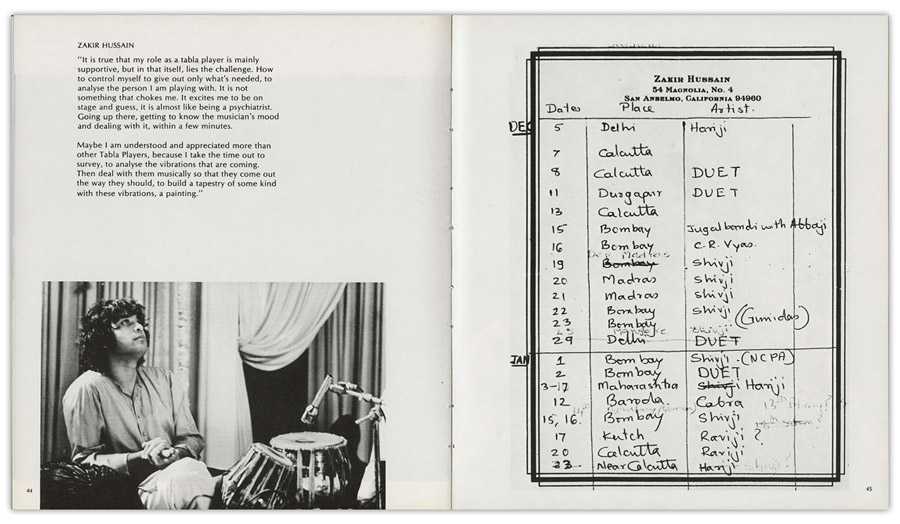
Dayanita Singh created Zakir Hussain in 1986, when she was 24 years old, as part of an assignment for a book design course in her fifth year at the National Institute of Design (NID), Ahmedabad. She had already spent several years photographing musician Zakir Hussain on his India tours, so when she joined the course led by Vikas Satwalekar, she asked if she could create a project using her existing material.
References for photobooks in India were almost non-existent in the 80s, so Singh came to the assignment without any preconceived understanding of photobook making. Even at NID, she had access to only a few artist books from the USSR and some tourist-oriented photo-books about India. She drew, instead, from the readier references that she had for photography, which were the many family albums and scrapbooks that she had seen around her home. “That is how I lived with photography growing up,” she says, “with albums that my mother carefully put together. She had one for each child, one for each event and even one for my father’s girlfriends from the time before they met.”
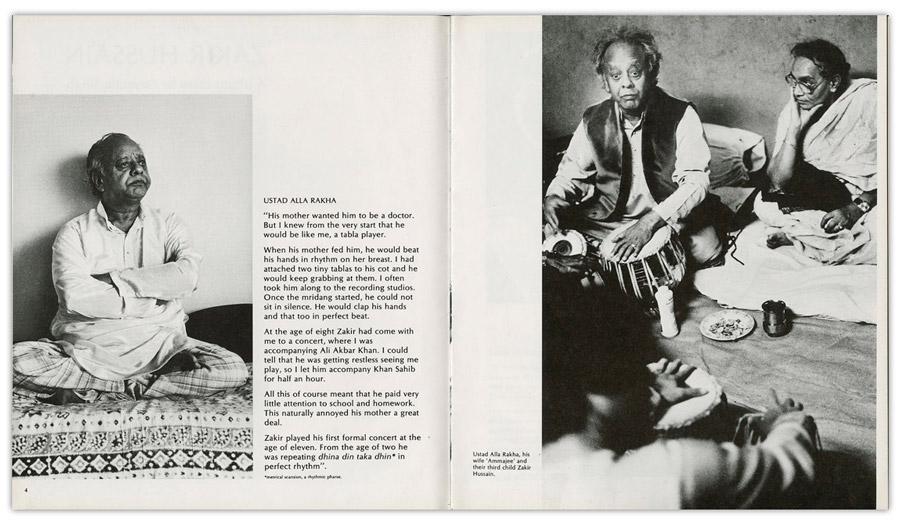
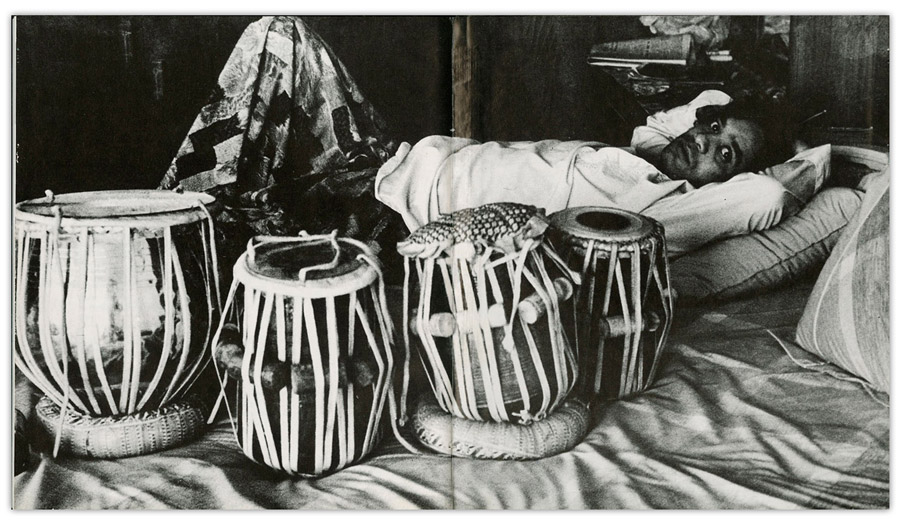
From the outset, Singh wanted her book to speak not just to the life of the extraordinarily talented musician but also more broadly to the ins and outs of Indian classical music as she had experienced it. She worked with a wide variety of images, touching on several dimensions of Hussain’s life: his time with his family, his process of riyaaz, his travels, pre-concert green-room meetings with other musicians and, of course, his performances on stage. The result was a kind of photo-biography of Hussain, a book that retained the intimacy and familiarity of a family album whilst speaking, simultaneously, to the rigours, practices and philosophies of Indian classical music.
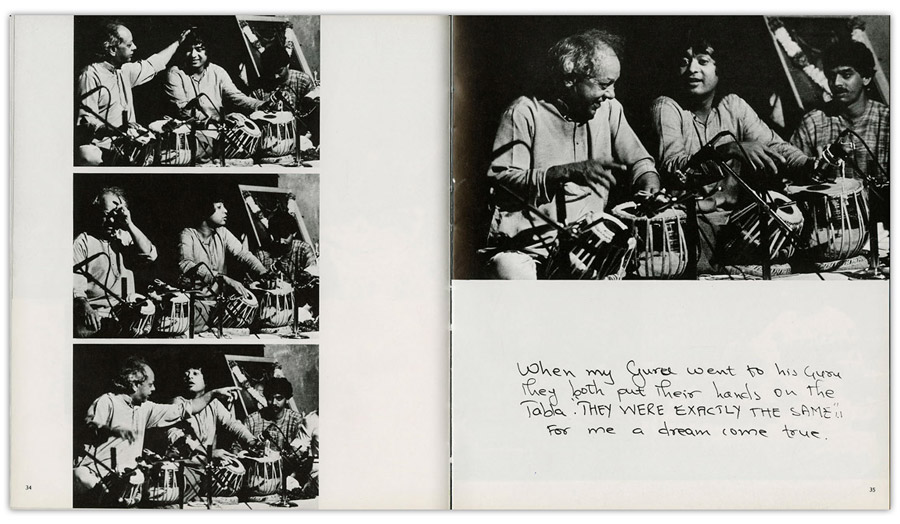
With the encouragement of Professor Satwalekar—who was a strong (and perhaps the only) supporter of her photography at NID—Singh experimented liberally with the book’s design, often breaking the grid and placing images as she felt necessary. She worked to create a kind of musical rhythm through the book, so she cropped photos at will and even placed full rows of contact prints side by side on some pages. She designed each layout individually, with the intention that no two pages should look the same.
Singh felt it important to centre Hussain’s voice, so she asked him to caption the images with whatever thoughts they brought to his mind (some of these appear in his own handwriting in the book). For the remaining captions, she spoke to musicians he worked with, conducting the interviews and copy-editing the text herself. She worked entirely on her own, unaware that these components of book-making were typically the domain of seasoned experts. For her book’s typeface, Singh chose to work with Optima, a “between serif and sans-serif” font that is both traditional and contemporary, much like Hussain himself who endeavours for the same balance musically.
Once ready, Singh was able to find a publisher in Himalayan Books but the book did not find much commercial success. Most Indian photo-books revolved only around travel and tourism and it was highly unusual for one to feature a single person. Even musicians seemed discontented. Although the book was formally launched with a concert by the great vocalist Pandit Mallikarjun Mansur, many of the musicians in attendance were disappointed, as the book neither explained Indian classical music nor served as a guide on how to play the tabla. Since Hussain was not yet the famous musician that he would eventually come to be, as such, the book was an anomaly. No one, including Singh, quite knew how to situate it.
It took nearly 15 years for Singh to produce her next book, Myself Mona Ahmed, and yet it was her work with Zakir Hussain that paved the way for one of her most important explorations in photography: that of its relationship to its form. In the process of imagining and then building Zakir Hussain in its entirety—from the photographs to the interviews, from the copy-editing to dissemination—she saw, early on, that she could engage with every dimension of book-making, not just the design or the photography. Encouraged in no small part by Hussain and Satwalekar, she realized that bookmaking gave her complete control of how her photographs could be contextualized, read and presented. And that in participating in every aspect of the process, she could become the complete author of her entire work.
“I knew I wanted to make books right from the start,” she says, “but it took two decades to have the confidence to do that as the primary work.”
Yet somewhere Singh must have perceived the importance that books were going to play in her life and future practice: even today, she has never made prints of the Zakir Hussain series—with the exception of a few prints in the Museum of Chance museum—and the images can only be seen either in the pages of the book or when the book is exhibited on the wall.