April 17 – July 31 2026
Archivio di Stato, Venezia, Italia
Opening hours: Monday-Friday, 12 am – 6 pm
Exhibition Handout
Press Release
For more than twenty-five years, Dayanita Singh has been quietly, patiently, and persistently photographing Italy. This long-duration engagement has unfolded without spectacle, without proclamation, almost as a parallel archive — one that has grown through friendship, trust, and the slow sedimentation of looking. From Venice to Bologna, from Florence to Milan, from Naples to Turin, Como, and Rome, Singh has approached Italian cities not as monuments to be recorded but as living organisms to be listened to.
Crucial to this long engagement has been the role of friendship. Access — to private houses, hidden libraries, family collections, storerooms, and spaces otherwise inaccessible — has been granted to her not through institutional commission alone, but through relationships cultivated over decades. Friends have opened doors; they have entrusted her with their histories, their interiors, their silences. In doing so, they have become, in a profound sense, her patrons.
This patronage is not economic in the classical sense, though it echoes the Italian tradition of artistic support. It is a patronage of care and reciprocity. Singh cares for the spaces and lives she photographs; in return, her friends care for her unfolding practice. The exchange is subtle but foundational. The archive that emerges from her Italian years is therefore not institutional but intimate — built on trust, sustained by mutual attention.
What emerges from twenty-five years of photographing Italy is therefore not a survey, nor a documentation, but a relational cartography. It is a map drawn through attention, through patience, through return. Singh’s Italian archive does not claim authority over these cities; it inhabits them lightly. It listens more than it declares. And perhaps this is the quiet radicality of her gaze: in places burdened by history, she finds the present. In cities saturated with representation, she uncovers anonymity.
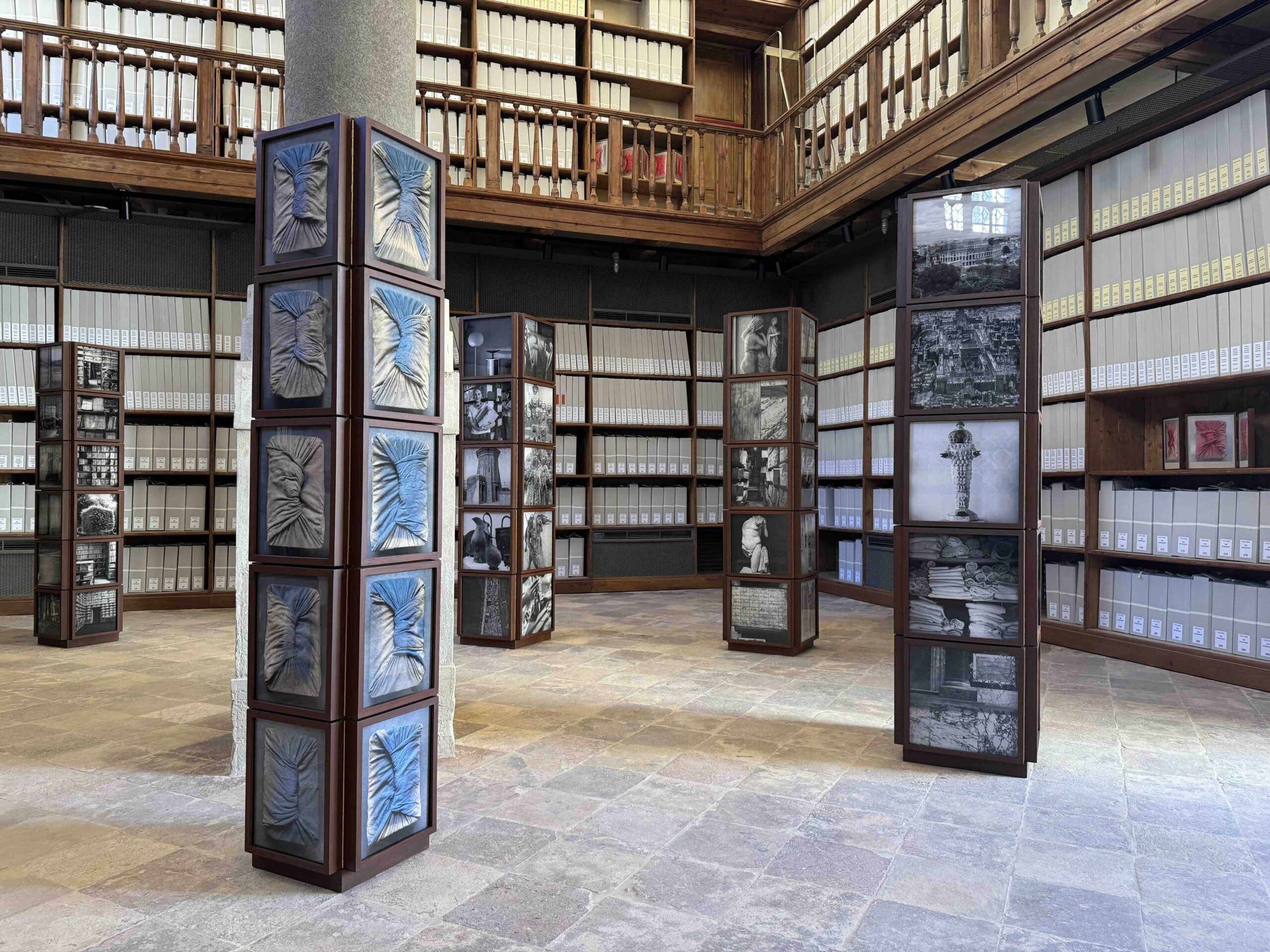
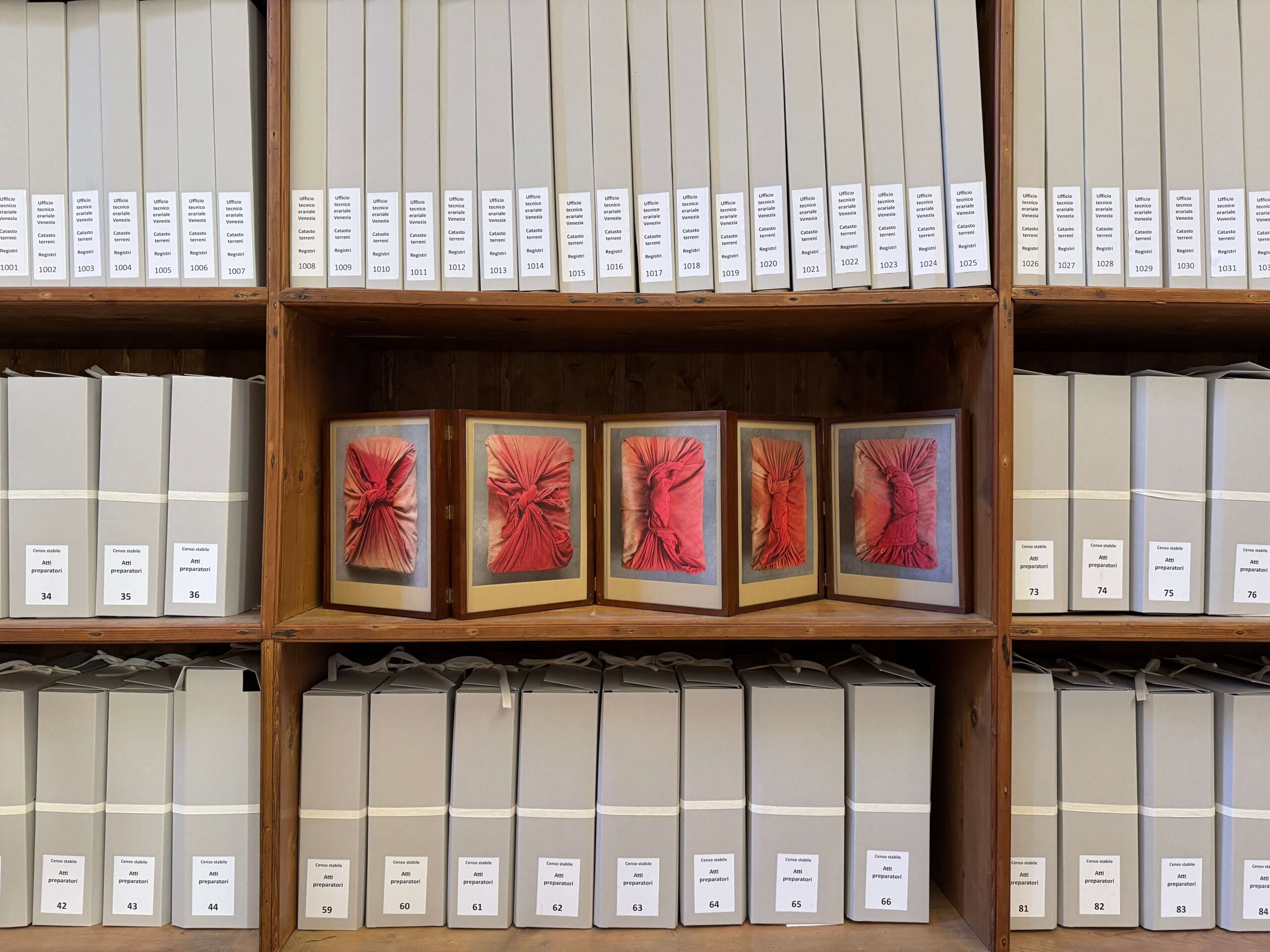
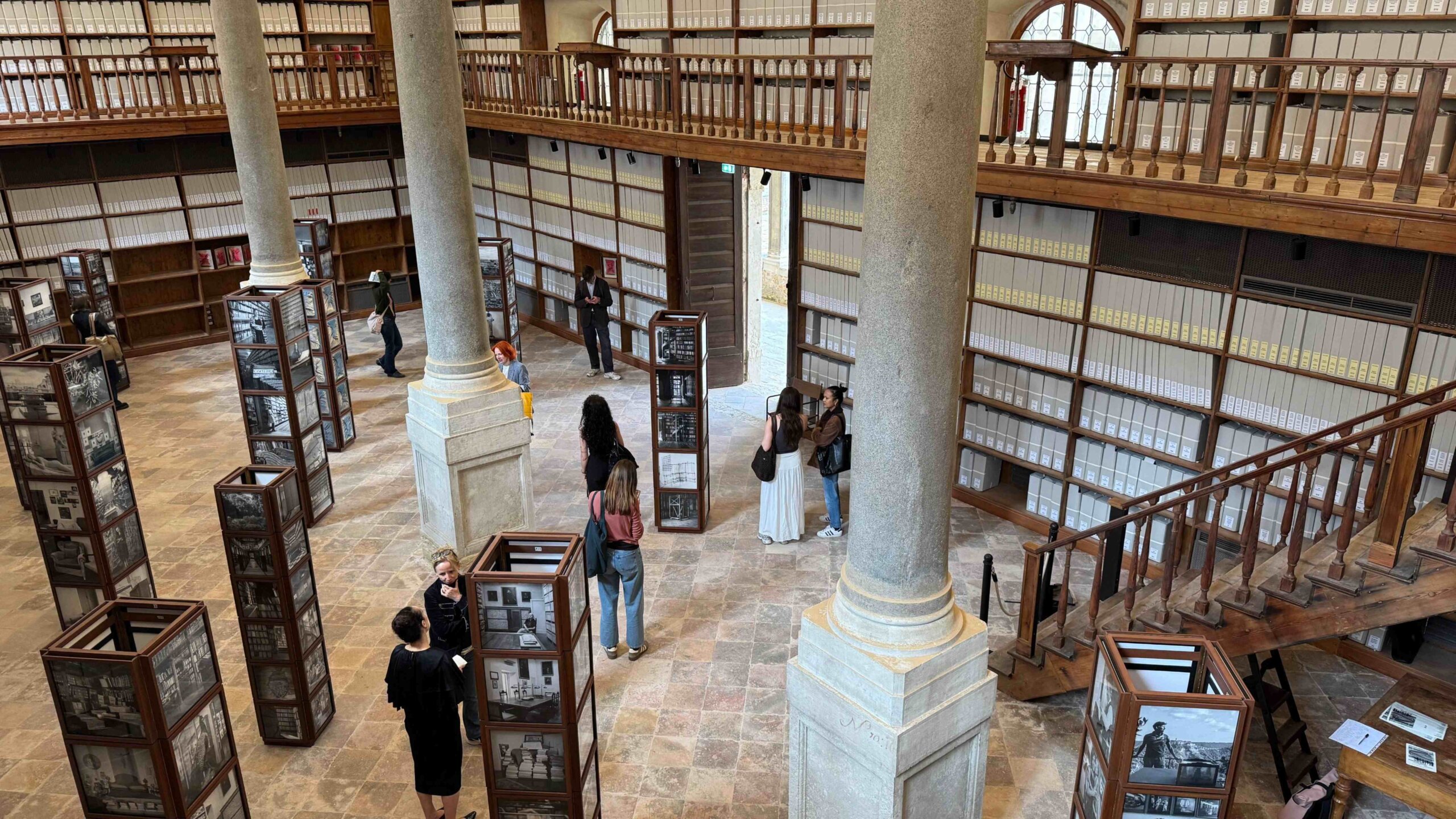
ARCHIVIO is not conceived as an exhibition in the conventional sense, nor as a fixed presentation of photographic works. It is, rather, a living system—an evolving constellation of images that take form through their arrangement in space and their capacity to be continually reconfigured. At its core lies Dayanita Singh’s long-standing redefinition of the archive: not as a place where things are stored and stabilized, but as a dynamic field where meanings emerge through proximity, sequencing, and encounter.
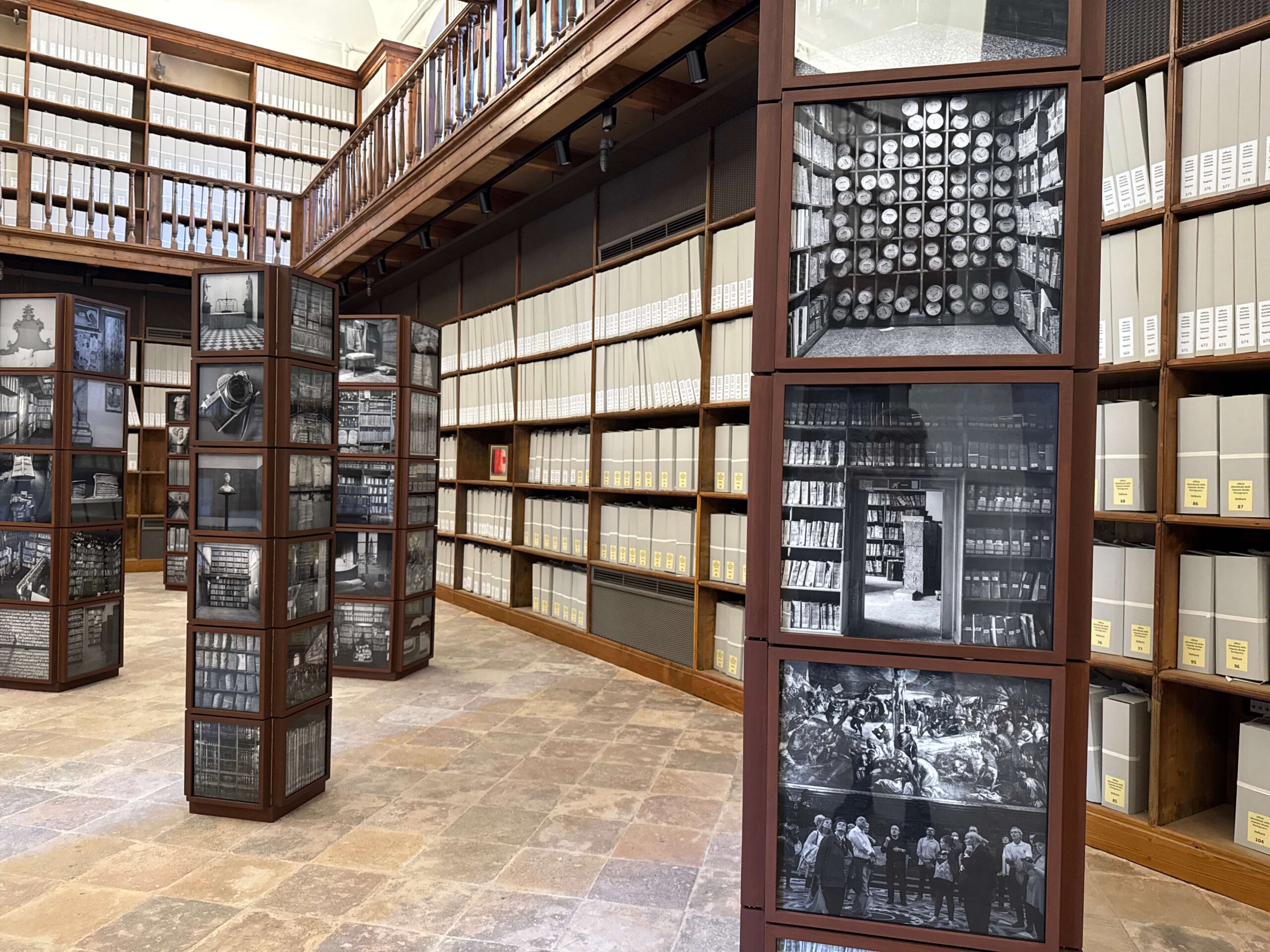
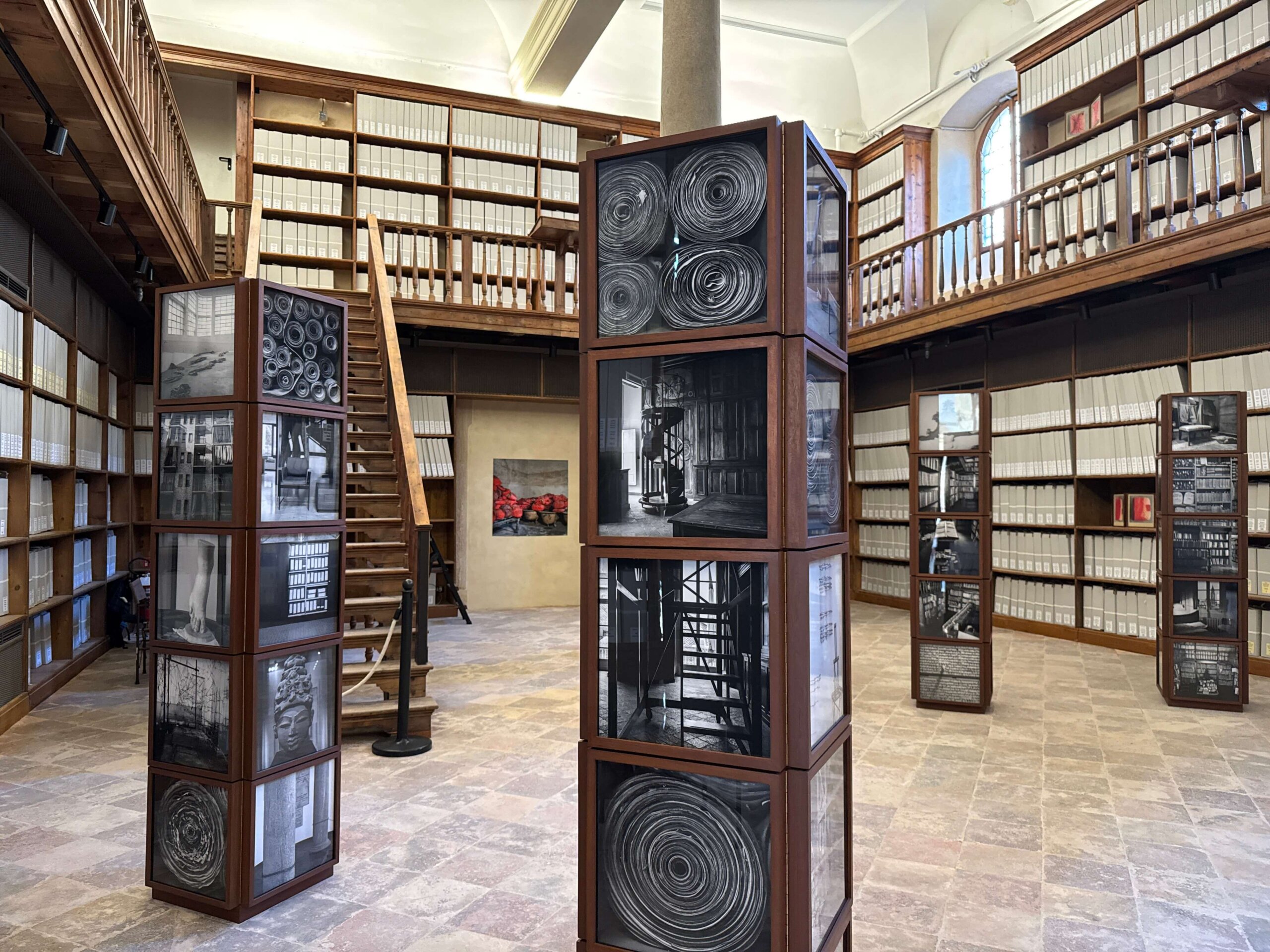
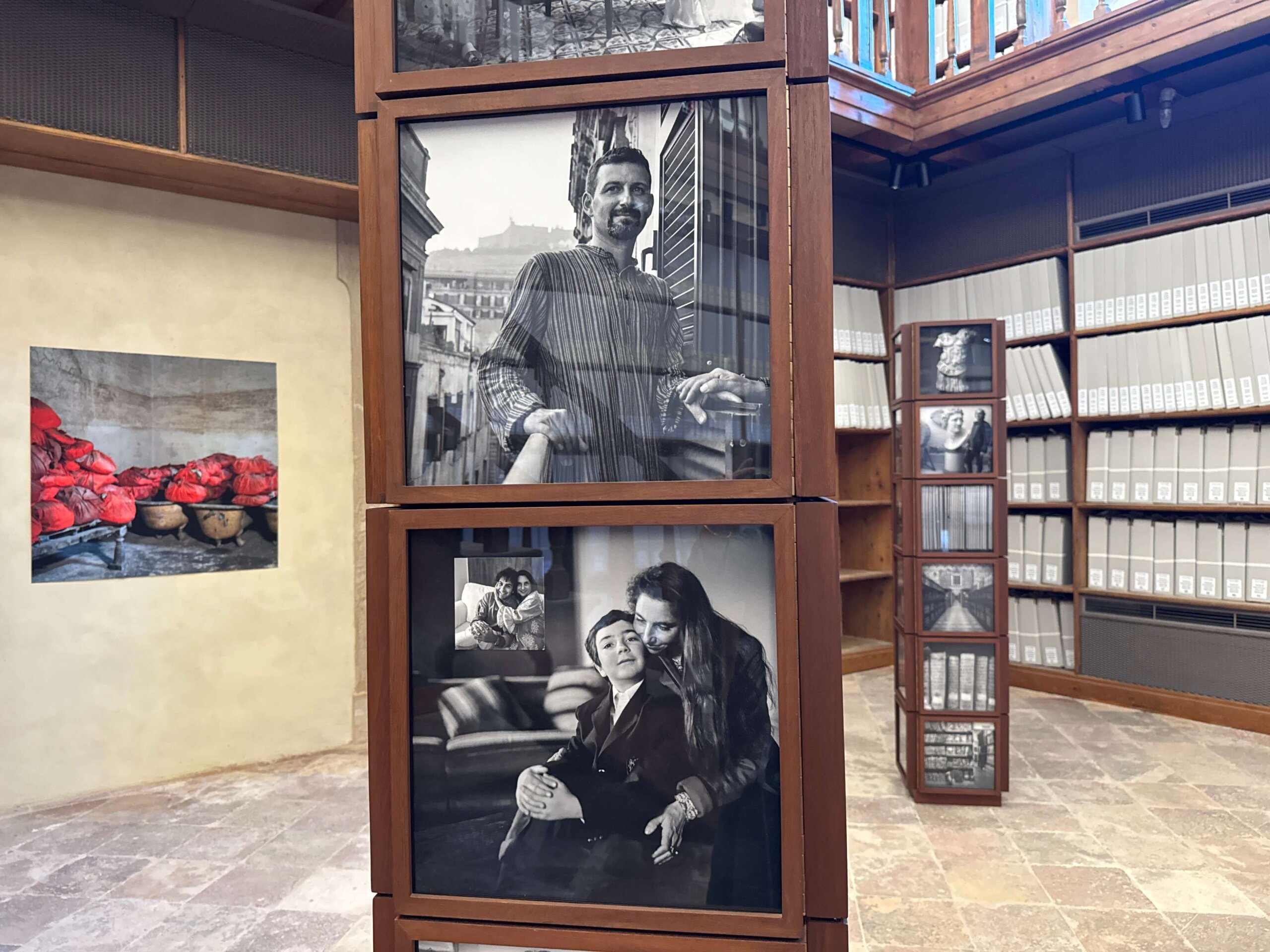
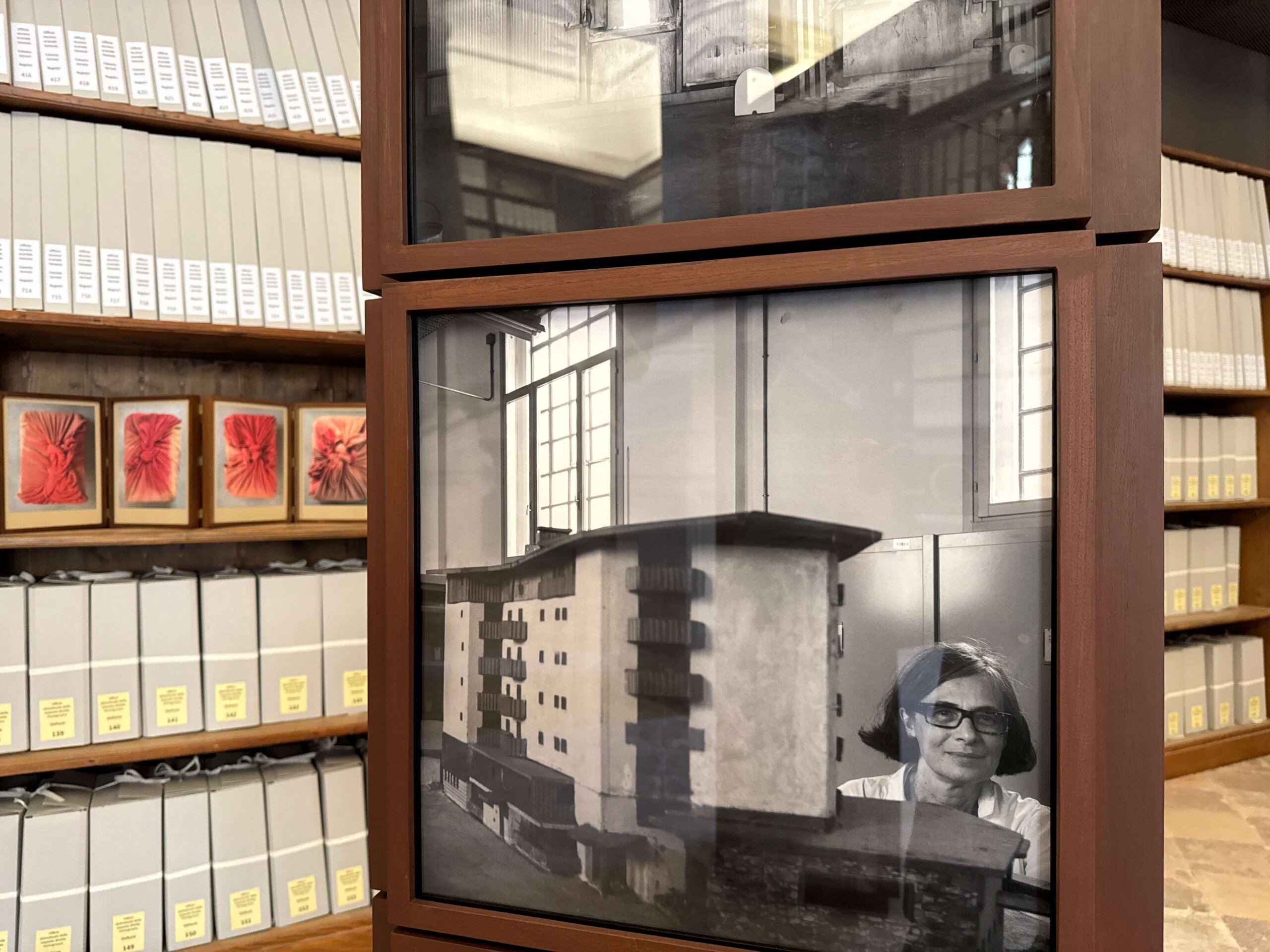
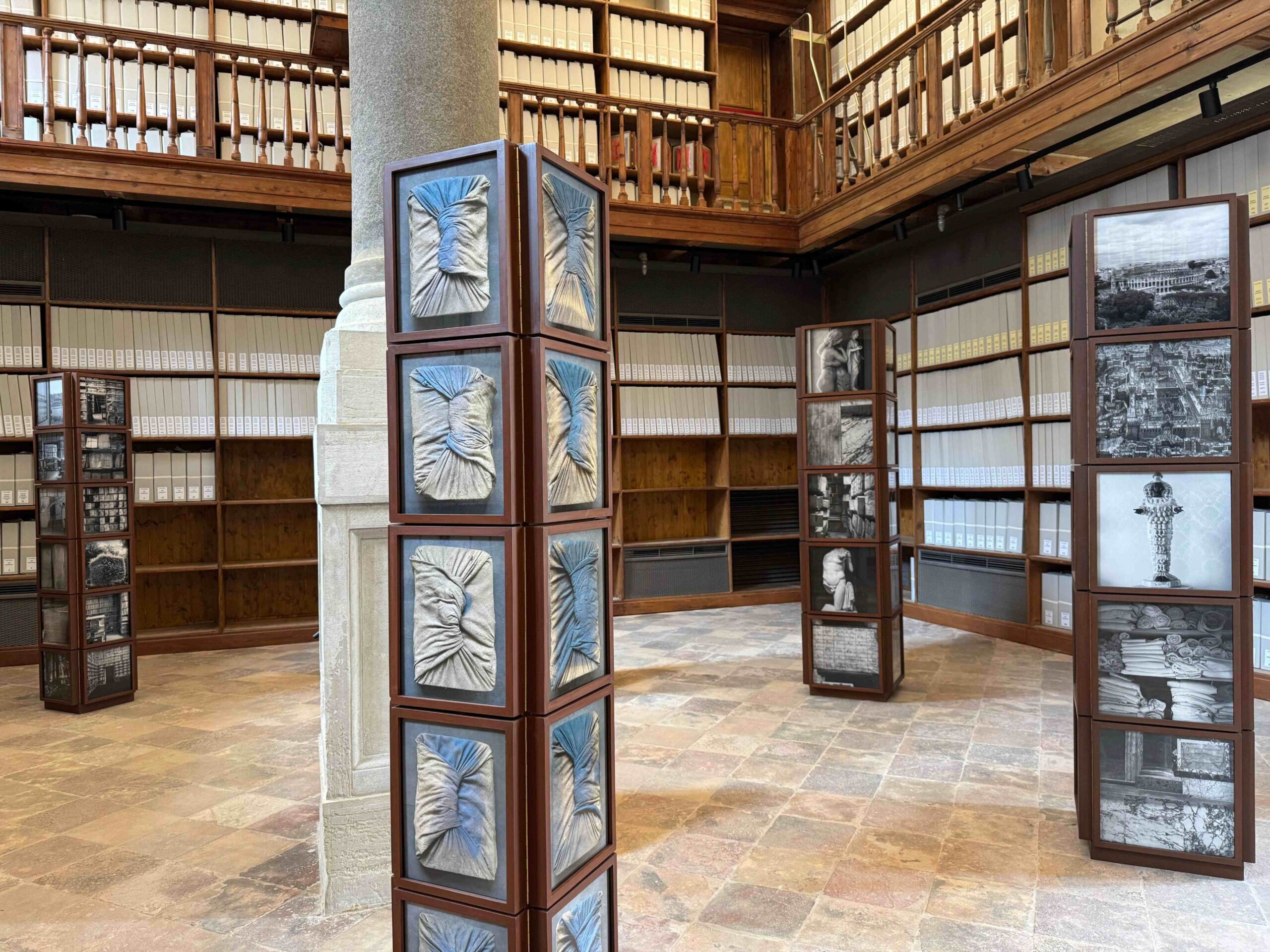
The exhibition unfolds through modular wooden structures—mobile architectures that function simultaneously as display, storage, and narrative devices. These structures are not neutral supports; they are integral to the work. They suggest cupboards, cabinets, partitions, and reading rooms, recalling both domestic interiors and institutional repositories. Visitors do not simply look at photographs; they move through an environment that behaves like an inhabitable archive, where each shift in position generates a new alignment of images.
Institutional interiors—museums, offices, storerooms—appear not as sites of authority, but as environments marked by repetition, stillness, and latent narratives. Objects are often present, yet rarely foregrounded. Instead, they participate in a broader atmosphere, contributing to a sense of quiet accumulation.
Dayanita Singh’s work unfolds at the intersection of photography, book-making, architecture, and memory, persistently challenging the conventions through which images are classified, preserved, and made meaningful. Over the course of more than three decades, Singh has redefined not only the status of the photographic image, but also the very idea of the archive itself. In her practice, the archive ceases to be a neutral repository of the past and becomes instead a living, mutable form—one that is activated through sequencing, circulation, and intimate encounters with viewers.
Photography has long been bound to archival logic. From its earliest institutional uses—scientific documentation, ethnography, surveillance, and state administration—the photograph has been invested with evidentiary authority. It promises fixity, permanence, and truth. Singh does not reject this history; rather, she reworks it from within. Her images retain a deep respect for photography’s capacity to bear witness, yet they resist the static and hierarchical structures that traditionally govern archives. In her work, photographs do not merely record; they migrate, recombine, and generate meaning through their relations with one another.
Dayanita Singh stands among the most significant artists working today because she has quietly but decisively altered the grammar of photography. At a time when images proliferate endlessly—circulating, accumulating, often losing depth through repetition—Singh has shifted the question from what an image shows to how it lives. Her work does not add more images to the world; it changes the conditions under which images are seen, remembered, and related to one another.
This transformation operates on several levels. First, she has expanded photography beyond the single frame, treating it as a modular, mobile, and relational medium. Her works exist as books, as installations, as sequences that can be reconfigured—never fixed, never definitive. In doing so, she dissolves the traditional boundaries between photograph, archive, and exhibition, proposing instead a fluid system where meaning is continuously produced through arrangement and encounter.
Second, she has redefined the archive itself. In Singh’s practice, the archive is no longer a static repository of the past, governed by authority and classification. It becomes a living structure—open, permeable, and subject to change. This shift is not only formal but philosophical. It invites us to reconsider how knowledge is organized, how memory is preserved, and who has the agency to shape both.
ARCHIVIO is particularly significant for Italian audiences precisely because it enters into a profound and nuanced dialogue with Italy’s own relationship to history, memory, and space. Italy is, in many ways, an immense archive—layered with centuries of art, architecture, and cultural production. What Singh brings is not another representation of this heritage, but a different way of inhabiting it.