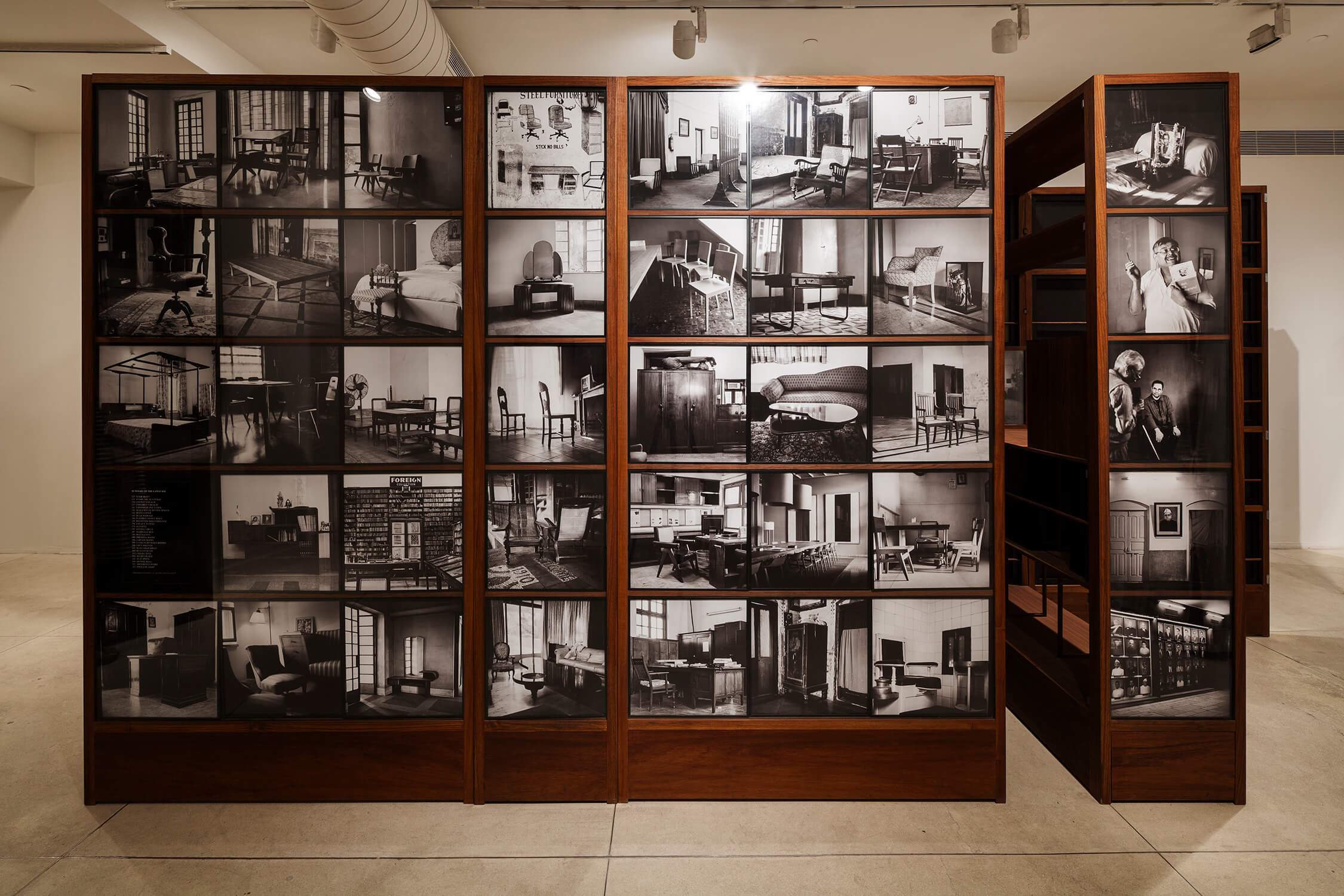
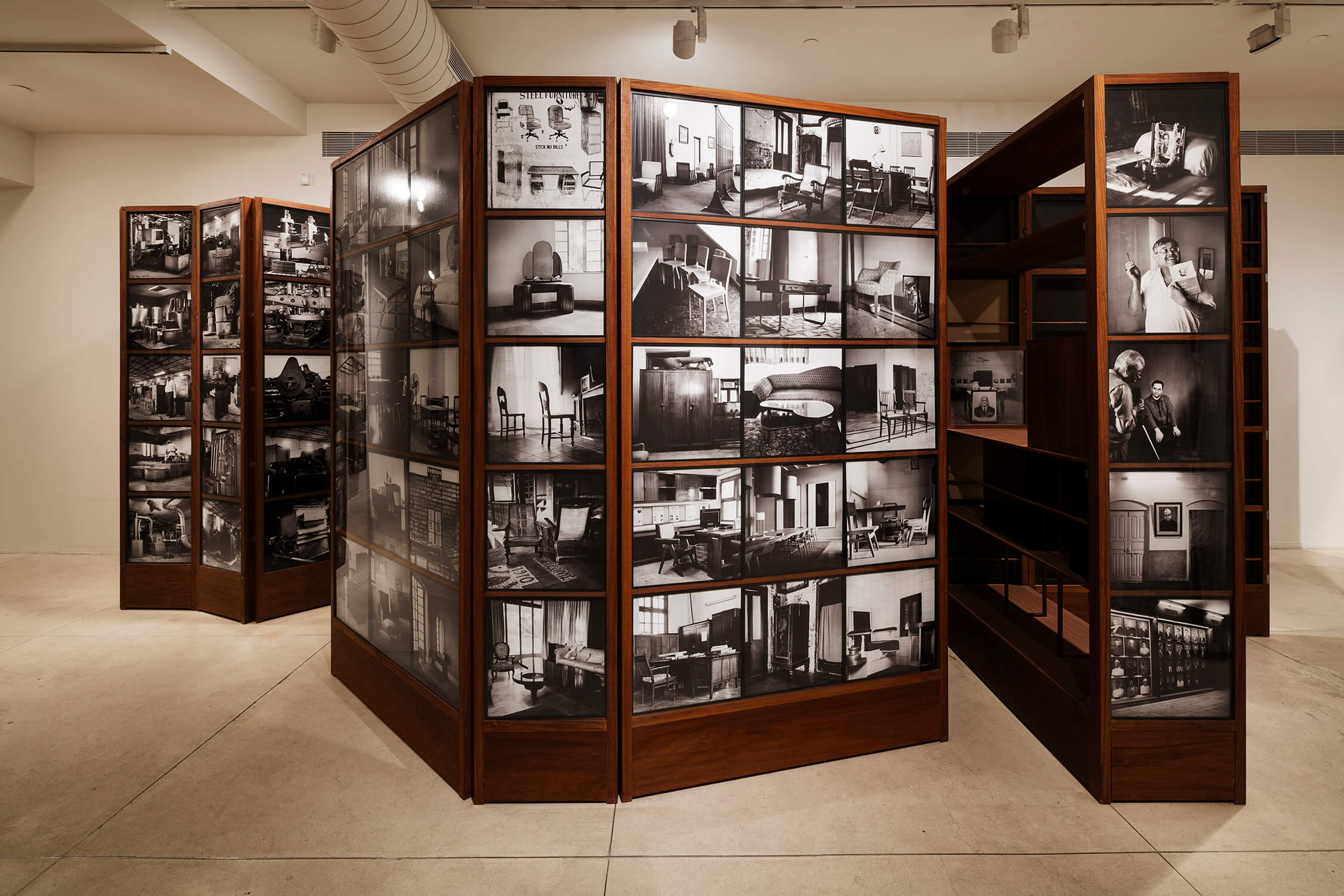
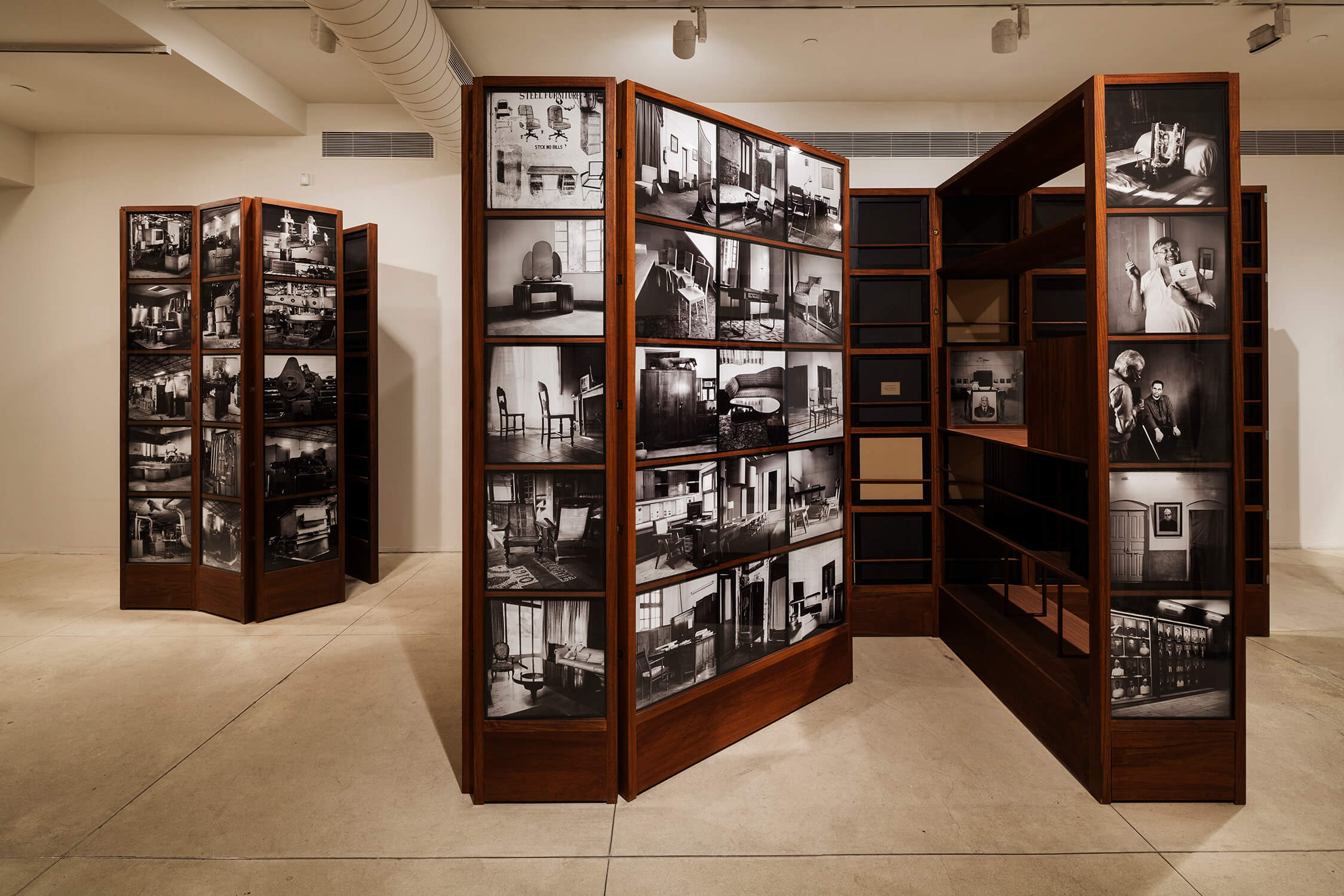
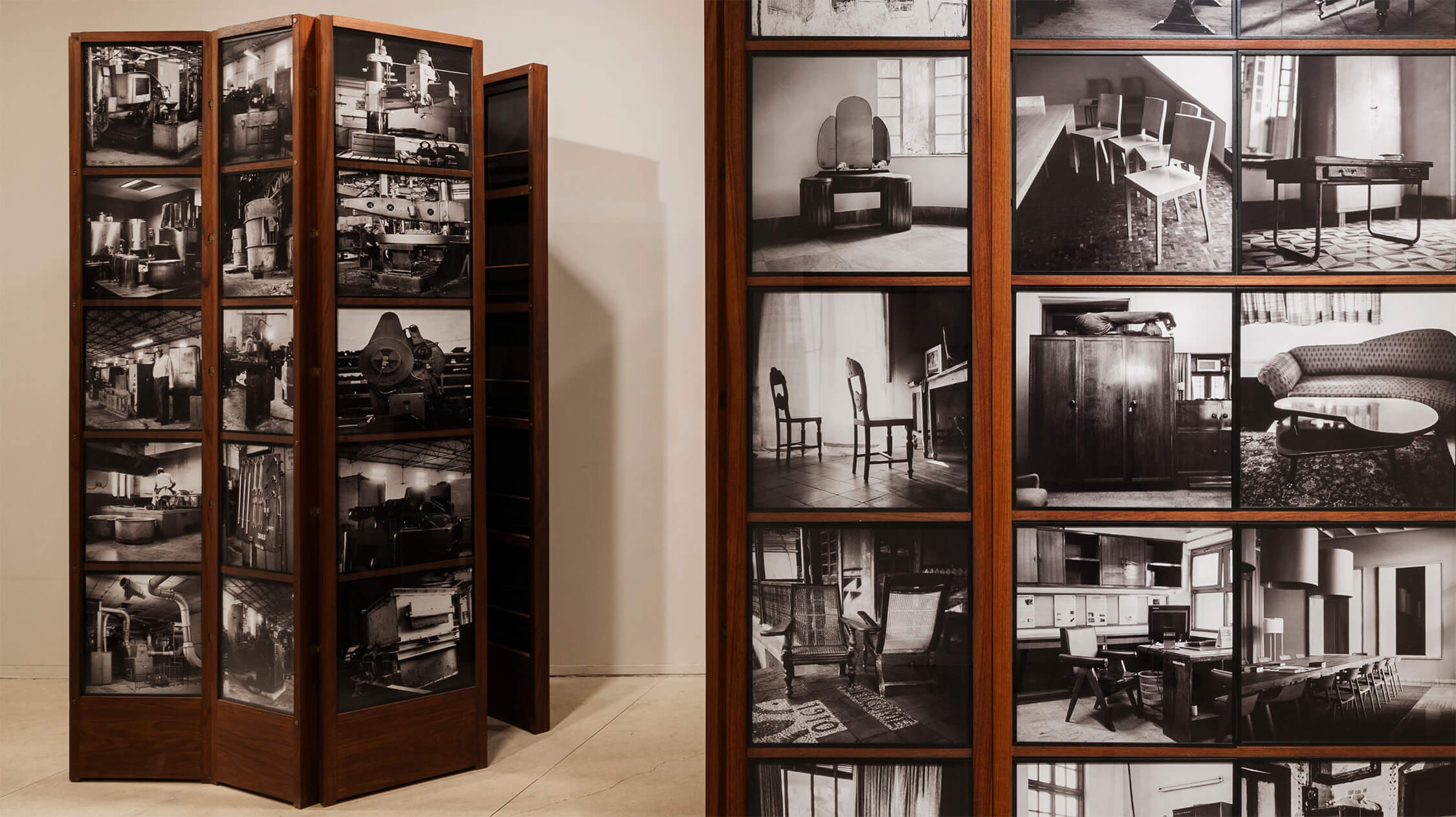
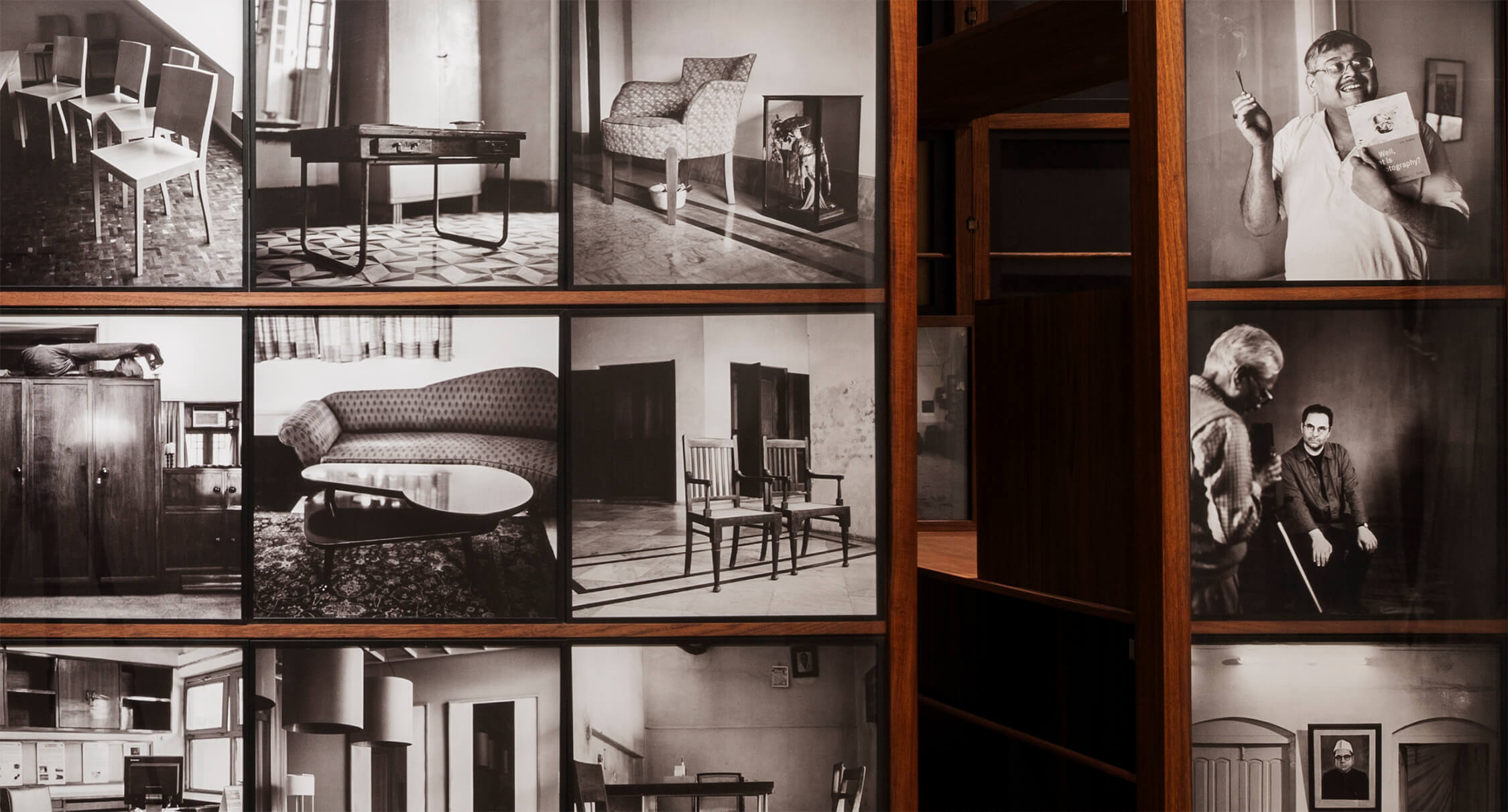
Teak structure and inkjet prints
One large structure:
227 x 132 x 56 in
Five small structures:
40.5 x 40.5 x 10.5 in (each)
77 prints:
38 x 38 in (each)
Installation image credit: Simon White
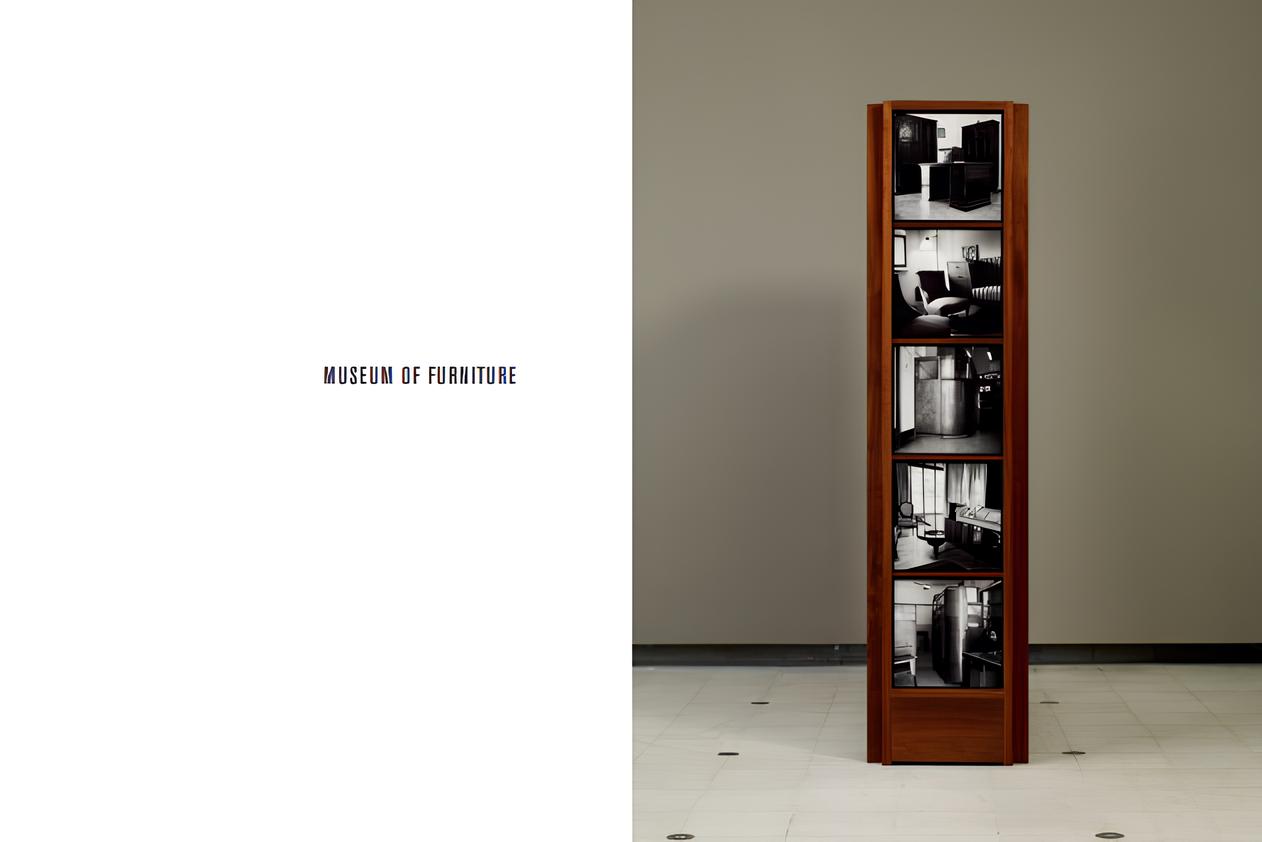
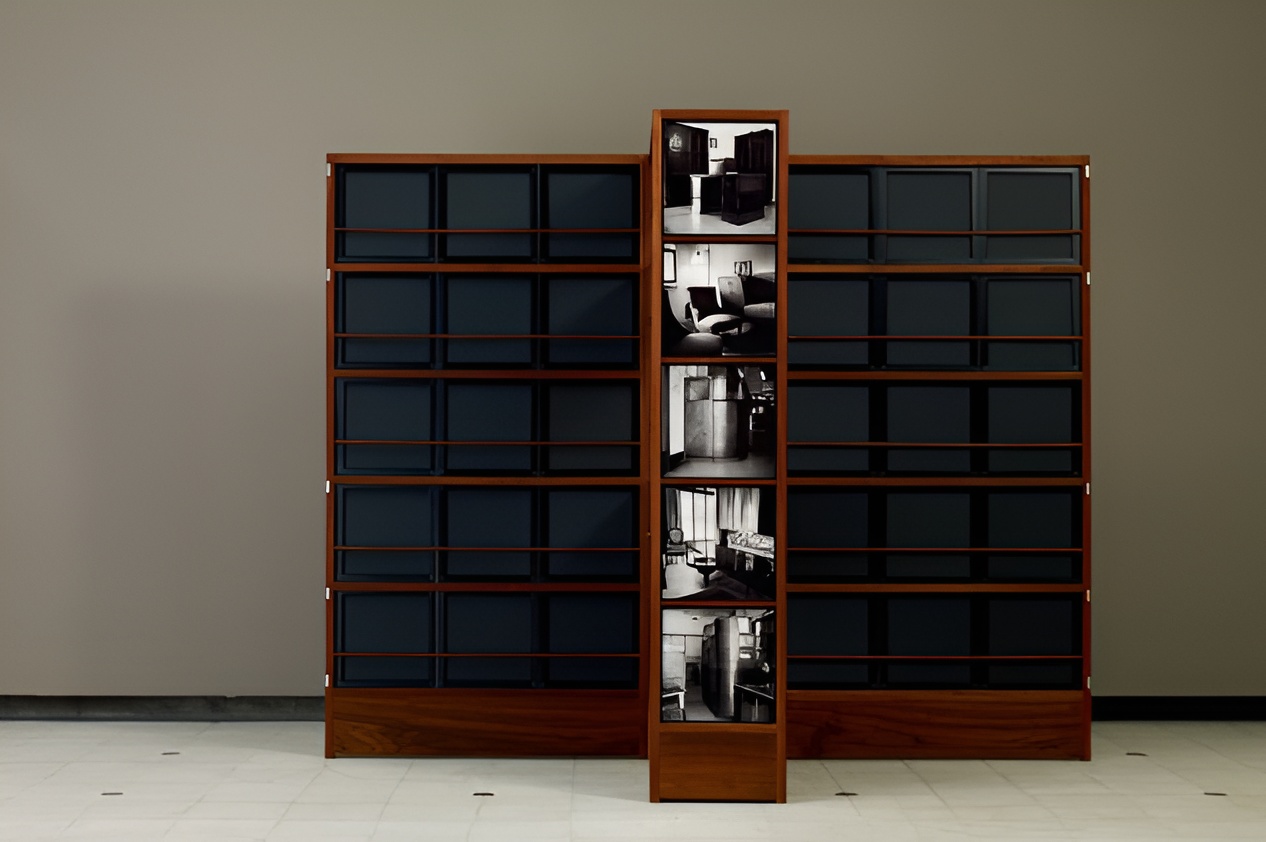
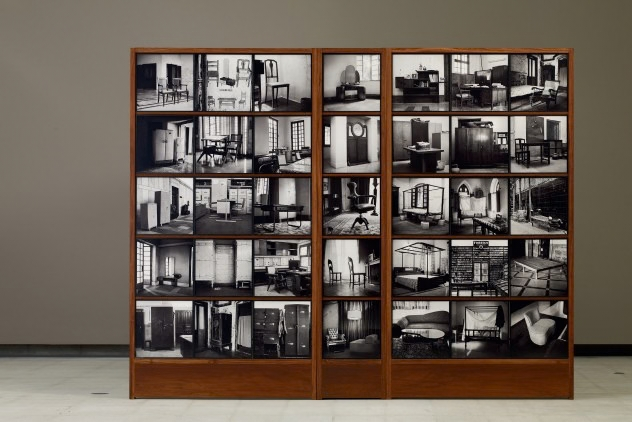
Teak structure and inkjet prints
One large structure:
227 x 132 x 56 in
Five small structures:
40.5 x 40.5 x 10.5 in (each)
77 prints:
38 x 38 in (each)
Installation image credit: Simon White
“I keep an ottoman in my heart exclusively for you,” wrote Emily Dickinson to her cousin, Loo, one morning early in January 1859 as a snowstorm raged outside in Amherst. Emily was then almost thirty – a passionate recluse and a prolific but largely closeted poet. Loo was more than a decade younger than her, and one of the few people from whose company Emily did not feel like running away, as she admits in the same letter. Emily reminds Loo of how she had decided to stay behind with her once, when they had come visiting Emily’s family and everybody else had gone out “driving”. The two of them had enjoyed being “distinguished” in the dining room – distinguished, or set apart, in spite of the ordinariness of their choosing to sit at home and talk to each other and enjoy each other’s company separately from the others. The mutually delighting intimacy of that conversation – like the intimacy of this, more solitary, moment of taking a break in her sewing and choosing to write to Loo – was testimony to how eminently lacking in “greatness” the lives of these two women were: “It’s a great thing to be ‘great,’ Loo, and you and I might tug for a life, and never accomplish it…”
Yet, Emily cannot help investing this quietly shared ordinariness with a sense of the “distinguished” – a sense that arranges itself into an image as she begins to conjure it in words: a picture of the two of them sitting and talking among the dining table and chairs, and now of her stopping to daydream the absent Loo into existence in order to begin writing to her. It starts as a feeling and then becomes a scene of rare distinction for her through both the experience of missing her cousin and the act of writing to her. For Emily, this sense of the distinguished moment at the heart of the ordinary is ineffably linked with a piece of furniture that had its own exotic associations in Emily’s time. Ottoman: the word itself is imbued with an Oriental opulence that is at once domesticated and internalized in the language of the heart that Emily “keeps” – reserves as well as preserves – for her specially beloved cousin. The ottoman becomes a real piece of furniture (like the dining room, real but also remembered, in which they had sat and talked) as well as a magically charged symbol standing in for the person who was not there at that moment, just as her letter to Loo becomes a realization, though at a remove, of the longing to sit with her and talk. By evoking the physicality of the ottoman, at once there and not there, Emily’s writing aspires here to the condition – the immediacy – of conversation.
Dickinson was a poet. She knew that one could do things with words without actually doing anything. She also knew that words were ultimately not things in the way that things always remained things. Words could, at best, be only the re-presentations of things (‘ottoman’ wasn’t an ottoman), even when they came into being in the midst of a world of things. And this was truer of the spoken, than of the written, word. After all, letters were made out of paper and ink and were sent to people, read, copied or destroyed, as many of Emily’s were eventually. But the conversations, remembered or fantasized, that inspired and compelled these letters were truly ephemeral events, perishing even as they came into existence out of real subjects and among real objects – surrounded by chairs and tables and beds and pictures. Words spoken and exchanged, however delighted in or suffered, bore in their essence the mortality of their embodied speakers, coming to life in the very moment of their passing, like music’s dying fall. So, the attempt to imbue breath with voice and meaning is always already doomed, terminal – in spite of the invention of writing or more advanced technologies of capture. Put a copyist, or a dictaphone, in a conversation chamber and the talk inevitably turns into something else, however comforting the relative imperishability of that something else.
Hence the poignancy of rooms in which people have talked, and of the furniture – the unmoved movables – that have silently choreographed these conversations and bear the mysterious imprint of the ghostliness of human utterance and, indeed, presence. And the photographer, especially one whose photography is aptly described as ‘still’, could possibly be the best – or perhaps the worst – historian and ‘keeper’ of these vanished conversations.